You paid for professional remediation. The clearance testing passed. The space looks and smells clean for the first time in months — maybe years. Now you have one question: how do I make sure this never happens again?
Mold prevention after remediation is ongoing moisture control — not a one-time fix. Remediation eliminated the existing contamination and corrected the original moisture source, but your home still contains every organic building material mold feeds on — drywall paper, wood framing, carpet fibers, dust. The only variable you control going forward is moisture. Keep materials dry, and mold cannot colonize them. Let moisture creep back in, and new growth can start within 24 to 48 hours.
This guide covers every system that influences moisture — what to monitor, what to maintain, and how to catch problems early enough that you never need remediation again.
Why Remediation Alone Doesn't Guarantee Prevention
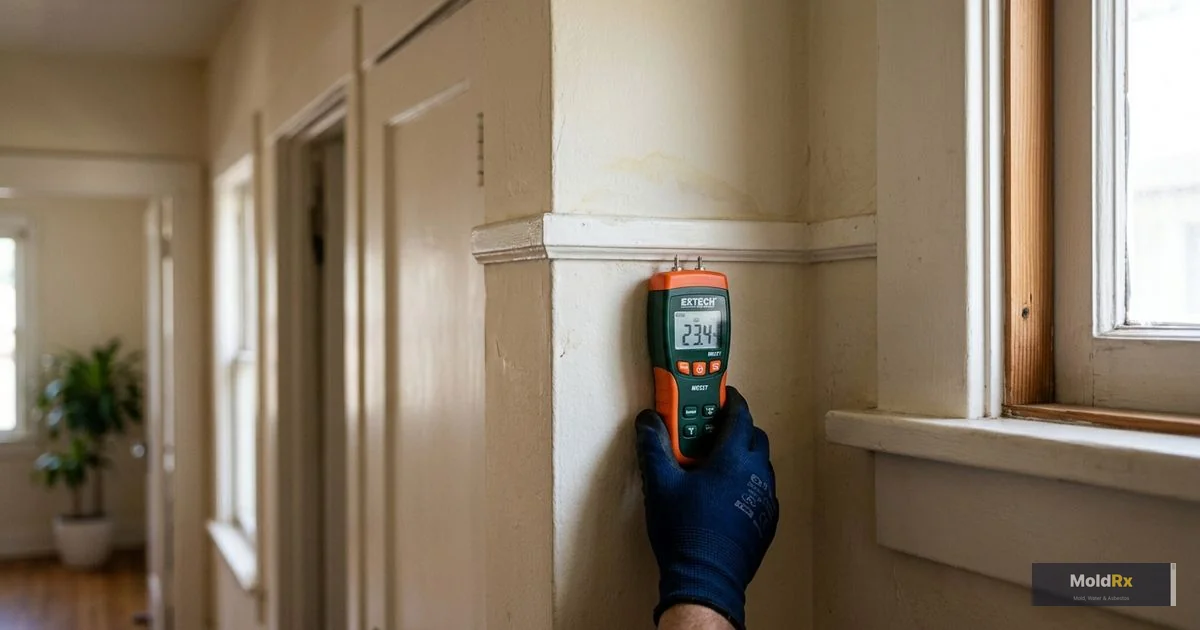
Professional remediation removes contaminated materials, treats structural elements, and corrects the moisture source. Clearance testing confirms the contamination is gone. But it doesn't inoculate your home against future mold.
Mold spores exist in every indoor environment — they're in your air right now. That's normal. Those spores only become a problem when they land on organic material that stays wet for more than 24 to 48 hours. Your remediation resolved the past problem. Prevention is about the next potential moisture event — the slow leak that develops in two years, the bathroom fan that fails, the gutter that clogs. Understanding what to expect after mold remediation is the first step. This guide is the long-term playbook.
Humidity Monitoring and Control
Indoor humidity is the single most important number in mold prevention. Keep it under control, and you've eliminated the most common condition mold needs to grow.
Know Your Target Range
Maintain indoor relative humidity between 30% and 50%. Above 60%, mold can grow on almost any organic surface. The 30% to 50% range keeps your home comfortable while denying mold the moisture it needs.
Invest in Hygrometers
Place digital hygrometers in every area with moisture risk: bathrooms (especially any where mold was previously found), kitchen, laundry room, crawl space access point, attic, and any room where remediation was performed.
You're looking for consistent readings. A hygrometer that reads 45% most of the time but spikes to 70% after showers is telling you that room isn't drying fast enough. That's actionable information.
Use Dehumidifiers Where Needed
If any area consistently reads above 50% — particularly crawl spaces, enclosed laundry rooms, or rooms with poor airflow — a dehumidifier is a direct solution. Set it to maintain 45% to 50%. Units with a continuous drain option eliminate the risk of a full reservoir shutting the unit off while you're away.
In Southern California, dehumidifiers are most needed in coastal homes during marine layer season and in any home with an enclosed crawl space. Monitor first, then decide based on data rather than assumptions.
Ventilation Improvements
Moisture that can't escape accumulates. Ventilation is how you move humid air out and dry air in — and it's where many homes fail.
Bathroom Exhaust Fans
Run your bathroom exhaust fan during every shower or bath and for at least 30 minutes after. Steam from a 10-minute shower can raise bathroom humidity above 80%. Without exhaust, that moisture saturates drywall, grout, and ceiling paint.
Verify that your fan vents to the exterior — not into the attic, soffit, or wall cavity. Fans that terminate in the attic dump warm, moist air directly onto cold roof sheathing, creating attic mold problems.
If your fan is noisy, weak, or more than 10 years old, replace it. Modern fans rated at 80 to 110 CFM are quiet and powerful enough to clear a standard bathroom in minutes. Models with humidity sensors turn on and off automatically.
Kitchen Ventilation
Use your range hood exhaust every time you cook — especially when boiling, steaming, or using the dishwasher. Like bathroom fans, range hoods need to vent to the exterior. Recirculating hoods filter grease and odor but do nothing for moisture.
Whole-House Ventilation
Homes built to modern energy codes are relatively airtight — good for efficiency, but they can trap moisture indoors. An energy recovery ventilator (ERV) or heat recovery ventilator (HRV) provides controlled fresh air exchange without the energy penalty of opening windows. These are particularly valuable in homes where remediation was performed because of chronically elevated indoor humidity.
Plumbing Maintenance
Plumbing leaks are the moisture source behind a large percentage of indoor mold growth — and most are slow, hidden, and intermittent.
Monthly Visual Inspections
Once a month, check the following:
- Under every sink — look for drips, water stains, swelling of cabinet floor material, or musty smell
- Around toilets — feel the floor around the base for dampness or softness; check supply lines and the wax ring seal
- Water heater — look for rust, drips, or moisture at the base and around fittings
- Washing machine connections — inspect supply hoses for bulging or weeping; replace rubber hoses with braided stainless steel
- Refrigerator water line — the supply line behind or beneath the fridge is a common leak source
Watch Your Water Bill
A sudden unexplained increase often signals a hidden leak. Compare month-to-month usage — if nothing changed in your habits but consumption jumped, investigate before the slow leak becomes a mold problem.
Fix Leaks Immediately
Homeowners routinely tolerate small leaks — a dripping faucet, a weeping supply line, a toilet that runs. Each one delivers moisture to building materials. The urgency that drives you to fix a burst pipe should apply equally to a slow drip under the bathroom sink. That drip is how mold starts.
Roof and Gutter Maintenance
Water intrusion from above is responsible for attic mold, ceiling mold, and wall cavity mold throughout the home.
Gutters and Downspouts
Clean gutters at least twice a year — in late fall after leaves drop and in spring before seasonal rain. Clogged gutters overflow, sending water down exterior walls, behind siding, and into the foundation perimeter. Ensure downspouts direct water at least 4 to 6 feet away from the foundation.
In Southern California, gutter maintenance is especially critical before the rainy season (November through March). Concentrated rainfall overwhelms neglected gutters within minutes.
Roof Inspections
Have your roof professionally inspected every two to three years — or immediately after a severe storm. Look for missing or damaged shingles/tiles, compromised flashing around chimneys, vents, and skylights, clogged roof vents, and signs of ponding on flat sections. A small roof leak can saturate attic insulation and sheathing for months before any stain appears on your ceiling.
Attic Ventilation
Your attic should have balanced intake (soffit vents) and exhaust (ridge vents or roof vents) allowing continuous airflow across the underside of the roof deck. Blocked soffit vents — often caused by insulation pushed against the eaves — trap moisture and create conditions for mold growth on sheathing and framing.
Bathroom and Kitchen Habits
Your daily habits directly influence indoor moisture levels. These are small changes that compound over time.
After Showers
- Run the exhaust fan for a full 30 minutes after the water shuts off
- Squeegee glass shower doors and tile walls to remove standing water
- Leave the shower door or curtain open to promote air circulation
- Hang wet towels spread out on a rack, not bunched on a hook
In the Kitchen
- Use the range hood exhaust when boiling, steaming, or running the dishwasher
- Wipe up spills and standing water promptly
- Empty the drip tray under the refrigerator regularly
Laundry
- Never leave wet clothes sitting in the washer — transfer to the dryer immediately
- Front-load washer owners: leave the door ajar between loads and wipe the door gasket monthly — this is one of the most common mold spots in any home
- Vent your dryer to the exterior. Indoor dryer venting pumps moisture-laden hot air directly into your living space
Crawl Space and Attic Care
These two spaces are out of sight and out of mind — and that's exactly why they develop mold problems that go undetected for months or years.
Crawl Spaces
If your home has a crawl space, it needs active moisture management. The ground continuously releases moisture upward, saturating floor joists, subfloor sheathing, and insulation. Due to the stack effect, that moist air rises directly into your living space.
Essential crawl space prevention measures:
- Vapor barrier — Heavy-gauge polyethylene covering the entire floor, sealed at seams and edges, blocks ground moisture. This is the single most effective crawl space intervention.
- Ventilation or encapsulation — Vented crawl spaces need clear foundation vents. For persistent moisture, full encapsulation (sealed barrier, sealed vents, dehumidification) may be more effective.
- Dehumidifier — If humidity exceeds 50% despite barriers and ventilation, a crawl space dehumidifier with continuous drain provides direct control.
- Plumbing inspection — Crawl space plumbing leaks are among the most common and most overlooked moisture sources.
Learn more about crawl space moisture dynamics in our full guide on crawl space mold causes and solutions.
Attics
- Verify all exhaust fans vent through the roof to the exterior — not into the attic
- Ensure soffit vents are clear and not blocked by insulation
- Check for gaps around penetrations where conditioned air could leak into the attic
- After heavy rain, inspect for water intrusion — stains on sheathing, damp insulation, drip marks
HVAC Maintenance
Your HVAC system circulates air throughout every room. If it has moisture problems or distributes contaminated air, it can spread spores or create condensation that leads to new growth.
Filter Replacement
Replace HVAC filters every 60 to 90 days. Clogged filters restrict airflow, causing condensation on the evaporator coil and in ductwork. Use filters rated MERV 8 to 13 — MERV 13 captures most mold spores and is the highest rating most residential systems can handle without modification.
Condensate Drain Maintenance
Your air conditioner generates condensation that drains through a condensate line. If this line clogs — algae and mineral buildup are common — water backs up, overflows, and saturates surrounding materials. Flush the condensate drain line every three months during cooling season. A condensate line safety switch that shuts down the system before overflow is a worthwhile investment.
Ductwork Inspection
Have ducts inspected every three to five years — or sooner if you notice musty odors from vents or inconsistent airflow. Leaky ducts in unconditioned spaces (attics, crawl spaces) create condensation where warm duct air meets cold surfaces, and mold growth inside ductwork distributes spores to every room on that system.
Annual Professional Service
An annual HVAC tune-up — coil cleaning, refrigerant check, drain verification, electrical inspection — keeps the system running efficiently and prevents the condensation problems that lead to mold.
Seasonal Monitoring Schedule
Prevention works best on a schedule. Rather than trying to remember individual tasks, organize your monitoring by season so it becomes routine.
Spring (March - May)
- Inspect roof for damage from winter rain
- Clean gutters and downspouts
- Check crawl space for moisture accumulation after rainy season
- Test all exhaust fans for proper airflow
- Replace HVAC filters before cooling season
- Check window and door seals for cracked caulk
Summer (June - August)
- Monitor indoor humidity (coastal homes spike during marine layer season)
- Flush the HVAC condensate drain line
- Check under sinks and around the water heater for moisture
- Inspect washing machine hoses and refrigerator water line
Fall (September - November)
- Clean gutters before rainy season
- Inspect roof and flashing before winter storms
- Verify attic vents are clear
- Schedule annual HVAC tune-up and replace filters
Winter (December - February)
- Monitor for condensation on windows and exterior walls
- Check for leaks during and after rainstorms
- Inspect crawl space after significant rain events
- Watch for musty odors in low-airflow spaces (closets, guest rooms)
When to Call for a Professional Recheck
Even with diligent prevention, some situations call for professional assessment. Early escalation prevents small issues from becoming full remediation projects.
Call for a professional evaluation if you notice any of the following:
- Musty odor returns in the previously remediated area or elsewhere in the home — if you detect it, mold is growing somewhere
- Visible discoloration on walls, ceilings, or floors, particularly near plumbing, exterior walls, or previously affected zones
- Persistent condensation on windows, walls, or pipes that doesn't resolve with ventilation improvements
- Water damage from any source — mold can begin growing within 24 to 48 hours of water exposure, so fast response prevents colonization
- Unexplained health symptoms — respiratory irritation or headaches that improve when you leave the home
- At the 6-month and 12-month marks after remediation — a professional mold testing visit provides objective confirmation that your prevention efforts are working. After 12 months of clean readings, your risk of recurrence drops significantly.
Understanding why mold keeps coming back helps you appreciate why professional remediation paired with ongoing prevention is fundamentally different from the clean-and-hope cycle.
Frequently Asked Questions
How long after remediation should I monitor for mold returning?
Monitor closely for 12 months. The highest risk period is the first 3 to 6 months, when any undetected moisture source would produce visible regrowth. After 12 months with no signs of recurrence, the remediation has proven effective. Continue basic maintenance permanently, but the intensive monitoring period is that first year.
Can mold come back after professional remediation?
It can, but not from the same contamination. New growth after remediation means a new moisture source has developed — a different leak, a failed appliance, a ventilation change. The remediation solved the original problem; prevention addresses the next potential one.
What humidity level prevents mold growth?
Keep indoor relative humidity between 30% and 50%. Mold requires sustained moisture above approximately 60% relative humidity to colonize most building materials. The 30% to 50% range provides a buffer below that threshold while maintaining comfort. Use hygrometers to monitor actual levels rather than guessing.
Do I need to run a dehumidifier all the time after remediation?
Only if humidity consistently exceeds 50% without one. Monitor levels for several weeks using hygrometers. If readings stay below 50% with normal ventilation habits, a dehumidifier isn't necessary. If certain areas — crawl spaces, basements, rooms with poor airflow — consistently read above 50%, run a dehumidifier in those spaces.
How often should I replace HVAC filters to prevent mold?
Every 60 to 90 days for standard 1-inch filters. For 4- or 5-inch media filters, follow the manufacturer's interval. Use MERV 8 to 13 ratings — higher captures more spores but restricts airflow, so don't exceed your system's recommendation. After remediation, start with a 60-day cycle for the first year.
Should I get mold testing done after remediation even if everything looks fine?
A follow-up test at the 6-month or 12-month mark is worthwhile. Professional mold testing measures airborne spore levels you can't assess visually — giving you objective confirmation that indoor air quality is normal. Clean results mean documented proof your prevention is working. Elevated results mean you've caught a developing issue before it becomes visible damage.
Is mold-resistant drywall worth installing after remediation?
Mold-resistant drywall (paperless or fiberglass-faced) is a reasonable upgrade during reconstruction, particularly in bathrooms, kitchens, and any area where mold was found. It removes the paper facing that serves as a primary food source, giving you more time before colonization if moisture returns. It's not a substitute for moisture control, but it's a useful additional layer of defense.
What's the difference between mold prevention and mold-proofing?
There's no such thing as mold-proofing. No product, material, or treatment makes a home immune to mold. Prevention is about controlling moisture — keeping materials dry through ventilation, maintenance, and prompt repair. Anyone claiming to mold-proof your home is selling something that doesn't exist.
Can air purifiers help prevent mold after remediation?
HEPA air purifiers can reduce airborne spore counts, but they don't address the root cause. An air purifier won't prevent mold from growing on a damp wall — it just captures some of the spores. Think of air purifiers as a supplement to moisture control, not a replacement. They're most useful during the first few months after remediation and for household members with mold sensitivities.
How do I know if my home's ventilation is adequate?
Persistent condensation on windows is the clearest sign — you have more moisture than your air exchange can handle. Other indicators: bathroom mirrors that stay fogged long after showers, musty closets, humidity above 50% despite exhaust fans, and moisture on exterior wall corners. Your home may need upgraded exhaust fans, a whole-house ERV/HRV system, or both. The mold prevention checklist for Southern California homeowners covers ventilation standards in detail.
Make Prevention the Last Step of Your Remediation
Professional remediation gave you a clean starting point. What you do from here determines whether that investment lasts. The homeowners who never need remediation again aren't lucky — they're monitoring humidity, maintaining ventilation, inspecting plumbing, and catching moisture problems in days rather than months.
None of this is complicated. A hygrometer in the bathroom, an exhaust fan that runs after showers, gutters cleaned twice a year, a glance under the sinks every month. These small habits are the difference between a home that stays clean and one that ends up back in the same situation.
MoldRx provides professional mold remediation and mold testing throughout Southern California. If you need a follow-up assessment, are seeing signs of recurrence, or want help evaluating your home's moisture controls — we'll give you a straight answer.
Call (888) 609-8907 to speak with someone who understands post-remediation prevention — not a call center, not a script. Or request a free estimate online and we'll reach out on your schedule.