Southern California's rainy season runs from November through March, delivering the vast majority of the region's annual rainfall in short, intense bursts. A single atmospheric river can dump more rain in 48 hours than most SoCal cities see in a typical month. Homes that aren't prepared sustain water damage that leads to structural issues, mold growth, and costly repairs — problems that could have been prevented with seasonal preparation.
This guide is a start-to-finish checklist: what to do before rainy season, how to protect your home during storms, what to inspect afterward, and how to respond if water gets inside — all specific to Southern California's construction types, climate patterns, and vulnerabilities.
Why SoCal's Rain Pattern Makes Water Damage Worse
Most of the country deals with distributed rainfall — steady precipitation spread across many months. Southern California gets the opposite. We average 12 to 15 inches per year, but 85% to 90% of that falls in a five-month window, often in just a handful of storm events. Some years, a single week accounts for a quarter of the annual total.
This pattern creates three compounding problems.
Structures aren't built for it. Homes in Seattle or Miami are constructed with heavy rainfall as a baseline assumption — robust waterproofing, steep roof pitches, extensive drainage systems. Southern California homes are built for a dry climate. Stucco exteriors, shallow roof pitches, minimal gutter systems, and basic grading are adequate for light rain. They're overwhelmed by intense storms.
The ground can't absorb it. After months of dry conditions, Southern California soil becomes compacted and hydrophobic. When heavy rain arrives, the ground rejects water instead of absorbing it. Runoff volumes spike dramatically, and that water has to go somewhere — along foundations, into window wells, through any gap in the building envelope.
People aren't prepared for it. In high-rainfall climates, homeowners maintain their rain-defense systems year-round because they use them year-round. In SoCal, gutters go uncleaned for years. Roof inspections get deferred. Caulk around windows degrades for a decade before anyone notices. When a major storm hits, all of that deferred maintenance fails at once.
Atmospheric Rivers: What They Are and Why They Matter
An atmospheric river is a narrow corridor of concentrated water vapor — typically 250 to 375 miles wide — that transports massive moisture from the tropical Pacific to the West Coast. When one makes landfall, it can produce rainfall rates of 1 to 3 inches per hour in foothill areas, with coastal and valley locations receiving sustained heavy rain for 24 to 72 hours. California receives 30% to 50% of its annual precipitation from atmospheric rivers, and they're rated Category 1 (beneficial) through Category 5 (exceptional and hazardous).
What makes atmospheric rivers particularly dangerous for SoCal homes is duration. A typical thunderstorm produces heavy rain for 20 to 40 minutes. An atmospheric river can produce moderate-to-heavy rain continuously for two to three days. That sustained duration overwhelms drainage, saturates soil, and finds every weakness in a building envelope that shorter storms don't exploit.
Burn Scar and Post-Fire Flooding Risk
Southern California faces a compounding risk that most regions don't: the intersection of wildfire and rainfall. After a wildfire burns through hillside vegetation, the affected soil becomes hydrophobic — it repels water instead of absorbing it. This condition persists for months to years.
When rain falls on a burn scar, runoff is immediate and extreme. Debris flows — mixtures of water, mud, rock, and burned vegetation — travel at high speed down canyons into developed areas below. The 2018 Montecito debris flow killed 23 people on a burn scar from the Thomas Fire, during a moderate rainstorm that would have caused no problems on unburned terrain.
If your home is downhill from a recent burn area, even moderate rainfall can trigger debris flows and flooding. Communities throughout Orange County, Riverside County, and San Bernardino County — particularly foothill neighborhoods in Riverside, Corona, Rancho Cucamonga, and the canyon communities of south Orange County — face this risk following fire seasons. Take local evacuation warnings for burn-scar areas seriously.
Pre-Season Checklist: Before the Rain Arrives
The best time to prepare for rainy season is October — after the heat and before the first storms. Every item on this list addresses a specific vulnerability that SoCal homes have during heavy rain.
Roof Inspection
- Walk the roof or hire a professional inspection. Look for cracked, curled, or missing shingles or tiles. Flat roofs (common in SoCal) need inspection for ponding areas and membrane cracks.
- Check all roof penetrations. Vent pipes, skylights, satellite dishes, and HVAC units all create entry points. Inspect flashing and sealant around each one.
- Inspect roof-to-wall transitions. Where the roof meets a vertical wall (dormers, second stories, chimneys), flashing is critical — one of the most common leak points in SoCal homes.
- Look for sagging or soft spots indicating existing moisture damage that needs repair before rain adds more water.
- Check the attic from underneath. Look for daylight, water stains on the decking, and signs of previous leaks.
Gutters and Downspouts
- Clean all gutters thoroughly. SoCal homes surrounded by eucalyptus, palm, or pine trees accumulate debris rapidly during dry months.
- Check for proper slope. Gutters should slope toward downspouts with no standing water. Re-hang sagging sections.
- Ensure downspouts extend at least 4 to 6 feet from the foundation. Water deposited at the foundation base is the leading cause of foundation-adjacent intrusion.
- Verify downspouts aren't clogged. Run water through with a hose and confirm free flow.
- If your home doesn't have gutters, consider adding them. Many older SoCal homes were built without gutters. During atmospheric rivers, roof runoff cascades directly down exterior walls and pools at the foundation.
Grading and Drainage
- Check the grade around the entire foundation. The ground should slope away from the house — a minimum of 6 inches of fall over the first 10 feet. SoCal's expansive clay soils settle over time, and grading that was correct a decade ago may now direct water toward the foundation.
- Clear all drainage pathways. Side yards, swales, French drains, and area drains collect leaves and sediment during dry months. Clear them before they need to handle storm volume.
- Inspect retaining walls for weep holes. Blocked weep holes cause water buildup behind the wall, increasing the risk of both wall failure and water intrusion.
- Move stored items away from the foundation. Planters, firewood, and storage against the house trap moisture and block drainage.
Windows and Doors
- Inspect caulk and sealant around all windows and doors. SoCal sun degrades caulk faster than in temperate climates. Re-caulk any compromised joints with high-quality exterior sealant.
- Check window weep holes. Sliding and casement windows have weep holes to drain water from the track. Clogged weep holes cause water to back up into the interior.
- Test weather stripping on doors. Gaps under exterior doors allow wind-driven rain entry. Replace worn stripping.
- Inspect sliding glass door tracks. Water commonly enters SoCal homes through sliding door tracks during wind-driven rain. Ensure tracks drain properly.
Plumbing
- Know where your main water shutoff is and confirm it works. If a pipe bursts during a storm, you need to shut off supply immediately.
- Inspect visible plumbing for corrosion or leaks. Check under sinks, at water heater connections, washing machine hoses, and the main supply line entry.
- Replace washing machine hoses older than five years. Rubber supply hoses are the most common source of catastrophic indoor flooding in residential properties.
- Test your sump pump by pouring water into the pit and confirming it activates and discharges. If your garage has flooded before and you don't have one, install one now.
Exterior Walls
- Inspect stucco for cracks. Even hairline cracks allow water entry during sustained rain. Seal with appropriate stucco repair compound.
- Verify the weep screed at the base of stucco walls is visible and unobstructed. Landscaping or soil buildup covering the weep screed traps moisture and prevents drainage.
- Confirm irrigation systems don't spray against the house. Overspray on stucco is a year-round moisture source that compounds with rain during wet months.
During-Storm Protection Checklist
When a significant storm is forecast — particularly an atmospheric river event — take these steps in the 24 to 48 hours before it arrives and during the event itself.
Before the Storm
- Clear gutters and drains one final time. Even if you cleaned them in October, wind and debris accumulate.
- Move valuables off ground-level floors. In areas with any flood history, elevate electronics, documents, and irreplaceable items above potential water lines.
- Stage towels, plastic sheeting, and a wet/dry vacuum in an accessible location. If water enters, rapid response matters. Having materials ready saves critical time.
- Sandbag vulnerable entry points if flooding is forecast. Garage doors, low-threshold exterior doors, and window wells in below-grade areas are common entry points.
- Disconnect electronics in low-lying areas. Water and electricity create life-threatening hazards. If a room or area might flood, unplug everything and move what you can.
During the Storm
- Monitor the interior actively. Walk through every room periodically during heavy rain. Check ceilings for stains or drips, feel walls for dampness, inspect window frames for water intrusion.
- Listen for running water you can't explain. Sounds of water movement behind walls or under floors indicate active intrusion.
- Don't ignore small leaks. A drip from a ceiling during an atmospheric river means water has found a path through your building envelope. That path will worsen with continued rain. Contain what you can and document the location.
- Keep garage doors closed during wind-driven rain. Garages flood easily — their doors offer no seal against water.
- Do not enter standing water. It may be in contact with electrical circuits. Shut off power at the breaker panel if you can do so safely, and call for professional help.
Post-Storm Inspection Checklist
Within 24 to 48 hours after a storm passes — ideally as soon as conditions are safe — conduct a thorough inspection. The first 24 hours after water intrusion are critical because mold can begin growing within that window if materials aren't dried.
Exterior Inspection
- Walk the perimeter of the house. Look for standing water near the foundation, soil erosion that changes grading, debris blocking drainage pathways, and any visible damage to the exterior.
- Check gutters and downspouts for damage or blockage. Heavy storms can shift gutters, clog downspouts with debris washed off the roof, and pull mounting hardware loose.
- Inspect the roof from the ground with binoculars. Look for displaced tiles or shingles, visible damage to flashing, and any debris that could block drainage on flat roof sections.
- Check retaining walls and slopes. Look for new cracks, bulging, soil movement, or erosion that could indicate instability.
Interior Inspection
- Check every ceiling for new stains, discoloration, or sagging — indicators of an active roof or upper-floor leak.
- Feel walls, especially exterior walls and those below upper-floor bathrooms. Damp drywall is soft and cool to the touch.
- Inspect around all windows and doors. Look for moisture on sills, staining below frames, bubbling paint, and damp flooring nearby.
- Check the attic. Look for wet insulation, water stains on the roof deck underside, and standing water. Attic leaks often go undetected.
- Smell for musty odors. A persistent musty smell after a storm indicates trapped moisture actively supporting mold growth. Don't wait.
- Check the garage floor and any below-grade areas. Water entry through garage doors and foundation walls is common during heavy storms.
If You Find Water
The first 24 hours after water damage determine whether you're dealing with a cleanup or a restoration project. Act immediately.
- Stop the source if possible. Shut off the water supply for plumbing failures. Contain and redirect rain intrusion.
- Remove standing water. Use a wet/dry vacuum, mops, and towels. The faster you remove it, the less it absorbs into building materials.
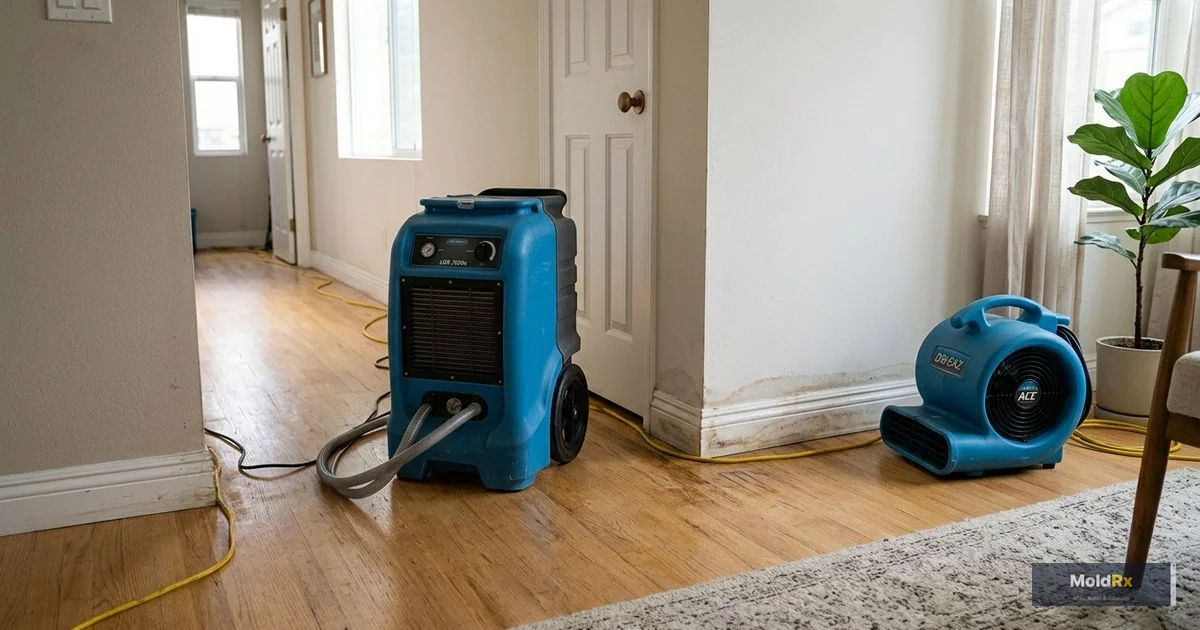
- Start drying immediately. Open windows if weather permits, run fans, deploy dehumidifiers. The goal is to dry affected materials within 24 to 48 hours.
- Document everything. Photos and video of all damage before cleanup begins — essential for insurance claims.
- Don't rip out materials yet. A professional restoration team needs to assess before demolition. Removing wet drywall before understanding the full scope can miss hidden damage.
- Call a professional if the affected area exceeds 10 square feet, water contacted electrical systems, the source was contaminated (sewage, floodwater), or you can't dry the area within 48 hours. Professional water damage restoration uses commercial-grade equipment that residential tools can't match.
Emergency Preparedness: What Every SoCal Homeowner Should Have Ready
Rainy season emergencies escalate quickly. Having essential items staged and accessible prevents scrambling during a crisis.
Water damage response supplies: Wet/dry shop vacuum, industrial fans (at least two), plastic sheeting and duct tape, five-gallon buckets, absorbent towels, flashlight and batteries, and a battery-powered weather radio.
Documentation and contacts: Insurance policy number and claims phone number written down (not just in your phone), pre-storm photos of every room for insurance documentation, your preferred restoration company's phone number vetted in advance, and the locations of your main water shutoff, gas shutoff, and electrical panel.
For homes in flood-risk or burn-scar areas: Pre-packed evacuation bags, important documents in a waterproof grab-and-go container, sandbags staged near vulnerable entry points, and familiarity with local evacuation routes and alert systems.
Hidden Water Leaks: The Storm Damage You Don't See
Not all storm damage is visible. Some of the most destructive water intrusion happens behind walls, under flooring, and in cavities you can't see. This hidden damage leads to mold, wood rot, and structural compromise.
Behind stucco walls. Rain drives water through cracks and failed sealant into the wall cavity. The exterior dries quickly, but framing and insulation inside stay wet for weeks — long enough for mold to establish.
Under flooring. Water entering through foundation-level gaps or slab seepage saturates the subfloor beneath your visible flooring. Carpet can feel dry on the surface while the pad beneath is soaked.
In the attic. A small roof leak can deposit water on attic insulation without any visible sign in the rooms below. By the time a ceiling stain appears, surrounding materials may have been wet for weeks.
Around windows. Water intrusion at window frames travels inside the wall cavity before showing any interior sign — down framing members, along the bottom plate, into adjacent materials. A leak at a second-floor window can cause damage at the first-floor baseboard.
If you suspect hidden moisture — a persistent musty smell, humidity that won't come down, paint bubbling, or baseboard warping — professional moisture detection using meters and thermal imaging can locate the problem without tearing out walls.
Rainy Season Water Damage: 10 FAQs
When is rainy season in Southern California?
November through March, with the heaviest rainfall typically occurring December through February. However, significant storms can occur outside this window — early-season atmospheric rivers in October and late-season events in April are not uncommon.
How much rain does it take to cause water damage to a home?
There's no universal threshold. A well-maintained home with proper drainage can handle intense storms without issue. A home with compromised roofing, failed caulk, poor grading, or clogged gutters can sustain water damage from a moderate rainfall event. Condition matters more than volume.
Should I worry about water damage if I've never had problems during past storms?
Yes. Building materials degrade, soil shifts, and upstream development changes drainage patterns. Atmospheric river events can also produce rainfall intensities well beyond what your home has previously experienced.
Does homeowner's insurance cover rain-related water damage?
Standard homeowner's insurance typically covers sudden and accidental water damage, including rain entering through storm-damaged roofing. It generally does not cover flooding (requires separate flood insurance), damage from deferred maintenance, or gradual intrusion. Review your policy before storm season.
How quickly does water damage become a mold problem?
Mold can begin growing on wet building materials within 24 to 48 hours under the right conditions — and SoCal's mild temperatures provide exactly those conditions. Materials that stay wet beyond 48 hours should be assumed to have mold risk. This is why rapid drying after any water event is critical.
My home was built in the 1980s with stucco. Is it at higher risk during rainy season?
Yes. Homes from the 1970s through 1990s frequently have stucco with inadequate drainage planes, compromised flashing, and building paper that has degraded over decades. These are among the most vulnerable to moisture intrusion during heavy rain. Pre-season inspection of stucco, window sealants, and roof flashing is especially important.
What's the difference between water damage and flood damage?
Water damage refers to water entering from above or from internal sources — roof leaks, burst pipes, appliance failures. Flood damage refers to water entering from ground level due to rising water. The distinction matters because remediation approaches differ and insurance coverage is typically separate.
Can I handle water damage cleanup myself?
Small, contained incidents on hard floors can often be managed with rapid drying. Professional water damage restoration is necessary when the affected area is large, water has reached wall cavities or subfloor areas, contaminated water is involved, or more than 48 hours have passed since the water event.
How do I know if my home is in a flood zone or burn scar area?
FEMA flood maps (msc.fema.gov) show designated flood zones. For burn scar risk, check your county's post-fire debris flow hazard maps published after significant wildfires. Foothill areas of Riverside County, San Bernardino County, and southern Orange County are most frequently affected.
What should I do if I find mold after a storm?
Do not disturb it — that releases spores and can spread contamination. Close off the area, run a dehumidifier, document with photos, and contact a professional. If the affected area exceeds 10 square feet, professional mold remediation is recommended.
Protect Your Home This Rainy Season
Southern California's rainy season is short, but the damage it causes lasts far longer than the storms. Deferred maintenance, ignored warning signs, and the assumption that "it doesn't rain much here" combine to turn manageable storms into expensive restoration projects. Every item on the checklists above costs less than the water damage it prevents.
If you're already dealing with water damage or have found signs of moisture or mold after a recent storm, the window for effective response is narrow. The longer water sits in building materials, the higher the likelihood of mold growth requiring professional remediation.
MoldRx provides professional water damage restoration and emergency services throughout Orange County, Riverside County, and San Bernardino County. We respond quickly, assess honestly, and focus on drying and restoring your home before secondary damage takes hold.
Call (888) 609-8907 or request a free estimate to get help now — or to schedule a pre-season assessment before the next storm hits.