Mold Removal in Riverside, CA — MoldRx
IICRC-Certified Mold Removal Professionals Serving Riverside and the Inland Empire
Riverside is the county seat of Riverside County — approximately 328,000 residents across 81.5 square miles at roughly 860 feet elevation. Incorporated in 1883 as the birthplace of the California citrus industry, the city retains one of the region's most diverse housing stocks: Victorian and Craftsman homes from the 1890s through 1920s in Downtown and the Wood Streets, massive midcentury tract development across Arlington, Victoria, and La Sierra, and newer master-planned communities in Orangecrest and Mission Grove. The median construction year across roughly 100,000 housing units is 1976 — half the city's homes approach 50 years old, and a significant share exceeds a century. The Santa Ana River bisects the city, Box Springs Mountains rise along the eastern boundary, Santa Ana winds accelerate through inland corridors, and summer temperatures exceed 100 degrees while HVAC systems cycle condensation through aging wall assemblies. MoldRx only sends vetted, IICRC-certified mold removal professionals who follow IICRC S520/R520 standards and EPA guidance (publication 402-K-01-001).
Request your free estimate — we'll assess your property and give you straight answers.
Why Mold Grows in Riverside Homes
Four persistent moisture pathways explain why mold recurs across every neighborhood and era of construction.
Inland Heat, HVAC Cycling, and Condensation
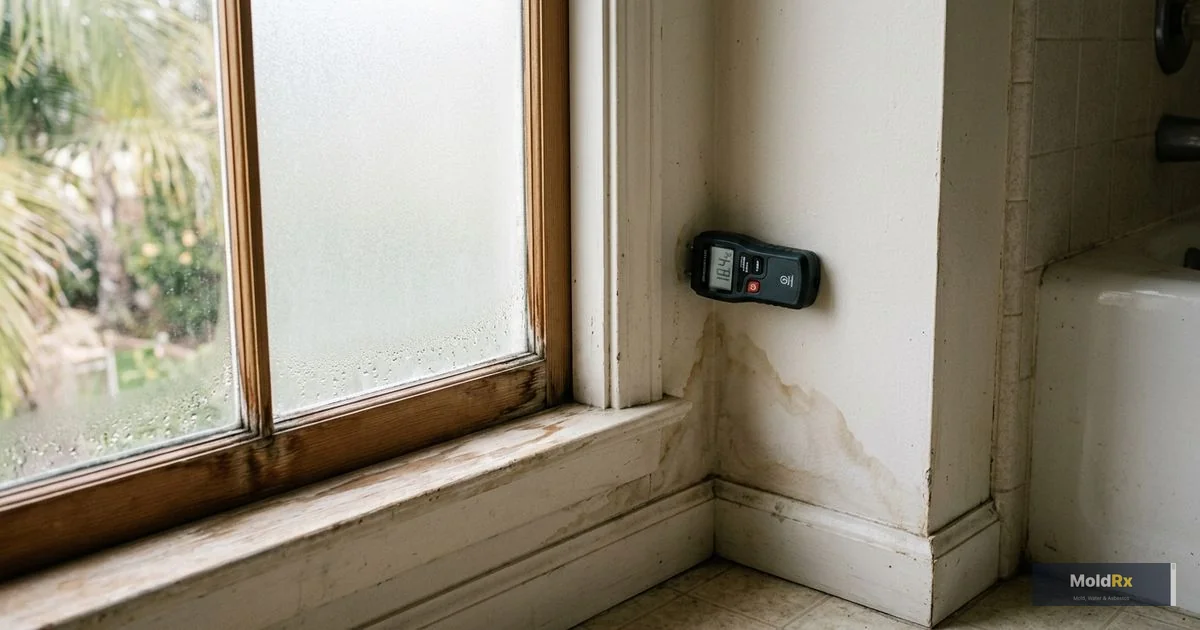
Summer highs regularly reach 94 to 103 degrees while winter lows drop into the low 40s. Humidity ranges from 46 percent in September to 60 percent in March, and day-to-night swings of 30 degrees create persistent condensation. When air conditioning drops interior temperatures well below outdoor conditions, moisture condenses on window frames, wall cavities, and supply-air plenums. In the city's enormous cohort of 1950s-1970s tract homes across Arlington, Victoria, and La Sierra, single-pane windows, aging HVAC, and minimal insulation create ideal condensation environments. The WHO Guidelines for Indoor Air Quality identify persistent condensation as a primary driver of indoor mold growth. Even in newer Orangecrest homes, poorly maintained HVAC creates humidity imbalances that feed mold in attics and behind bathroom walls.
Extremely Varied Housing Stock — 130+ Years of Concealed Moisture Pathways
The citrus boom produced Victorian, Queen Anne, and Craftsman homes — Heritage House (1891), the Wood Streets, and Victoria Avenue estates date to this period. Plaster-and-lath traps moisture differently than modern drywall, balloon framing allows moisture to migrate between floors, and century-old plumbing corrodes into slow concealed leaks. Roughly ten percent of homes predate 1950. The 1950s-1970s tract boom added tens of thousands of homes with slab foundations lacking vapor barriers and galvanized plumbing past service life. Every neighborhood presents different mold pathways — balloon-frame migration in a 1905 Victorian, slab wicking in a 1962 ranch, and stucco failure on a 1995 hillside home all require different approaches.
Santa Ana River Corridor and Canyon Drainage
The Santa Ana River cuts through Riverside's western neighborhoods. During the rainy season, the river corridor raises the water table, and alluvial soils channel subsurface moisture against foundations in La Sierra, Arlanza, and neighborhoods west of downtown. On the eastern side, Box Springs Mountains and Sycamore Canyon generate seasonal runoff draining through Canyon Crest and the UC Riverside area. Moisture wicks upward through older slabs without vapor barriers. Per IICRC S520 and EPA 402-K-01-001, mold colonizes damp materials within 24 to 48 hours — subsurface moisture feeds concealed mold for months.
Santa Ana Winds and Wind-Driven Rain
Santa Ana winds accelerate through the San Gorgonio and Cajon corridors at 40 to 60 mph. When winds coincide with winter storms, rain drives laterally into building envelopes through stucco cracks, around flashing, and into gaps in century-old siding. Exteriors dry within hours while water inside wall cavities remains. Wind-deposited particulate clogs weep screeds on stucco homes, trapping moisture inside wall assemblies. In Canyon Crest, the Box Springs foothills, and Arlington Heights, wind-driven rain intrusion is a recurring source of concealed mold.
Signs You Need Professional Mold Removal
These indicators warrant professional assessment in any Riverside home.
Visible Growth Beyond a Small Area
EPA publication 402-K-01-001 sets ten square feet as the professional remediation threshold. In Riverside, colonies commonly appear along slab-to-drywall transitions, inside bathroom cavities with original plumbing, at single-pane window frames in pre-war homes, behind deteriorating stucco, and along foundations in the river corridor. If growth exceeds a three-by-three-foot patch or appears in multiple rooms, professional containment is appropriate.
Persistent Musty Odor Without Visible Mold
A persistent musty smell without a visible source typically means concealed mold — inside wall cavities behind aging plumbing, within balloon-frame assemblies, behind cabinetry on exterior walls, or beneath flooring near the river corridor. If the odor intensifies when the HVAC cycles on, concealed mold is circulating through ductwork.
Recurring Mold After Previous Cleanup
If mold returns after cleaning, the moisture source persists — condensation on single-pane windows, corroded plumbing behind plaster, stucco cracks admitting wind-driven rain, canyon drainage saturating foothill foundations, or slab moisture wicking from the river corridor. Recurring mold requires professional moisture mapping and source correction.
Water Damage History
Per IICRC S520 and EPA guidance, mold colonizes damp materials within 24 to 48 hours. Properties that have experienced a plumbing leak, slab leak, rain intrusion, or water heater failure should be evaluated even if surfaces appear dry. Water inside wall cavities or beneath slabs feeds concealed mold for weeks.
Health Symptoms That Worsen Indoors
The CDC notes that mold exposure can cause nasal stuffiness, throat irritation, coughing, and wheezing. If symptoms improve when you leave and return when you come back, indoor mold is a reasonable possibility — especially in older homes where HVAC circulates spores from concealed colonies through every room.
Health Risks of Mold Exposure
Mold produces allergens, irritants, and in some species mycotoxins. The EPA, CDC, and WHO Guidelines for Indoor Air Quality document that prolonged exposure is associated with respiratory symptoms, allergic reactions, and asthma aggravation.
Populations at Higher Risk
Riverside has approximately 328,000 residents with a median age of 33.6 — a younger population driven by UC Riverside's 26,000 students and large family households.
- Children and infants — The WHO identifies children as a priority population. Riverside's family neighborhoods in Orangecrest, La Sierra, and Arlington have high concentrations of school-age children.
- Adults with asthma or respiratory conditions — The CDC reports that mold triggers asthma attacks. In older homes where HVAC circulates spores from concealed colonies, sensitive occupants face continuous exposure.
- Elderly residents — Original homeowners in Victoria, the Wood Streets, and Arlington have aged in place for decades with compounded exposure risk.
- Immunocompromised individuals — Chemotherapy patients, transplant recipients, and those with chronic immune conditions face elevated risk from species like Aspergillus.
Professional remediation returns indoor fungal ecology to normal background levels — what IICRC S520 defines as Condition 1.
When DIY Mold Removal Isn't Enough
The EPA allows homeowners to address small areas of mold. These situations exceed DIY methods:
- The affected area exceeds ten square feet — EPA 402-K-01-001 identifies this as the professional threshold.
- Mold is inside HVAC ductwork or the air handler — NADCA recommends professional cleaning when mold is confirmed in duct systems. In Riverside, contaminated ductwork distributes spores to every room.
- Growth has penetrated structural materials — Mold in wall framing, subfloor sheathing, or slab-to-wall transitions requires selective demolition and containment.
- The mold appears to be Stachybotrys (black mold) — IICRC S520 requires careful containment due to mycotoxin production.
- The water source is Category 2 or Category 3 — IICRC S500 classifies sewage or flood water as gray or black water, requiring biohazard protocols.
- Documentation is needed for insurance or real estate — DIY cleanup does not produce the reports and clearance testing that carriers and lenders require.
If any of these conditions apply, professional assessment is the practical next step. Request a free estimate — we will tell you what you actually need.
How We Remove Mold in Riverside Properties
Every project follows IICRC S520/R520 and Cal/OSHA Title 8 regulations — methodical, documented, designed to eliminate mold at the source.
1. Inspection and Moisture Mapping
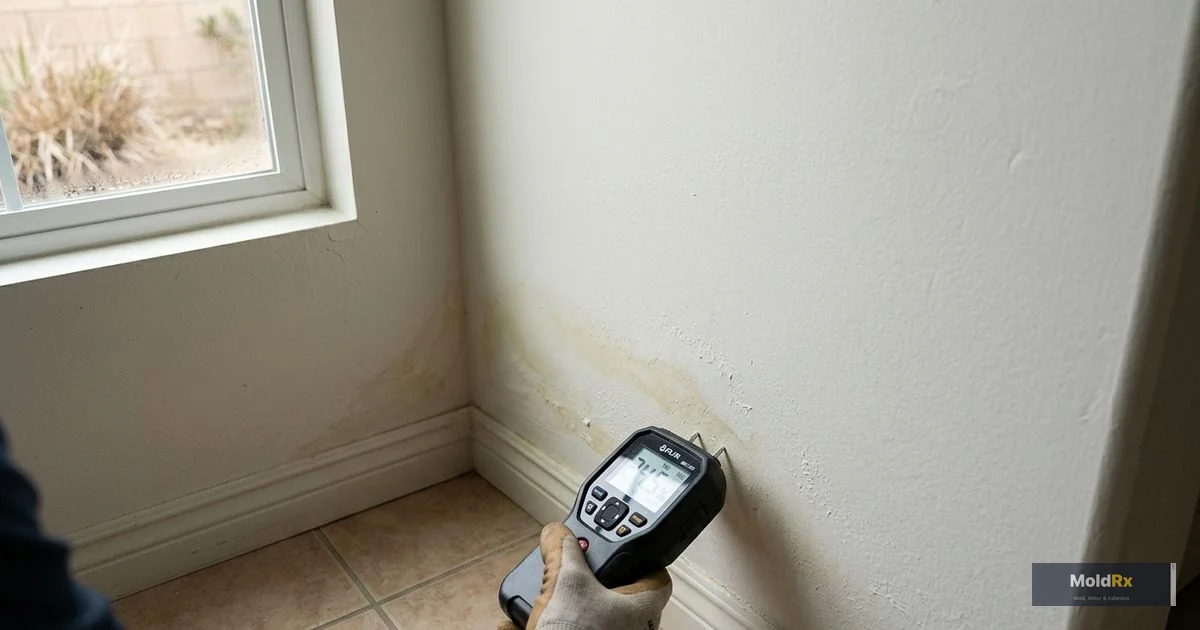
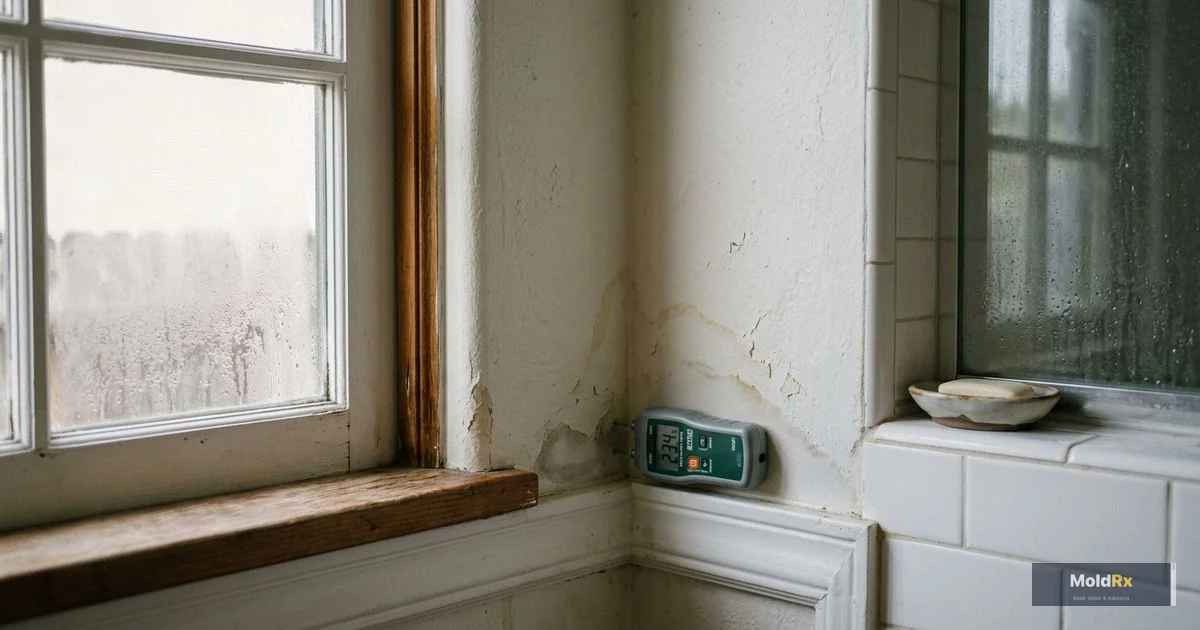
Infrared thermal imaging and calibrated moisture meters locate all affected areas — balloon-frame cavities in Victorian homes, slab-to-drywall transitions in midcentury tract homes, stucco failures in Canyon Crest, and river-corridor foundations in western neighborhoods. The assessment follows EPA 402-K-01-001 protocols, producing a moisture map and scope of work before any material is disturbed.
2. Containment
Affected areas are isolated using polyethylene sheeting and negative air pressure with HEPA filtration, following IICRC S520 Condition 2 and 3 classifications. The CDC and EPA advise keeping vulnerable occupants away from active remediation — the WHO Guidelines for Indoor Air Quality document elevated risks for children.
3. Removal and Treatment
Colonized porous materials are removed, double-bagged, and disposed of per IICRC S520 and Cal/OSHA Title 8 section 5155 standards. Salvageable surfaces are HEPA-vacuumed and treated with EPA-registered antimicrobials. Common Riverside locations: behind plaster in historic homes, along slab-to-drywall transitions, behind stucco with wind-driven rain intrusion, and inside HVAC plenums.
4. Moisture Correction
Mold removal without moisture correction is temporary. Correction targets the specific pathway: replacing corroded plumbing, sealing stucco and re-flashing windows, repairing canyon drainage, installing vapor barriers on older slabs, and upgrading bathroom exhaust to exterior termination.
5. Post-Remediation Verification
Verification confirms IICRC S520 Condition 1 — normal fungal ecology, no visible mold, no elevated spore counts. You receive complete documentation: photographs, moisture readings, clearance results, and moisture correction summary.
Mold Removal vs. Mold Remediation: What's the Difference?
Mold removal is the physical elimination of colonized materials — cutting out drywall, disposing of contaminated insulation, cleaning surfaces. Mold remediation is the full IICRC S520 process: assessment, containment, removal, moisture correction, drying, and verification to Condition 1.
Removal without remediation is incomplete. In Riverside, where river-corridor groundwater, 130 years of varied housing, Santa Ana winds, and summer HVAC cycling create persistent moisture, correction is the difference between a permanent fix and a recurring problem. MoldRx coordinates the complete IICRC S520 protocol from assessment through Condition 1 clearance.
Preventing Mold After Remediation
Tailored to Riverside's inland climate, diverse housing stock, and specific geographic moisture sources.
Address Aging Plumbing Before It Fails
Riverside's oldest homes have plumbing 90 to 130 years old. The midcentury stock across Arlington, Victoria, and La Sierra has galvanized plumbing 50 to 70 years old, well past service life. A pinhole leak behind a plaster wall or beneath a slab feeds mold for weeks before any sign appears. If your home has original plumbing, have it evaluated — proactive replacement eliminates the most common concealed moisture source.
Control Indoor Humidity and Condensation
Dramatic temperature swings create persistent condensation in homes with single-pane windows and aging HVAC. Run bathroom exhaust fans during showers and for 20 minutes afterward. Use kitchen range hoods when cooking. Maintain indoor humidity between 30 and 50 percent. Monitor with a hygrometer and respond when readings exceed 55 percent.
Maintain Your Building Envelope
Stucco degrades under UV, thermal cycling, and Santa Ana wind exposure. Inspect exterior walls annually for hairline cracks, failed caulk, and deteriorating flashing. Seal cracks before winter storms push water into wall cavities. In Canyon Crest and Box Springs foothill neighborhoods, inspect retaining walls and foundation waterproofing annually.
Address Water Intrusion Immediately
Mold colonization begins within 24 to 48 hours. Whether the source is a slab leak, rain through stucco, or canyon drainage saturating a foundation, dry affected materials immediately and call for professional assessment if materials cannot be dried within 24 hours.
Schedule Periodic Inspections
For properties with original plumbing, river-corridor lots, foothill homes near Box Springs, historic homes downtown, and any property with prior water intrusion, an annual moisture inspection is practical preventive care. Thermal imaging and moisture meters identify corroding plumbing and stucco penetration before mold establishes. Ideal timing is late fall — before winter rains.
What Sets MoldRx Apart
- Straight talk, not sales talk. We report what the inspection finds — including when the problem is smaller than you feared. No inflated scopes.
- Licensed, insured, IICRC-certified. Every professional holds active credentials verified through the CSLB (Contractors State License Board) with full liability and workers' compensation insurance for Riverside County work.
- Full documentation on every job. Inspection reports, moisture readings, clearance testing, photo documentation — a complete record for insurance and real estate purposes.
- Family-owned accountability. We only send vetted remediation professionals we stand behind. If something is not right, you call us directly.
Get your free estimate — no obligations, no pressure.
Riverside Neighborhoods We Serve
MoldRx provides mold removal across every Riverside neighborhood — ZIP codes 92501, 92503, 92504, 92505, 92506, 92507, 92508, and 92509 — including single-family homes, condos, townhomes, and commercial properties.
-
Downtown / Mission Inn District (92501) — The historic heart of Riverside, anchored by the landmark Mission Inn Hotel and the original Mile Square. Victorian, Queen Anne, and Italianate homes from the 1880s through 1910s stand alongside newer infill. Heritage Square — one of the city's earliest residential developments — is rich in Victorian architecture. Homes exceeding 100 years old mean balloon-frame construction, plaster-and-lath, original plumbing, and foundations without damp-proofing. Mold grows behind intact plaster for months — remediation requires professionals who understand historic construction and can preserve irreplaceable millwork.
-
Wood Streets (92506) — Originally orange groves until 1913, when a fill across the Tequesquite Arroyo connected Magnolia Avenue to downtown. Craftsman, Spanish Revival, and bungalow homes from the 1910s through 1940s line tree-named streets — Elm, Chestnut, Lime, Palm. Full range of pre-war vulnerabilities: plaster-and-lath, balloon framing, plumbing over a century old, and single-pane windows with persistent condensation. Mature landscaping concentrates irrigation near foundations, and concealed leaks behind plaster persist undetected for months.
-
Victoria (92506/92507) — Anchored by Victoria Avenue, a palm-lined boulevard developed in the late 1800s. Grand estates, 1950s-1970s ranch homes, and custom properties sit on generous lots. The mix of eras means different mold pathways on the same street: balloon-frame moisture migration in a turn-of-the-century estate next to slab moisture wicking in a 1965 ranch. Citrus-era irrigation infrastructure still underlies portions of the neighborhood, channeling subsurface water against foundations.
-
Arlington / Arlington Heights (92503/92504/92505) — Western Riverside, home to the California Citrus State Historic Park. Homes sit on large lots that were once citrus groves. Housing ranges from 1940s ranch homes to 1960s-1970s tract with galvanized plumbing, slab foundations without vapor barriers, and original HVAC. Proximity to the Santa Ana River corridor means elevated groundwater during wet seasons. Slab leaks are persistent here — slow, concealed leaks beneath foundations surface as mold on baseboards and carpet edges long after damage has spread.
-
Orangecrest / Mission Grove (92508) — Southeastern Riverside's master-planned communities, developed from the 1980s through 2000s. Newer construction means better envelopes, but hillside lots create drainage against downhill foundations, Box Springs Mountain generates seasonal runoff, and family homes carry high moisture loads. Poorly maintained HVAC in a climate demanding year-round operation creates condensation in attics and behind bathroom walls. Popular with young families — the WHO identifies children as a priority population for mold exposure.
-
Canyon Crest (92507) — Upper-elevation neighborhoods east of UC Riverside, climbing toward Box Springs Mountains and Sycamore Canyon Wilderness Park. Contemporary homes, estates, and townhomes from the 1960s through 2000s. Canyon proximity means direct exposure to seasonal runoff and saturated soil during prolonged storms. Santa Ana winds hit canyon-facing facades with particular intensity, driving rain into stucco cracks and around window flashing. Canyon-adjacent properties face persistent moisture challenges requiring professionals familiar with hillside drainage.
-
La Sierra (92505/92509) — Western Riverside along the Santa Ana River corridor. Housing ranges from midcentury properties to 1980s-1990s development and newer construction, with La Sierra University anchoring the south. River-corridor proximity means elevated groundwater and alluvial-soil moisture, while 1960s-1970s homes carry aging plumbing and slab vulnerabilities. Affordability has attracted young families and first-time buyers who frequently encounter deferred-maintenance mold in older homes.
Nearby Communities We Also Serve
Related Services in Riverside
→ All remediation services in Riverside
Frequently Asked Questions
How quickly does mold grow in Riverside's climate?
Mold colonizes damp materials within 24 to 48 hours. Riverside's dramatic temperature swings create condensation in older homes almost immediately after any moisture event. During the rainy season, the river corridor raises groundwater, canyon drainages channel runoff, and wind-driven rain penetrates building envelopes. In historic balloon-frame homes, moisture migrates between floors without visible evidence.
My home is a historic Victorian or Craftsman built before 1930. Does that make it more prone to mold?
Yes. Balloon-frame walls allow moisture to move between floors, plaster-and-lath traps moisture differently than modern drywall, original plumbing is 90 to 130 years old, and stone foundations lack damp-proofing. Heritage Square, the Wood Streets, and Victoria contain concentrations of these homes. Mold grows behind intact plaster for months before detection. Remediation requires professionals who understand historic construction — aggressive demolition that damages irreplaceable plaster or millwork is not appropriate.
Is mold risk different near the Santa Ana River compared to the foothills?
The risk is comparable but the pathways differ. Western neighborhoods — La Sierra, Arlanza, Arlington — face elevated groundwater and slab-leak vulnerabilities. Eastern neighborhoods near Box Springs and Sycamore Canyon face seasonal runoff and greater wind exposure. The historic core faces century-old construction vulnerabilities. All areas produce concealed mold — the remediation approach accounts for these differences.
How do the Santa Ana winds affect mold in Riverside?
Santa Ana winds funnel through the San Gorgonio and Cajon passes at 40 to 60 mph. When winds coincide with storms, rain drives laterally into building envelopes through stucco cracks, around window flashing, and into gaps in historic siding. Exteriors dry quickly while water inside wall cavities remains. Wind-deposited particulate clogs weep screeds on stucco homes, trapping moisture inside wall assemblies. Canyon Crest and Box Springs foothill neighborhoods face the most direct exposure.
Does Riverside's housing age really matter for mold risk?
Significantly. The median construction year is 1976, but the range spans 1880s to present. Ten percent of homes predate 1950 with balloon-frame and century-old plumbing vulnerabilities. The massive 1950s-1970s cohort has slab foundations and galvanized plumbing past service life. Even newer homes face stucco degradation and condensation issues. Every era has specific mold pathways — the inspection identifies which apply to your property.
Can mold in my home affect my family's health?
The EPA, CDC, and WHO document that prolonged exposure is associated with respiratory symptoms, allergic reactions, and asthma aggravation. The WHO identifies children as a priority population. Prompt remediation is important when mold is suspected, especially in bedrooms. If symptoms improve when household members leave the home, indoor mold should be investigated.
Should I test for mold before selling my Riverside home?
Not legally required in California, but increasingly common in Riverside County transactions — especially for older housing. With a median construction year of 1976 and significant pre-1940 inventory, buyers are attuned to moisture concerns. A pre-listing clearance report demonstrating IICRC S520 Condition 1 eliminates a negotiation point. Addressing issues before listing is less disruptive than negotiating remediation mid-escrow.
Do I need to leave my home during mold removal?
For most projects with proper containment, occupants can stay in unaffected areas. If contamination involves the HVAC system or spans multiple rooms, or if household members include young children or individuals with respiratory conditions, we may recommend temporary relocation during intensive phases.
How do I prevent mold from returning after remediation?
Address the moisture source permanently. Replace corroded plumbing in pre-1980s homes. Ensure bathroom exhaust terminates at the exterior and run fans 20 minutes after every shower. Maintain indoor humidity between 30 and 50 percent. Inspect stucco and siding annually and seal cracks before winter rains. In foothill areas, maintain drainage channels and foundation waterproofing. In river-corridor neighborhoods, monitor for slab moisture. Schedule annual moisture inspections for homes with original plumbing or prior water intrusion.
Does MoldRx provide emergency mold removal in Riverside?
Yes. Mold colonization begins within 24 to 48 hours, and delay allows contamination to spread through wall cavities and ductwork. Call (888) 609-8907 — we coordinate prompt assessment and containment.
Get Mold Removal in Riverside
MoldRx only sends vetted, IICRC-certified remediation professionals who know Riverside's inland climate, river corridor, Box Springs drainage, Santa Ana wind exposure, and the full range of housing from Victorian landmarks to master-planned communities.
Call (888) 609-8907 or request your free estimate online — clear answers, honest guidance, work done right.