Most mold behind walls never announces itself with a dramatic black patch you can point at. Instead, it sends quieter signals — a smell you can't trace, paint that won't stay flat, allergy symptoms that have no obvious cause, stains that keep reappearing after you clean them, or a wall that was wet six months ago and never quite felt right since. These are the five most common signs of hidden mold behind walls, and any one of them is worth investigating before the problem gets worse.
The mold is literally on the side of the wall you can't see — feeding on the paper facing of drywall, on wood framing, on insulation — growing for weeks or months before it produces any outward sign. By the time you notice something, the colony has often been established for a long time. This guide covers every warning sign in detail, explains where mold is most likely to hide, and walks through what to do if you suspect a hidden mold problem.
Visual Signs: What Hidden Mold Looks Like from the Outside
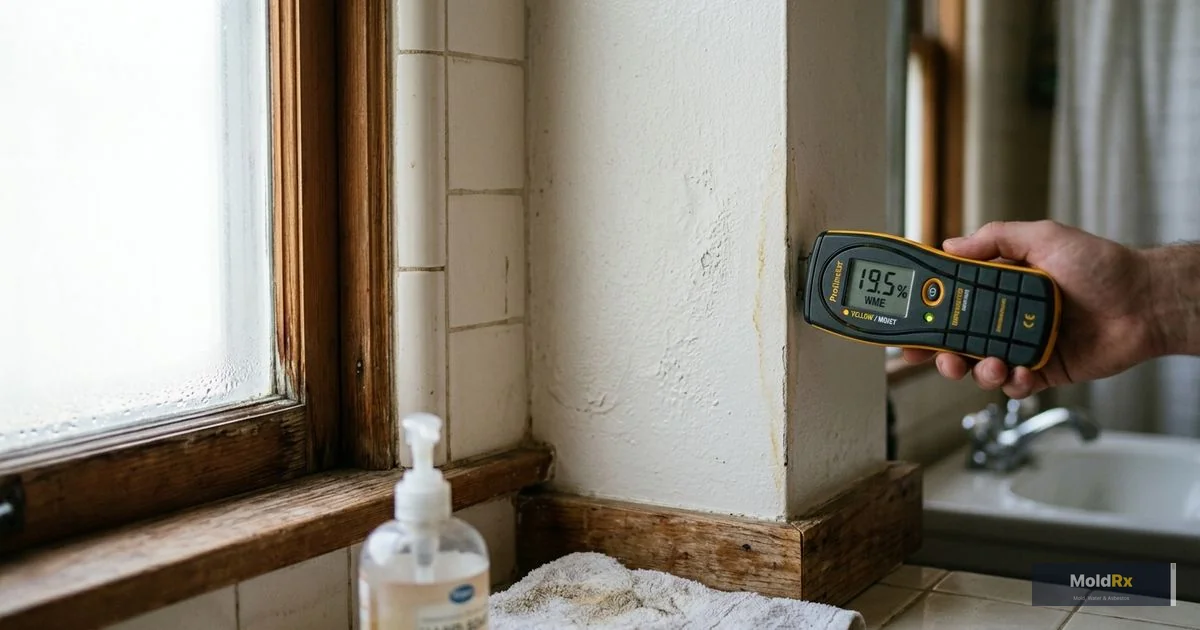
Mold behind drywall can't be seen directly, but it often changes the appearance of the wall surface in front of it. These visual clues are your wall telling you something is wrong on the other side.
Paint Bubbling or Peeling
When moisture accumulates behind a painted wall — from a slow leak, condensation, or rising damp — it disrupts the bond between paint and surface. The result is paint that bubbles, blisters, or peels. The moisture migrating through the wall and causing your paint to fail is the same moisture feeding mold growth on the back side of that drywall.
Not every paint bubble means mold. A single blister from a bad paint job is different from a pattern of bubbling concentrated in one area — especially near a bathroom, kitchen, exterior wall, or below a window. If the bubbling is localized and you can identify a potential moisture source behind that section of wall, mold is a reasonable concern.
Discoloration and Staining
Dark spots or yellowish-brown stains on walls or ceilings — especially ones that bleed through fresh paint — often indicate moisture and biological growth behind the surface. Pay particular attention to stains that appear in the same location repeatedly after cleaning, that grow or change shape over time, that concentrate near plumbing fixtures or exterior walls, or that have irregular, organic-looking edges.
Water stains alone don't confirm mold. But if moisture reached the visible side of the wall, it's been on the hidden side longer — where conditions for mold growth are far more favorable.
Warping, Buckling, or Soft Spots
Drywall absorbing moisture from behind will eventually change shape — bowing outward, feeling soft or spongy when pressed, or developing a different texture compared to surrounding areas. Baseboards may pull away from the wall or warp along their length.
These are signs of sustained moisture saturation, not a quick splash that dried. Drywall in this condition has almost certainly been colonized by mold on its concealed side — the paper facing is one of mold's preferred food sources, and it's been sitting wet for an extended period.
Wallpaper Lifting or Bubbling
Similar to paint failure, wallpaper that peels at its edges, develops bubbles, or shows moisture marks underneath is responding to moisture migrating through the wall from behind. Wallpaper can actually make hidden mold problems worse by trapping moisture against the wall surface — creating a warm, damp, dark environment between the wallpaper adhesive and the drywall that's ideal for mold growth.
Smell Signs: The Musty Odor You Can't Find
A persistent musty, earthy, or damp smell is one of the earliest and most reliable indicators of hidden mold. Many people notice the smell before any visual sign appears — and many describe it as the thing that finally made them investigate.
What Hidden Mold Smells Like
Mold produces microbial volatile organic compounds (MVOCs) as metabolic byproducts. These create a characteristic odor described as musty (like an old book or clothes left in the washer), earthy (like wet soil or decaying leaves), or stale (a persistent dampness that ventilation won't clear). If you walk into a room and think "something smells off," MVOCs from mold are a likely cause.
The significance of a musty odor is that it means mold is actively growing — not dormant, not dead, but actively consuming material and producing spores. The smell often fluctuates: stronger on humid days, after rain, or when HVAC systems push air through affected wall cavities. If the odor comes and goes but keeps returning, the mold is still there.
Locating the Source
If the smell is strongest in a specific room or near a particular wall, that's your starting point. Pay attention to whether the odor intensifies when you're near:
- Bathroom walls (especially shared walls with showers or tubs)
- Kitchen walls behind or beside the sink and dishwasher
- Walls beneath windows
- Exterior walls
- Walls adjacent to the garage or an unheated space
A musty smell you can't trace to a visible source is one of the strongest reasons to have a professional moisture assessment done. Learn more about how professionals detect hidden mold behind walls and under floors.
Health Signs: When Your Body Tells You First
Sometimes the first sign of hidden mold isn't something you see or smell — it's something you feel. Mold exposure can produce a range of health symptoms, and when those symptoms correlate with time spent in a particular building, hidden mold should be on the list of possible causes.
Respiratory Symptoms
When a colony grows behind a wall, spores escape into living spaces through gaps around electrical outlets, along baseboards, through HVAC returns, and through the drywall itself. Common respiratory responses include persistent coughing or throat irritation, nasal congestion that lingers for weeks, wheezing or shortness of breath, and worsening of existing asthma.
Allergic Reactions
Mold is a common allergen. Elevated spore levels can trigger itchy or watery eyes, runny nose, frequent sneezing, skin irritation, and headaches that recur in the same area of the home.
The Key Pattern: Symptoms That Improve Away from Home
The most telling indicator is a pattern where symptoms improve significantly when you leave the building and return when you come back. If your congestion clears up during a weekend trip and comes back within a day of returning home, if your headaches happen at home but not at work, if your child's asthma is worse in their bedroom than anywhere else — these patterns point toward an indoor environmental issue.
This doesn't mean mold is the only explanation. But when these symptoms appear alongside other signs in this article — a musty smell, a moisture history, visual wall changes — hidden mold becomes a strong possibility. Mold testing can determine whether indoor spore levels are elevated, providing objective data about whether mold exposure is a factor.
Moisture History Signs: Past Events That Predict Current Mold
Mold doesn't appear spontaneously. It needs moisture, organic material, and time. If your property has a moisture history, you have a mold risk — whether or not you can see anything today.
Past Water Damage
Any previous water event that wasn't completely dried within 24 to 48 hours created conditions for mold growth: burst pipes or plumbing leaks where surrounding materials weren't dried before closing up the wall, roof leaks where water traveled along framing far from the visible ceiling stain, appliance failures that wet materials behind or beneath the unit, and flooding from any source that touched wall materials.
How fast does mold grow after water damage? Spores can begin colonizing damp materials within 24 to 48 hours. If water sat on building materials for more than two days — and especially if the hidden side of walls was never confirmed dry — mold growth is probable, not just possible.
Slow Leaks and Chronic Moisture
Slow leaks are actually more likely to cause hidden mold than sudden floods because they provide a continuous moisture source over weeks or months. Signs include an unexplained increase in your water bill, the sound of water running when all fixtures are off, warm spots on the floor, condensation on pipes or inside cabinets, and aging appliances (water heaters, washing machines, dishwashers over 10 years old).
Condensation Issues
Chronic condensation on windows, exterior walls, or cold water pipes is a moisture source that's easy to overlook. The resulting moisture soaks into drywall, framing, and insulation over time. Homes with poor ventilation, inadequate insulation, or high indoor humidity are particularly susceptible.
Where Mold Hides Behind Walls: The Most Common Locations
Mold can grow behind any wall that gets wet. But certain locations are far more common than others because of their proximity to water sources, temperature differentials, or structural vulnerabilities.
Bathroom Walls
Bathrooms are the number one location for hidden mold behind walls. Daily moisture from showers, steam, and plumbing creates persistent humidity that penetrates wall materials over time. The most common spots: the wall behind the shower or tub (especially where caulk or grout has cracked), walls shared with the bathroom on the other side (hallway, closet, or bedroom walls often show signs first), and around the toilet base where a compromised wax ring leaks water with every flush.
If visual or smell signs concentrate near a bathroom, that wall should be your primary suspect. Learn more: Mold in the Bathroom: When to Worry and When to Act.
Kitchen Walls
Kitchens concentrate multiple water sources in a small area. The wall behind the kitchen sink is the most common kitchen location — supply lines, drain connections, and garbage disposals all create leak potential. Behind the dishwasher, supply and drain lines can develop slow leaks that wet the wall for months unnoticed. Behind the refrigerator, ice maker supply lines are a frequent culprit because nobody moves the fridge to check.
Exterior Walls
Exterior walls face rain, wind-driven moisture, temperature differentials, and flashing failures that interior walls don't. The most common locations: below windows (failed flashing or deteriorated caulk lets rain into the wall cavity — one of the most common sources of hidden mold in Southern California homes), at roof-to-wall transitions where flashing failures allow water intrusion, and at or near grade level where moisture wicks up from the ground into the bottom of wall cavities.
Basement and Crawl Space Walls
Even in Southern California, where basements are less common, crawl spaces under raised foundations are a frequent source of hidden mold. Foundation walls allow moisture to wick through, and the high humidity in these enclosed spaces creates ideal conditions for mold on framing and floor sheathing.
Around HVAC Penetrations and Ductwork
Where ductwork passes through walls, the temperature differential between conditioned air and the wall cavity creates condensation on duct surfaces and surrounding materials — particularly common with poorly insulated ducts in exterior walls or walls adjacent to attics and garages.
What to Do If You Suspect Mold Behind Your Walls
If you've identified one or more of the signs described above, here's a practical approach — what to do, in what order, and what to avoid.
Don't Start Tearing Out Walls
Do not open walls yourself to check for mold. Cutting into drywall without containment releases spores into your living space, turning a contained problem into whole-house contamination. Professional mold remediation uses sealed containment barriers and HEPA-filtered negative air pressure specifically to prevent this.
Document What You're Seeing
Before calling anyone, note which signs are present, where they're concentrated, when you first noticed them, and any known water events in the property's history. This helps a professional focus their assessment on the right areas.
Get a Professional Moisture Assessment
A moisture assessment using professional-grade meters and thermal imaging can determine whether elevated moisture exists behind walls — without opening them. If moisture is found, it strongly supports the suspicion of hidden mold and defines which areas need further investigation.
Consider Mold Testing
Do I need a mold test? Air sampling can detect elevated spore levels even when mold isn't visible. If indoor counts are significantly higher than outdoor levels, mold is actively growing somewhere in the building. Testing is particularly valuable when you have symptoms or smell but no visual confirmation.
Understand What Comes Next
If assessment and testing confirm hidden mold, the next step is professional remediation — containment, removal of affected materials, moisture source correction, and clearance testing. The scope depends on how far the mold has spread, which is why early detection keeps projects smaller. Understanding what happens during mold remediation can help you know what to expect, and our guide on how to choose a mold remediation company covers the certifications and red flags that matter.
Signs of Mold Behind Walls: 10 FAQs
Can mold grow behind walls without any visible signs?
Yes. Mold can grow for weeks or months inside a wall cavity without producing any visible change on the room-facing surface. It feeds on the back side of drywall, on framing, and on insulation in the dark, humid wall cavity. Eventually it may produce outward signs — smell, staining, paint failure — but there's often a significant delay between when mold establishes and when you notice anything.
What does mold behind drywall smell like?
A musty, earthy, damp odor — often described as an old basement, wet cardboard, or damp earth. The smell is caused by microbial volatile organic compounds (MVOCs) and may intensify during humid weather, after rain, or when the HVAC system runs. A musty smell concentrated near a specific wall is a strong indicator of hidden mold.
Can mold behind walls make you sick?
Yes. Wall cavities are not sealed from living spaces — spores travel through gaps around outlets, along baseboards, through HVAC returns, and through porous drywall. Prolonged exposure can cause respiratory symptoms, allergic reactions, headaches, and fatigue. People with asthma, allergies, or compromised immune systems are more susceptible.
How do I know if mold is behind my walls versus on the surface?
Surface mold is visible on the face of the wall. Mold behind walls reveals itself through indirect signs: a musty smell with no visible source, paint bubbling or staining in one area, health symptoms that improve when you leave, and a moisture history in that location. If you see mold on the wall surface, there's often more behind it.
Does paint bubbling always mean mold?
Not always. Paint can bubble from poor preparation, incompatible layers, or a single moisture event that dried. But paint bubbling combined with a musty smell, localized near a water source, or recurring after repainting is a strong indicator of ongoing moisture behind the wall — and where there's sustained moisture behind drywall, mold growth is likely.
Should I buy a home mold test kit?
Home test kits have significant limitations. Settle plates only capture spores that happen to land during the exposure period, and results are heavily influenced by air currents. A professional mold test uses calibrated sampling equipment and provides standardized, comparable results that actually tell you something useful.
How quickly should I act if I notice signs of hidden mold?
As soon as reasonably possible. Mold continues to grow as long as moisture is present — a colony behind one wall section today can spread to adjacent cavities over weeks. Early action means a smaller remediation scope. That said, hidden mold that's been growing for months won't dramatically worsen in a few days. Don't panic, but don't put it off.
Can I use bleach to kill mold behind walls?
No. Bleach doesn't penetrate porous materials like drywall — the water in the solution actually feeds mold roots while the bleach stays on the surface. More importantly, disturbing mold behind a wall without containment releases spores into your living space. Hidden mold requires professional remediation with containment, material removal, and HEPA filtration. Understanding the difference between black mold and regular mold can also help you assess your situation.
Does homeowner's insurance cover mold behind walls?
It depends on the cause. Mold from a sudden, accidental event — burst pipe, failed appliance, storm damage — is typically covered. Mold from gradual conditions like poor ventilation or deferred maintenance is usually excluded. If you discover hidden mold, document everything before disturbing it: photos, dates, any connection to a covered water event.
What's the difference between mold and mildew on walls?
Mildew is surface-level growth — the flat, powdery stuff on shower tile or bathroom ceilings that can usually be cleaned off. Mold behind walls has colonized into the building material itself, with root structures penetrating the drywall or wood, and requires physical removal of affected material. Our guide on mold in the bathroom helps distinguish between what you can handle yourself and what needs professional attention.
Next Steps
Hidden mold behind walls is a problem that gets worse with time, not better. The signs described in this article — visual changes, musty odors, health symptoms, and moisture history — are your early warning system. Paying attention to them and acting on them is the most effective way to catch a hidden mold problem while it's still contained and manageable.
If you've noticed one or more of these signs in your home, MoldRx can help you understand what you're dealing with. We coordinate professional mold testing and remediation services throughout Orange County, Riverside County, and San Bernardino County — and we'll give you honest guidance about whether professional assessment is warranted for your situation.
Call (888) 609-8907 to talk through what you're seeing, or request a free estimate online.