A slab leak is a water leak in the plumbing lines that run beneath or within your home's concrete foundation. In Southern California, where the vast majority of homes are built on concrete slab foundations, these leaks are one of the most common — and most damaging — plumbing failures homeowners face.
The problem with slab leaks is that you can't see them. Water escapes underground, saturating soil, wicking into concrete, and migrating upward into flooring and walls — often for weeks or months before anything visible tells you something is wrong. By the time you notice a warm spot on the floor, a spike in your water bill, or the sound of water running when nothing is on, the leak may have already caused significant damage beneath your home.
Understanding what causes slab leaks, how to recognize warning signs, and what to do when you suspect one can save you from the cascading damage — foundation problems, mold growth, structural deterioration — that turns a plumbing repair into a major restoration project.
Why Southern California Homes Are Especially Vulnerable
Slab leaks happen everywhere, but several factors make them significantly more common in this region.
Slab-on-Grade Construction Is the Norm
Most homes in Orange County, Riverside County, and San Bernardino County are built on slab-on-grade foundations — the concrete slab sits directly on the ground with no basement or crawl space underneath. Plumbing supply and drain lines are embedded in or run directly beneath this slab. In regions where basements or crawl spaces are common, a leaking pipe is often visible or at least accessible. In Southern California, the same leak is buried under several inches of concrete, making it invisible until secondary symptoms appear. This is why slab leaks here tend to cause more damage before detection.
Hard Water Corrodes Copper Pipes
Southern California's water supply is notoriously hard — high in dissolved minerals, particularly calcium and magnesium. Over time, hard water causes pinhole corrosion in copper pipes, the standard material in homes built from the 1960s through the early 2000s across the region.
Pinhole leaks start microscopic and grow gradually. Once corrosion reaches a critical point, multiple leaks can develop within months — which is why it's common for a home to have one slab leak repaired, then develop another shortly after. Inland areas like Riverside, Corona, Temecula, and Murrieta tend to have harder water than coastal communities, making pinhole corrosion an even greater concern.
Expansive Soils Shift and Stress Pipes
Much of Southern California sits on expansive clay soils that swell when wet and shrink when dry. The seasonal cycle of rain followed by extended dry periods causes the soil beneath your slab to expand and contract repeatedly, creating stress on the pipes running through and beneath the slab. Over years, repeated micro-movements fatigue pipe joints and connections. Combined with hard-water corrosion, soil movement accelerates pipe failure. Homes on hillsides or reactive soils — common in parts of San Bernardino County, the Inland Empire foothills, and portions of south Orange County — face elevated risk.
Seismic Activity Compounds the Problem
Even minor earthquakes that cause no visible damage to your home can shift the soil beneath your foundation enough to stress aging plumbing. Southern California experiences thousands of small seismic events annually, each contributing incrementally to pipe fatigue. Combined with corrosion and soil movement, pipes under SoCal slabs are under more stress than pipes in most other regions.
Signs of a Slab Leak
Slab leaks reveal themselves through subtle symptoms that are easy to dismiss individually but should raise concern when you notice more than one.
Hot Spots on the Floor
If you notice a warm or hot area on your floor — particularly on tile or concrete — and there's no obvious heat source beneath it, you may have a hot water line leak under the slab. Hot water leaking from a pressurized supply line heats the concrete above it, creating a noticeable warm spot you can feel through the flooring. This is one of the most distinctive slab leak indicators.
The Sound of Running Water When Nothing Is On
Turn off every faucet, appliance, and fixture in your home and listen. If you hear water flowing, trickling, or hissing beneath the floor or inside walls — and nothing is using water — you likely have a pressurized supply line leak. This sound is often most noticeable at night when ambient noise is low.
Unexplained Water Bill Increase
A sudden or gradual increase in your water bill without a corresponding change in usage is one of the earliest indicators of a slab leak. Even a small leak under constant pressure can waste hundreds of gallons per day. Compare your current bill to the same billing period in previous years. A significant increase that continues climbing month over month should prompt investigation.
Damp Carpet, Warped Flooring, or Wet Baseboards
Water from a slab leak migrates upward through the concrete into whatever materials sit above it. You may notice carpet that feels damp for no apparent reason, hardwood or laminate flooring that is cupping or buckling, or baseboards swelling and pulling away from the wall. These symptoms often appear in areas nowhere near a visible plumbing fixture — which is what distinguishes them from a typical fixture leak.
Foundation Cracks
Hairline cracks in a slab foundation are normal in Southern California, but new cracks that appear suddenly, existing cracks that widen, or cracks accompanied by other symptoms on this list may indicate a slab leak. Water escaping under the foundation erodes the supporting soil, causing uneven settling that stresses the concrete.
Musty Odors With No Visible Source
A persistent damp or musty smell — especially in ground-level rooms where there's no obvious moisture source — often indicates hidden water and early mold growth. Slab leaks create constant moisture conditions beneath flooring materials that are ideal for mold colonization.
Low Water Pressure
If water is escaping from a supply line under your slab, less water reaches your fixtures. A noticeable decrease in water pressure — particularly across multiple fixtures rather than just one — can indicate a significant supply-line leak under the foundation.
Mold or Mildew on Walls and Baseboards
Visible mold growth along baseboards, on lower portions of walls, or around flooring edges in areas that shouldn't be getting wet is a late-stage indicator. By the time mold is visible, the underlying leak has typically been active for weeks or longer.
What Happens If a Slab Leak Is Ignored
Slab leaks don't resolve on their own, and the damage accelerates over time.
Water Damage to Flooring and Interior Materials
Moisture migrates upward through the concrete into your home's interior materials. Carpet padding saturates. Hardwood warps. Tile grout deteriorates. The damage grows because water under a slab doesn't stay put — it travels laterally and can surface far from the actual leak location. Professional water damage restoration becomes necessary.
Mold Growth Under and Around the Slab
This is where slab leaks become a health concern. Mold can begin colonizing within 24 to 48 hours of sustained moisture exposure, and a slab leak provides exactly the kind of constant moisture that allows colonies to become established and spread — in and beneath flooring materials, along the base of walls, inside wall cavities, and in carpet padding.
Because the moisture source is hidden, the mold growth is often hidden too — until it produces visible colonies or noticeable odors. Learn about how professionals detect hidden mold behind walls and under floors. By the time a slab-leak-related mold problem is discovered, mold remediation is almost always necessary in addition to the plumbing repair and water damage restoration.
Foundation and Structural Damage
Sustained water flow under a slab erodes the supporting soil, causing differential settlement — some areas sink while others remain stable. This leads to doors and windows that stick, cracks in walls and ceilings, and structural damage requiring foundation repair. Fixing the plumbing alone doesn't reverse the soil erosion or settlement that has already occurred.
Increasing Utility Costs
A slab leak in a hot water line means your water heater is working continuously to replace the hot water being lost underground. You're paying for the water being wasted and the energy to heat it. Homeowners with undetected hot water slab leaks commonly report both water and gas or electric bill increases.
How Slab Leaks Are Detected
Modern slab leak detection uses non-invasive technology to locate leaks without tearing up your floor.
Electronic Leak Detection
Specialized acoustic equipment amplifies the sound of water escaping from pressurized pipes. A trained technician listens through the slab, identifying the leak's location based on the sound profile of pressurized water hitting soil or concrete. This is the most common primary detection method.
Thermal Imaging
Infrared cameras detect temperature variations across your floor surface. A hot water slab leak creates a thermal signature visible on the camera even through tile, hardwood, or carpet — often pinpointing the general area quickly.
Pressure Testing
A plumber isolates sections of your plumbing system and pressurizes them individually. A section that loses pressure has a leak. This method doesn't pinpoint the exact location but confirms which line is leaking and narrows the search area.
Moisture Mapping
Professional-grade moisture meters measure moisture content in flooring, walls, and other materials to map the extent of water migration. This is critical not just for finding the leak but for understanding how far the resulting water damage extends — essential for determining the scope of restoration work needed.
The Repair and Restoration Process
Addressing a slab leak involves two phases: repairing the plumbing and restoring the damage the leak caused.
Plumbing Repair Options
The plumbing repair is handled by a licensed plumber and typically involves one of three approaches:
Spot repair: The plumber accesses the specific section of pipe through the slab, removes the damaged section, and replaces it. This is the least invasive option when the leak is isolated and the rest of the piping system is in reasonable condition.
Reroute (repipe): Instead of repairing the pipe under the slab, the plumber runs a new water line through the walls and ceiling to bypass the slab entirely. This is often recommended when the piping has deteriorated to the point where additional leaks are likely — common in older SoCal homes with original copper piping.
Epoxy lining: A resin coating is applied to the interior of the existing pipe to seal leaks and prevent further corrosion. Less common and not suitable for all situations, but effective for pipes with early-stage pinhole corrosion.
The right approach depends on the pipe's overall condition, the leak's location, and whether the plumbing system is near the end of its useful life.
Water Damage Restoration
Once the leak is repaired, the damage it caused still needs to be addressed. Water saturating your slab and building materials doesn't dry on its own, and the first 24 hours after water damage are critical for limiting secondary damage.
Professional water damage restoration for a slab leak typically involves:
- Assessment and moisture mapping — Identifying every affected area, including areas with no visible damage
- Removal of damaged materials — Saturated carpet, padding, flooring, and compromised drywall may need to be removed to access the structure beneath
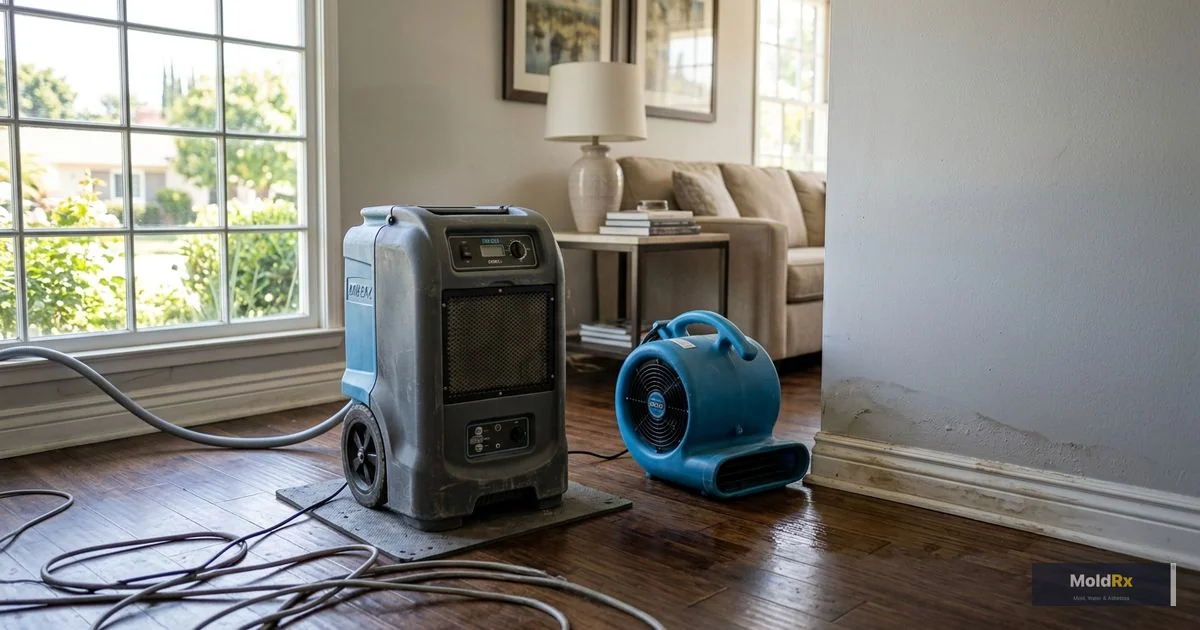
- Structural drying — Industrial dehumidifiers and air movers dry the slab, subfloor materials, and lower wall sections until target dryness is verified
- Antimicrobial treatment — Surfaces exposed to sustained moisture are treated to prevent mold colonization
- Documentation — Moisture readings, drying logs, and photos are recorded for your records and insurance purposes
Mold Assessment and Remediation
If the slab leak has been active for more than a day or two, mold assessment should be part of the process. Mold testing can determine whether mold is present in affected materials, and if mold remediation is needed, it should be completed after the source is repaired and before reconstruction begins. Treating water damage without evaluating for mold leaves you at risk of rebuilding over an active mold problem that will resurface weeks or months later.
The Connection Between Slab Leaks and Mold
Slab leaks are among the most common causes of hidden mold growth in Southern California homes. Mold needs moisture, organic material, and time. A slab leak provides persistent moisture. Carpet padding, hardwood flooring, drywall, and tack strips provide organic material. And because slab leaks typically go undetected for weeks or months, there is more than enough time for mold to become established.
What makes slab-leak mold particularly problematic is its location. Mold growing beneath flooring, at the base of walls, and in lower wall cavities is invisible until it produces a noticeable odor or shows through surface materials. By that point, the affected area is usually larger than homeowners expect.
If you've had a slab leak repaired but didn't have the water damage professionally dried and assessed, it's worth having the area evaluated — even months later. Mold that established during the active leak continues to grow as long as residual moisture remains.
Slab Leak FAQs
How do I know if I have a slab leak or a different type of leak?
Slab leak symptoms originate from ground level — warm spots on the floor, damp carpet with no overhead source, water at the base of walls, and the sound of water beneath the floor. If signs come from above (ceiling stains, dripping) or from a specific fixture, the leak is likely somewhere else. A water meter test can confirm whether your supply-side plumbing has an active leak.
Are slab leaks covered by homeowner's insurance?
Most homeowner's insurance policies in California cover the resulting damage from a slab leak (water damage to flooring, walls, and contents) but do not cover the plumbing repair itself. Coverage depends on whether the damage is from a sudden event or gradual deterioration. Contact your insurance carrier to confirm your specific policy terms. Professional documentation — moisture readings, photos, drying logs — supports your claim.
How common are slab leaks in Southern California?
Very common. The combination of slab-on-grade construction, hard water, copper piping, expansive soils, and seismic activity makes this one of the highest-frequency regions for slab leaks in the country. Restoration companies in Orange County, Riverside County, and San Bernardino County deal with slab leaks daily.
Can I prevent slab leaks?
You can reduce risk but not eliminate it. Water softener systems reduce corrosion-causing mineral content. Pressure regulation (high pressure accelerates pipe wear) helps extend pipe life. Monitoring your water bill catches leaks early. If your home has original copper piping and is more than 30 years old, a plumber can assess whether a proactive repipe makes sense before leaks start.
How long can a slab leak go undetected?
Weeks, months, or even years. Pinhole leaks start extremely small and grow gradually, producing damage so slowly that signs build imperceptibly. Many slab leaks are discovered only when damage reaches a critical threshold — a water bill spike, visible mold, flooring failure, or a foundation crack.
What does slab leak repair typically involve?
The plumber locates the leak using electronic detection equipment, then determines the best repair approach — spot repair through the slab, rerouting the line through walls and ceiling, or in some cases epoxy lining. The method depends on the pipe's overall condition, location, and accessibility. After the plumbing is repaired, any water damage needs to be addressed separately through professional restoration.
Should I worry about slab leaks in a newer home?
Newer homes (built after roughly 2000-2005) increasingly use PEX or CPVC piping instead of copper, which resists pinhole corrosion. However, newer homes are not immune — soil movement, improper installation, and mechanical damage during construction can still cause slab leaks. Homes on expansive soils or in seismically active areas still carry meaningful risk.
How much water can a slab leak waste?
A pressurized supply line leak can waste anywhere from a few gallons to hundreds of gallons per day. Even small leaks under constant pressure are continuous — they don't stop when you turn off a faucet. A pinhole leak wasting 50 gallons per day adds up to over 18,000 gallons per year, all of it saturating the soil and materials under your foundation.
Can a slab leak cause my foundation to crack?
Yes. Water escaping under your foundation erodes the supporting soil unevenly, causing differential settlement — one area drops while adjacent areas remain stable. This creates stress in the concrete that leads to cracks. Prolonged slab leaks can cause foundation damage requiring structural repair beyond the plumbing and interior restoration.
What should I do if I suspect a slab leak right now?
Perform a water meter test: turn off all water usage in your home, check your meter, wait 15 to 30 minutes, and check again. If the meter has moved, you have an active leak. Contact a licensed plumber who specializes in slab leak detection. If you've already noticed water damage, mold, or musty odors, contact MoldRx at (888) 609-8907 for an assessment of the water damage and mold risk so the plumbing repair and resulting damage can be addressed properly.
Don't Wait for a Slab Leak to Become a Mold Problem
If you've discovered a slab leak — or had one repaired without addressing the water damage — the moisture in your building materials doesn't resolve on its own. Every day that damp materials sit beneath your flooring is another day mold has to establish itself.
MoldRx coordinates water damage restoration and mold remediation throughout Orange County, Riverside County, and San Bernardino County. We assess the full scope of damage, dry what can be saved, remediate mold when present, and document everything for your records and insurance needs.
Call (888) 609-8907 or request a free estimate to talk to a real person about your situation. No pressure — just honest guidance about what it takes to fix it properly.