Pool leaks are one of the most underestimated sources of structural water damage in Southern California. In a region where roughly one in six homes has a swimming pool, that's a problem hiding in plain sight. A leaking pool can silently release hundreds of gallons of water per day into the surrounding soil — saturating foundations, destabilizing the ground beneath slab-on-grade construction, and creating the persistent moisture conditions that lead to mold colonization inside your home.
If you have a pool and you've noticed foundation cracks, unexplained dampness along interior walls, musty odors, or a water bill that doesn't make sense, a pool leak may be the cause. Most homeowners suspect plumbing first. Many never consider the pool at all. That delay between onset and discovery is what turns a manageable repair into a serious restoration project.
Here's what makes pool leaks uniquely damaging in Southern California, how to recognize the warning signs, what happens to your home when a leak goes unaddressed, and when the situation requires water damage and mold remediation beyond just a pool repair.
Why Pool Leaks Are Uniquely Damaging in Southern California
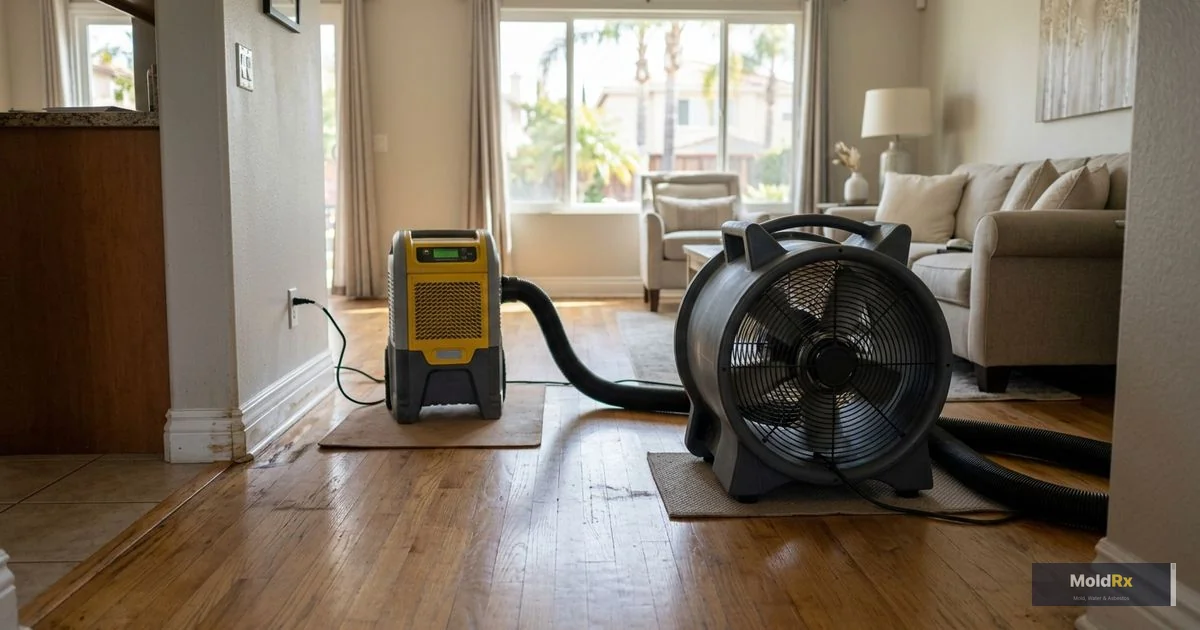
Several factors specific to Southern California amplify the damage a leaking pool can cause here compared to other parts of the country.
Expansive Soils
Much of Southern California sits on clay-heavy, expansive soils — particularly throughout the Inland Empire, parts of Orange County, and the San Gabriel Valley. These soils swell when they absorb water and shrink as they dry out. A pool leak introduces a continuous, concentrated water source into soil that reacts to moisture changes by expanding unevenly — pushing against foundations, displacing footer supports, and cracking concrete slabs. The same expansive soil dynamics that make slab leaks so damaging in this region apply to pool leaks — often at a larger scale, since a pool leak can introduce far more water than a pinhole pipe failure.
Proximity to Foundations
Pools are frequently built close to the home, sometimes just a few feet from the foundation. In many SoCal neighborhoods — especially those built during the postwar suburban expansion of the 1950s through 1980s — pools were designed to maximize usable yard space, which meant positioning them near the house.
When a pool shell cracks or a plumbing line beneath the deck fails, water migrates laterally through the soil toward the path of least resistance. A foundation footer, a utility trench, or the gravel base beneath a slab all act as channels that direct pool leak water toward and under the home. The closer the pool, the faster the water reaches the structure.
Slab-on-Grade Construction
The vast majority of Southern California homes are built on concrete slab foundations that sit directly on the soil. Any moisture change in the soil beneath or adjacent to the slab directly affects the foundation. Water from a pool leak saturates the soil under the slab, causes it to swell unevenly, and puts hydraulic pressure on the concrete from below — causing heaving, cracking, and settlement that homeowners rarely connect to the pool.
Year-Round Exposure
In colder climates, pools are winterized and covered for months, which limits both leak opportunities and the consequences of slow leaks. In Southern California, pools are active year-round. That means a pool leak that develops in January keeps running in February, March, April — continuously feeding water into the soil through every season. There's no natural off-season to limit the damage.
Signs Your Pool May Be Leaking
Pool leaks don't always announce themselves dramatically. Many homeowners live with a slow leak for months before connecting the dots.
Unexplained Water Level Drop
All pools lose water to evaporation. In Southern California's dry climate, evaporation rates can reach a quarter inch per day during hot, windy periods — roughly 1 to 2 inches per week in summer. But if your pool is losing water faster than evaporation explains, you likely have a leak.
Consistently needing to add water more than once a week, or noticing that the water level drops noticeably overnight when evaporation is minimal, are strong indicators. An autofill system can mask this problem entirely — your pool stays full while the leak runs undetected and your water bill climbs.
The Bucket Test
The bucket test is a simple, reliable way to distinguish between normal evaporation and an actual leak.
Step 1: Fill a bucket with pool water and place it on the pool steps or a ledge so it's partially submerged. Mark the water level inside the bucket and the pool water level on the outside of the bucket.
Step 2: Wait 24 hours. Don't use the pool during this period. Turn off autofill systems and any water features.
Step 3: Compare the two marks. Both levels will drop due to evaporation — the bucket water and the pool water are exposed to the same conditions. If the pool water level dropped more than the bucket water level, the pool is losing water beyond what evaporation accounts for. That's a leak.
Step 4: Repeat with the pump running and with the pump off. If the pool loses more water when the pump is running, the leak is likely in the plumbing (pressure side or return lines). If it loses more with the pump off, the leak may be in the skimmer, main drain, or shell itself.
This test won't tell you where the leak is, but it confirms that one exists and gives you initial information about whether the shell or plumbing is more likely at fault.
Soggy or Soft Spots in the Yard
If the ground between your pool and your house — or anywhere around the pool perimeter — stays consistently wet or spongy despite no recent rain or irrigation, water is saturating the soil from below. This is especially telling in Southern California, where soil dries out quickly at the surface. Persistent soft spots in a climate that should dry the ground within days are a red flag.
Grass that grows faster or greener in one patch near the pool can also indicate a subsurface water source feeding that area.
Foundation Cracks or Movement
New cracks in your foundation, interior walls, or tile floors that appear without an obvious cause may be the result of soil movement driven by a pool leak. Doors and windows that suddenly stick or won't close properly are another sign of foundation shift.
These symptoms overlap with slab leak indicators, and in practice, the two problems can coexist — a pool leak saturating the soil can also accelerate corrosion of copper supply lines running beneath the slab.
Unexplained Water Bill Increase
A pool leak adds directly to your water usage, especially if an autofill system is compensating for the lost water. Compare your water bill to the same period in prior years. A significant increase that doesn't correspond to a change in household habits, irrigation, or a new pool fill deserves investigation. Even a moderate pool leak — say, an inch of water loss per day from a standard 15,000-gallon pool — can waste over 100 gallons daily.
Cracks in the Pool Deck or Coping
Concrete pool decking that cracks, heaves, or separates from the pool coping often indicates soil movement beneath the deck — soil that's expanding because it's absorbing water from a leak. These cracks may also be the source of the leak itself, as water migrating through deck cracks can reach pool plumbing or the shell bond beam.
Musty Odors Inside the Home
A persistent musty or earthy smell in rooms closest to the pool — especially ground-floor rooms on the pool side of the house — can indicate that moisture from a pool leak has migrated into the home's building materials. By the time you can smell it, mold growth has likely already begun. Learn about how water damage leads to mold and the timeline involved.
How Pool Leaks Damage Your Home
A pool leak isn't just a pool problem. Once water escapes the shell or plumbing, it becomes a soil problem, then a foundation problem, then an interior water damage and mold problem. Here's how the cascade unfolds.
Foundation Damage
In SoCal's expansive clay soils, pool leak water causes the ground to swell unevenly, exerting lateral and upward pressure on the concrete slab. The result is differential settlement — parts of the foundation heave while other parts sink. This cracks the slab, separates walls from the ceiling, displaces door and window frames, and can fracture the concrete enough to allow water to wick upward into your flooring. A foundation that was stable for decades can develop serious structural problems within months of a sustained pool leak.
Crawl Space and Under-Slab Moisture
For homes with crawl spaces, pool leak water can flood the crawl space directly, saturating wooden floor joists, subfloor panels, and insulation. Standing water or persistent moisture in a crawl space creates aggressive mold conditions — the dark, still air and organic building materials are exactly what mold needs.
For slab-on-grade homes, water migrating under the slab may not be visible at all. It saturates the gravel base, wicks upward through concrete via capillary action, and reaches flooring materials from below. Homeowners often discover the problem only when flooring warps, tile grout darkens, or a musty smell develops without any apparent water source inside the home. Hidden leaks that originate from outside the plumbing system — like pool leaks — are among the hardest to diagnose because standard leak detection focuses on the home's supply and drain lines.
Interior Water Damage
Once moisture reaches the interior, it attacks building materials from the outside in — drywall loses structural integrity, baseboards swell and separate, hardwood floors cup and buckle, carpet and pad trap moisture. The damage typically begins in rooms closest to the pool and progresses inward as the saturation zone expands. This water is initially Category 1 (clean), but as it passes through soil and sits in materials, microbial contamination develops — escalating it to Category 2 or 3 and requiring more aggressive remediation.
Mold Growth
Mold begins colonizing damp building materials within 24 to 48 hours of sustained moisture exposure. A pool leak that has been saturating soil for weeks or months creates conditions where mold has had ample time to establish itself — often in wall cavities, beneath flooring, or in crawl spaces where it grows unseen.
Southern California homes are particularly vulnerable because homeowners here don't expect moisture problems, so they're slower to investigate unusual odors or minor cosmetic changes that signal mold growth behind surfaces.
By the time a pool leak is identified as the source, mold remediation is frequently necessary in addition to the pool repair and structural restoration.
Pool Repair vs. Water Damage Remediation: Knowing the Difference
Fixing the pool stops the water. But if water has already reached your foundation or building materials, a pool repair alone doesn't resolve the damage.
When Pool Repair Is Sufficient
If you catch a pool leak early — before water has reached the foundation or building materials — a pool repair may be all you need. Signs that the damage is likely limited to the pool itself include:
- The bucket test confirms a leak, but no foundation cracks, soggy yard areas, or interior moisture signs are present
- The leak is in above-ground equipment (pump, filter connections, exposed plumbing) rather than underground lines or the shell
- Your home shows no new cracks, sticking doors, musty odors, or flooring changes
In these cases, a licensed pool contractor can repair the leak, and the soil will dry naturally over time in Southern California's arid climate.
When Remediation Is Needed
The situation moves beyond pool repair when water has affected your home. Indicators that professional water damage assessment and remediation are needed include:
- Foundation movement: New cracks in the slab, walls, or tile that appeared during the period the pool was leaking
- Interior moisture: Damp baseboards, warped flooring, bubbling paint, or soft drywall on the pool side of the home
- Musty odors: Persistent earthy smells indicating mold growth in wall cavities or under flooring
- Crawl space moisture: Standing water, wet insulation, or visible mold growth in the crawl space
- Flooring damage: Tile grout discoloration, hardwood cupping, or carpet dampness without an interior water source
In these situations, the building materials that absorbed water need professional drying, and areas where mold has developed require proper mold remediation. Simply fixing the pool and hoping materials dry on their own risks continued mold growth and further structural deterioration.
Preventing Pool Leak Damage
Pool leaks can't always be prevented, but the damage they cause can be minimized with vigilance and early action.
Monitor your water level weekly. Note where the waterline sits relative to a fixed mark — tile line, skimmer faceplate screw, or grease pencil mark. Same day each week, morning before wind picks up. Consistency reveals trends.
Check your water bill monthly. Compare to the same month in prior years. An unexplained increase warrants investigation, even if the pool looks fine.
Inspect the soil around your pool regularly. Walk the perimeter and press the ground. Soil that stays soft days after the last rain may be absorbing water from below.
Run the bucket test seasonally. Once in spring and once in fall. Catching a small leak before it becomes a large one is the most effective way to prevent water damage to your home.
Address equipment issues promptly. A leak in pool equipment or plumbing rarely fixes itself and almost always gets worse.
Maintain proper drainage. Ensure grading around your pool directs surface water away from your foundation. Backfill settlement can create a slope that channels water toward the house.
Frequently Asked Questions
Can a pool leak really damage my home's foundation?
Yes. A leaking pool can release hundreds of gallons per day into expansive clay soils, causing uneven ground swelling that leads to foundation cracking, heaving, and differential settlement. The closer the pool is to the house, the faster and more severe the damage.
How much water can a pool leak waste?
Even a small crack or failed fitting can waste 100 to 500 gallons per day. A significant structural crack can lose over 1,000 gallons daily. A standard 15,000-gallon pool losing one inch per day wastes roughly 100 gallons — over 36,000 gallons per year.
How do I know if my pool is leaking or just losing water to evaporation?
Run the bucket test described above. By comparing the evaporation rate inside a bucket of pool water to the actual pool water loss, you isolate whether the pool is losing water beyond what evaporation accounts for. If the pool level drops more than the bucket level over 24 hours, the pool is leaking.
Can a pool leak cause mold in my house?
Absolutely. Water migrates through soil into building materials where it creates the sustained moisture mold needs to colonize — often within 24 to 48 hours. How water damage leads to mold explains the full biological process.
Would I notice a pool leak, or can it be hidden?
Many pool leaks are hidden. A crack in an underground return line or a small shell fracture below the waterline can release water into the soil with no visible sign at the pool — especially if an autofill system is maintaining the water level. Homeowners often discover pool leaks only after noticing foundation damage, soggy yard areas, or interior moisture problems.
How long can a pool leak go undetected?
Months or even years. Slow leaks that lose a fraction of an inch per day are nearly impossible to distinguish from normal evaporation without deliberate testing, and autofill systems extend the detection timeline further.
Should I turn off my pool if I suspect a leak?
Turning off the pump and autofill system is a reasonable first step — it stops the autofill from masking the leak and reduces pressure in the plumbing. However, don't drain the pool without professional guidance. An empty or partially empty pool can "pop" out of the ground if saturated soil creates upward hydrostatic pressure.
Does homeowners insurance cover pool leak damage to my house?
Policies vary, but most homeowners insurance covers sudden and accidental water damage to the home — not the pool repair itself. The key distinction insurers make is between maintenance issues (gradual) and sudden failures. Interior damage from a pool leak may be covered even though the pool repair is not. Document everything — our guide on documenting damage for insurance claims covers best practices.
Is pool leak detection different from plumbing leak detection?
Yes. Pool leak detection is a specialized service using pressure testing on individual pool lines, dye testing near suspected shell cracks, electronic listening equipment, and camera inspection of underground lines. Standard plumbing leak detection focuses on the home's supply and drain system and won't identify pool-related issues. If you suspect a pool leak, hire a company that specializes in pool leak detection.
How quickly should I act if I confirm a pool leak?
Immediately. Every day a pool leak continues, the saturation zone expands and the risk to your foundation increases. The difference between week one and month six can be the difference between a pool repair and a full foundation, water damage, and mold remediation project.
Don't Let a Pool Leak Become a Mold Problem
If you've confirmed a pool leak — or you've been dealing with unexplained moisture, foundation cracks, or musty odors in a home with a pool — the water that's already reached your building materials won't dry itself out. Fixing the pool stops the source, but it doesn't address the damage that's already occurred inside your home.
MoldRx coordinates water damage restoration and mold remediation throughout Orange County, Riverside County, and San Bernardino County. We assess whether water from a pool leak has reached your home, determine the extent of moisture intrusion and mold growth, and coordinate the remediation needed to restore your property properly.
Call (888) 609-8907 or request a free estimate to talk to a real person about your situation. No pressure — just honest guidance about what your home actually needs.