Mold Removal in Twentynine Palms, CA — MoldRx
IICRC-Certified Mold Removal Professionals Serving Twentynine Palms and the Morongo Basin
Twentynine Palms sits at the eastern edge of the Morongo Basin, home to both Joshua Tree National Park headquarters and the largest Marine Corps training installation on the planet. Roughly 26,000 residents live here, and a significant share of them cycle through base housing or off-base rentals that were built decades ago. When a swamp cooler line fails in July or monsoon runoff seeps under a slab foundation, mold can colonize hidden wall cavities faster than most homeowners realize. MoldRx only sends vetted, IICRC-certified mold removal professionals who follow IICRC S520/R520 remediation standards and EPA federal mold guidance — specialists who work Twentynine Palms and the Morongo Basin every week.
Request your free estimate — we'll assess your property and give you straight answers.
Why Mold Grows in Twentynine Palms Homes
Twentynine Palms is an unincorporated city in San Bernardino County at roughly 1,900 feet elevation, about 140 miles east of Los Angeles and 50 miles northeast of Palm Springs. The population is approximately 26,000, though that figure fluctuates with active-duty rotations at the Marine Corps Air Ground Combat Center (MCAGCC). Annual rainfall averages just four inches, and summer highs routinely top 115 degrees Fahrenheit. None of that sounds like mold country, but Twentynine Palms properties face moisture vectors that are easy to miss until a colony is already established.
Extreme Temperature Swings and Condensation
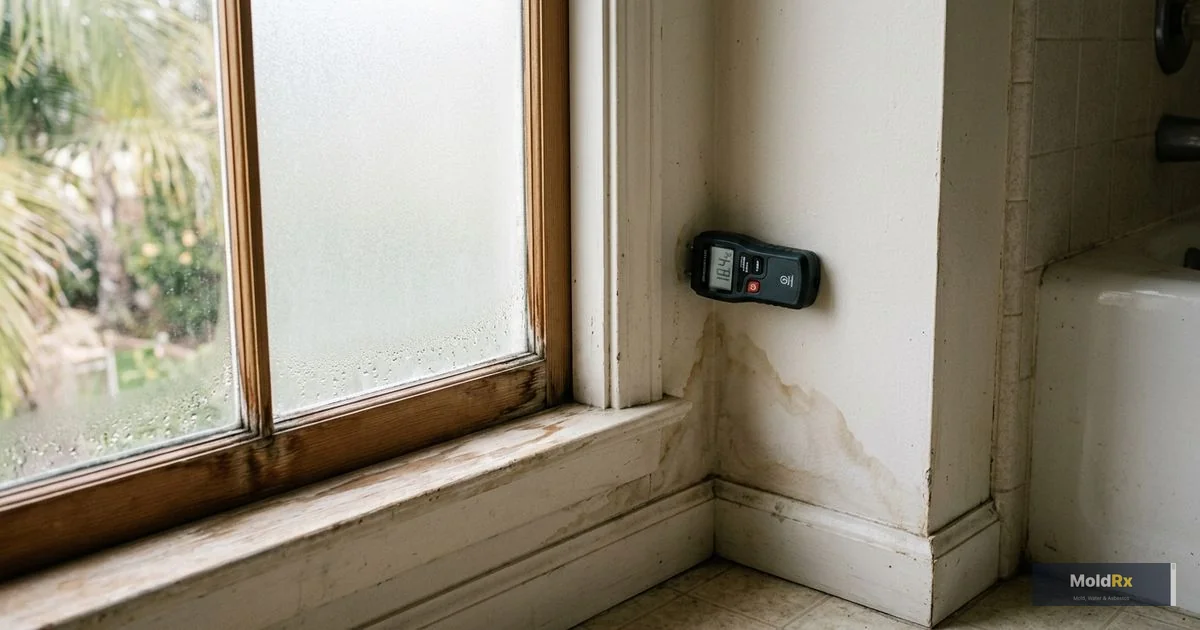
Summer daytime temperatures in Twentynine Palms can exceed 120 degrees and then drop 40 to 50 degrees after sunset. That swing creates condensation on cooler interior surfaces — window frames, metal ductwork, concrete slab edges, and the underside of roof sheathing. When indoor relative humidity crosses the 50 percent threshold the EPA identifies as the upper safe limit, mold colonizes within 24 to 48 hours according to both IICRC S520 and EPA 402-K-01-001 guidance. In a poorly insulated desert home, that 24-hour window opens almost every summer night.
Evaporative Coolers as a Hidden Moisture Source
Swamp coolers are the dominant cooling method in the High Desert because they are inexpensive to operate in arid conditions. But an evaporative cooler works by pulling dry air through water-saturated pads, and that process raises indoor humidity well above ambient desert levels. A malfunctioning float valve, a cracked distribution line, or clogged pads push even more moisture into the living space. The wet cellulose pads themselves become mold incubators if they are not cleaned at least three to four times per season. In Twentynine Palms, where cooling season runs from April through October, swamp cooler-related mold is one of the most common calls we see.
Aging and Military-Era Housing Stock
The median construction year for housing in Twentynine Palms is 1988, but a large share of the stock predates that. Development surged during the 1950s through 1980s as the Marine base expanded, producing thousands of single-family homes, duplexes, and mobile homes with galvanized steel plumbing, minimal insulation, and no vapor barriers. MCAGCC itself manages over 2,300 family housing units plus an 83-space mobile home park through Lincoln Military Housing. Off-base rentals in Sunfair Heights, Desert Heights, and along Adobe Road share many of the same vintage construction issues. Slow pinhole leaks behind drywall, failed supply lines under slab foundations, and deteriorating shower pans are routine moisture entry points that feed hidden mold growth for weeks or months before anyone notices a musty smell.
Monsoon Season and Flash Flooding
The North American Monsoon pushes moisture into the Mojave Desert from July through September. When a summer thunderstorm drops an inch of rain in 30 minutes over terrain that sheds water rather than absorbing it, flash flooding follows. Properties in low-lying areas near desert washes, homes with negative grading toward the foundation, and older slabs without modern moisture barriers are all vulnerable. Post-storm water intrusion under a slab or through a cracked stucco wall provides exactly the sustained moisture that mold needs to colonize — and because homeowners assume the desert will dry everything out, the intrusion often goes unaddressed until visible growth appears.
Signs You Need Professional Mold Removal
Not every dark spot on a wall requires a remediation crew, but certain indicators mean the problem has moved beyond what a homeowner should handle alone. Here is what to watch for in a Twentynine Palms property.
Visible Growth Beyond a Small Area
The EPA's 402-K-01-001 guidance uses a ten-square-foot threshold as a practical dividing line. Growth smaller than that on a non-porous surface can often be addressed with proper cleaning. Once colonization exceeds ten square feet — or appears on porous materials like drywall, insulation, or carpet — professional containment and removal become necessary to prevent cross-contamination. In Twentynine Palms homes, the most common locations for visible growth are around swamp cooler vent registers, along baseboards where slab moisture wicks upward, inside bathroom walls where shower pans have failed, and in closets that share a wall with aging plumbing.
Persistent Musty Odor Without Visible Mold
A musty or earthy smell that you cannot trace to a visible source almost always indicates hidden colonization. In Twentynine Palms, concealed mold frequently grows inside wall cavities near galvanized plumbing runs, behind bathroom tile on deteriorated backer board, inside swamp cooler ductwork and plenums, and under slab-edge flooring where condensation accumulates overnight. If the odor intensifies when your HVAC or swamp cooler cycles on, the ductwork itself may be colonized — a situation that distributes spores to every room in the house.
Recurring Mold After Previous Cleanup
If you have cleaned a mold-affected area and the growth returns within weeks or months, the underlying moisture source was never resolved. Surface cleaning without source correction is temporary. Common unresolved sources in Twentynine Palms homes include slow pinhole leaks in galvanized supply lines, condensation from uninsulated ductwork running through unconditioned attic spaces, and failed swamp cooler float valves that intermittently overflow.
Water Damage History
IICRC S520 and EPA guidance both identify a 24-to-48-hour window: once a material stays wet beyond that threshold, mold colonization becomes likely. If your property has experienced a plumbing failure, monsoon water intrusion, or swamp cooler overflow that was not dried within that window, professional assessment is warranted even if no growth is visible yet. For military families at MCAGCC, base housing water events — supply line failures in older units, roof leaks reported through the maintenance system — should be followed up with a mold check if drying was delayed.
Health Symptoms That Worsen Indoors
The CDC notes that mold exposure can cause nasal congestion, throat irritation, coughing, wheezing, eye irritation, and in some cases skin irritation. If household members experience respiratory or allergic symptoms that improve when they leave the home and return when they come back inside, indoor mold exposure is a reasonable suspect. This is especially relevant in tightly sealed desert homes where occupants spend extended time indoors during the extreme summer months.
Health Risks of Mold Exposure
Mold is not just a property problem — it is a health concern documented by the EPA, CDC, and WHO. When mold colonies release spores and mycotoxins into indoor air, occupants inhale them with every breath. The EPA states that mold can cause allergic reactions, asthma episodes, and irritation of the eyes, skin, nose, throat, and lungs. The CDC identifies mold exposure as a trigger for upper respiratory symptoms in otherwise healthy people and a serious risk factor for those with chronic lung conditions. The WHO's Guidelines for Indoor Air Quality: Dampness and Mould found sufficient evidence linking indoor mold exposure to respiratory infections, bronchitis, and allergic rhinitis.
The health risk is real but manageable. The goal is prompt identification and professional remediation — not panic.
Populations at Higher Risk
Certain groups face elevated health risks from mold exposure, and Twentynine Palms demographics make several of them locally relevant.
- Children. Young children breathe faster relative to body weight and their immune and respiratory systems are still developing. Twentynine Palms has a significant population of military families with young children — many living in base housing or off-base rentals where aging infrastructure creates moisture vulnerabilities.
- People with asthma or allergies. The CDC identifies mold as a known asthma trigger. Exposure can provoke attacks in sensitized individuals even at spore concentrations that do not affect others.
- Elderly residents. Reduced immune function and higher rates of chronic respiratory conditions increase vulnerability to mold-related health effects.
- Immunocompromised individuals. People undergoing chemotherapy, organ transplant recipients, and those with HIV/AIDS face the most serious risks, including invasive fungal infections from species like Aspergillus.
When DIY Mold Removal Isn't Enough
The EPA's guidance for homeowners draws a practical line: small areas of mold on non-porous surfaces can often be cleaned without professional help. Beyond that, the risks of improper handling — spreading spores, missing hidden growth, failing to address moisture — outweigh the cost of bringing in a certified team.
You should call a professional when:
- The affected area exceeds ten square feet (EPA 402-K-01-001 threshold)
- Mold is growing inside HVAC ductwork, swamp cooler plenums, or air handlers
- Colonization has reached structural materials — framing, subfloor, roof sheathing
- You suspect a toxic species such as Stachybotrys chartarum (black mold)
- The water source is Category 2 (gray water) or Category 3 (sewage, floodwater) per IICRC S500
- You need documentation for insurance, a real estate transaction, or base housing records
If any of those apply, DIY cleanup creates more problems than it solves. Cross-contamination from improper containment, incomplete removal that allows regrowth, and undocumented work that complicates insurance claims are all common outcomes.
Request your free estimate — we'll tell you what you actually need.
How We Remove Mold in Twentynine Palms Properties
Every remediation project follows the IICRC S520/ANSI R520 Standard for Professional Mold Remediation and applicable Cal/OSHA Title 8 regulations for airborne contaminant exposure. Here is what that looks like on the ground in a Twentynine Palms property.
1. Inspection and Moisture Mapping
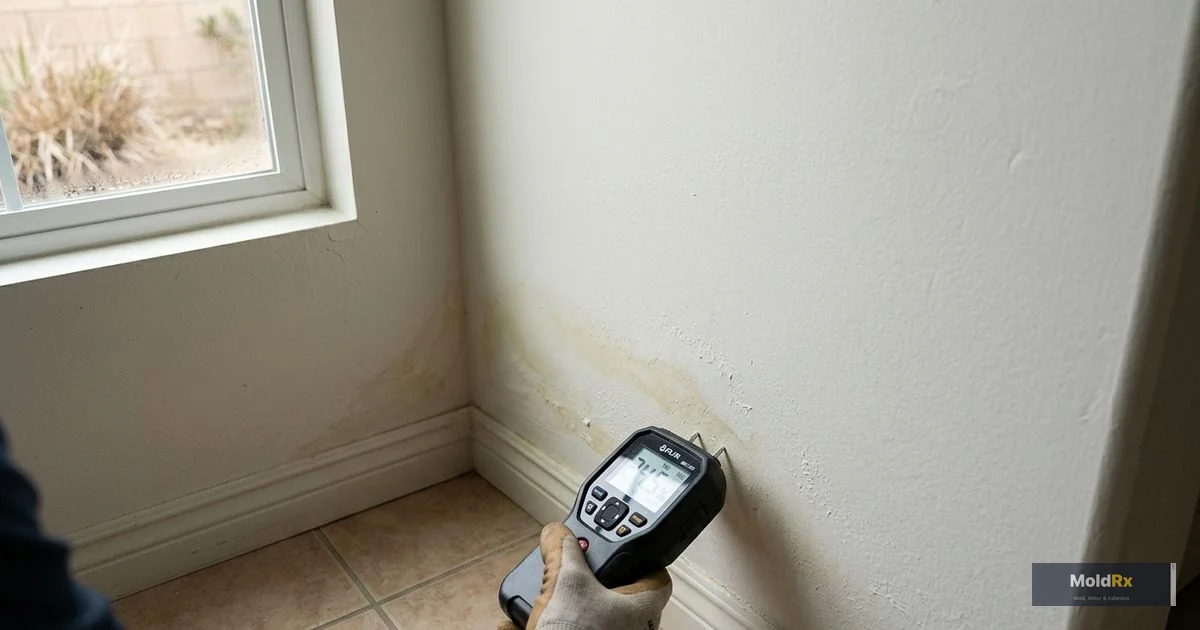
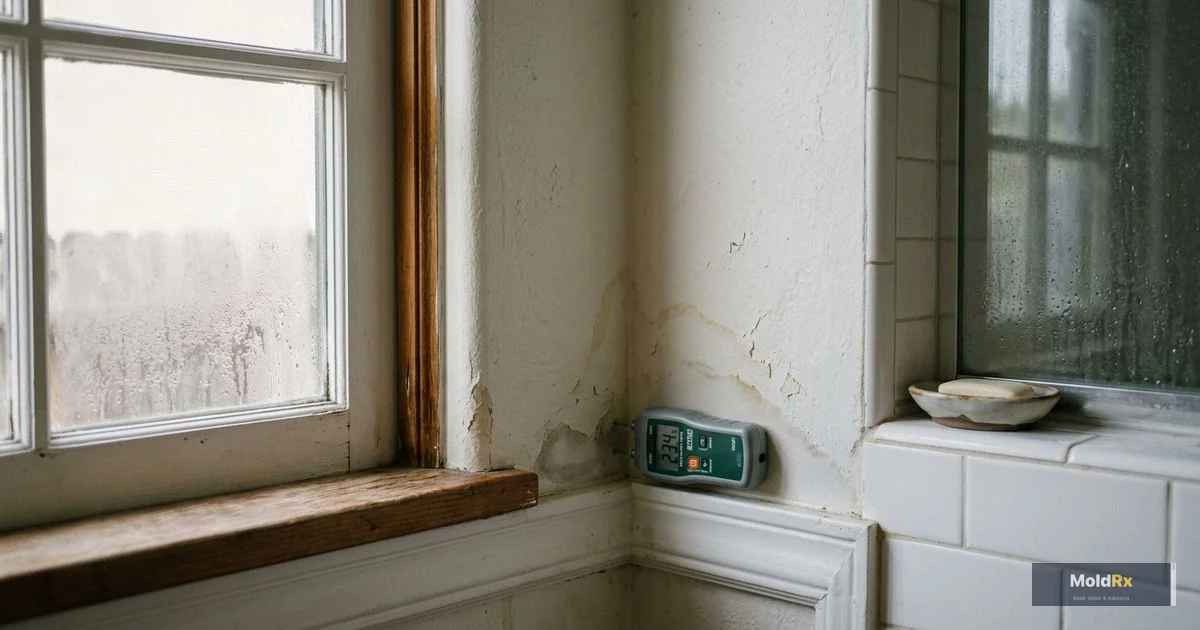
Our professionals begin with a full visual and instrument-based assessment following EPA 402-K-01-001 protocols for mold remediation assessment. That means infrared thermal imaging, pin and pinless moisture meters on every suspect wall cavity, and a thorough check of the specific moisture vectors Twentynine Palms homes face: swamp cooler supply lines and drain pans, under-slab plumbing, condensation zones around ductwork, and any areas that took water during monsoon season. You get a clear scope of work before any demolition begins.
2. Containment
Affected areas are isolated under IICRC S520 Condition 2 or Condition 3 containment depending on the scope of colonization. Physical barriers of reinforced polyethylene sheeting seal the work zone, and negative-air machines fitted with HEPA filters rated to capture particles down to 0.3 microns scrub airborne spores continuously. This is especially critical in Twentynine Palms homes where central HVAC or swamp cooler ductwork can distribute spores to every room within minutes. The CDC and EPA both publish guidance on limiting mold exposure during remediation, and WHO Guidelines for Indoor Air Quality: Dampness and Mould underscore the importance of containment in homes with children or immunocompromised residents.
3. Removal and Treatment
Mold-colonized porous materials — drywall, insulation, carpet, tack strip, cellulose ceiling tiles — are removed and bagged inside the containment zone per IICRC S520 protocols. Non-porous and semi-porous surfaces are cleaned, sanded, or media-blasted as conditions require, then treated with EPA-registered antimicrobials. Air monitoring throughout the process ensures airborne contaminant levels remain within Cal/OSHA Title 8 Section 5155 permissible exposure limits, and HEPA-filtered negative air continues running until clearance.
4. Moisture Correction
Mold removal without source correction is temporary. Our team identifies the exact moisture entry point and coordinates the repair — whether that is a failed swamp cooler float valve, a pinhole leak in a galvanized supply line, poor foundation grading that channels monsoon runoff toward the slab, or condensation caused by missing insulation in an attic or crawlspace. For military housing tenants, we work within the maintenance coordination requirements of the property management company.
5. Post-Remediation Verification
The project is not complete until the affected area meets IICRC S520 Condition 1 — normal fungal ecology. That verification includes visual confirmation that no suspect materials remain, moisture readings confirming the structure is dry, and, when warranted, independent air or surface sampling by a third-party industrial hygienist. You receive full documentation: scope of work, before-and-after photos, moisture readings, containment logs, waste manifests, and clearance results. That packet supports insurance claims, real estate transactions, base housing inspection requirements, and your own records.
Mold Removal vs. Mold Remediation
The terms are often used interchangeably, but they describe different scopes of work. Mold removal means physically taking out mold-colonized materials. Mold remediation, as defined by IICRC S520, is the full process: assessment, containment, removal, antimicrobial treatment, moisture correction, structural drying, and post-remediation verification to Condition 1 (normal fungal ecology). Removal without remediation is like mopping a floor while the pipe above it keeps leaking.
MoldRx only sends professionals who perform full remediation — not cosmetic removal. That means the moisture source is identified and corrected, contaminated materials are properly contained and disposed of, and the project is not considered complete until independent verification confirms the space meets Condition 1 standards. Moisture correction is part of the scope, not an upsell.
Preventing Mold After Remediation
A successful remediation project restores your home to normal fungal ecology, but the desert conditions that created the problem in the first place do not change. These five practices are the most effective ways to keep mold from returning in a Twentynine Palms home.
Manage Your Swamp Cooler
Inspect pads, float valves, and water distribution lines at least three to four times per cooling season. Replace cellulose pads before they show visible discoloration or biological growth. When the cooler is not in use — typically November through March — drain all water from the reservoir, disconnect the supply line, and leave the unit open to dry completely. A neglected swamp cooler is the single most common mold source in Twentynine Palms homes.
Control Indoor Humidity
The EPA recommends maintaining indoor relative humidity between 30 and 50 percent. In a desert home running a swamp cooler, humidity can spike well above that range. Use a standalone hygrometer (ten to twenty dollars at any hardware store) to monitor conditions in rooms that tend to run damp — kitchens, bathrooms, and any room directly in the swamp cooler airflow path. If readings consistently exceed 50 percent, increase ventilation by cracking windows on the leeward side of the house or reduce the cooler's water flow rate.
Address Condensation Zones
Twentynine Palms temperature swings create condensation on cooler surfaces overnight: single-pane windows, uninsulated metal ductwork, slab edges, and roof sheathing in poorly ventilated attics. Adding insulation to ductwork, replacing single-pane windows, and ensuring adequate attic ventilation all reduce condensation. Wipe visible moisture from window frames and sills rather than letting it pool.
Fix Water Intrusion Promptly
IICRC S520 identifies a 24-to-48-hour window between water contact and mold colonization. A monsoon roof leak, a burst supply line, or a swamp cooler overflow should be dried within that window — not left to "air out" in the desert heat. Remove standing water, run fans, and use a dehumidifier if available. If you cannot confirm the area is dry within 48 hours, call for a professional assessment.
Schedule Periodic Inspections
Annual or biannual inspections catch developing moisture problems before they become remediation projects. Check under sinks, around water heaters, behind toilets, inside swamp cooler plenums, and along slab edges. For military families who may be renting or transitioning between duty stations, an inspection before moving in and a walkthrough before moving out protects both your health and your housing deposit.
What Sets MoldRx Apart
- Straight talk, not sales talk. We tell you what you actually need — and what you do not. If the scope is smaller than you feared, you will hear that first.
- Licensed, insured, IICRC-certified. Every professional we send holds active credentials verified through the CSLB (Contractors State License Board) and is insured to work in San Bernardino County.
- Full documentation on every job. Scope, photos, moisture logs, containment records, clearance results — everything you need for insurance, base housing, or resale.
- Family-owned accountability. We only send vetted remediation professionals we stand behind.
Get your free estimate — no obligations, no pressure. Just a clear picture of your situation.
Twentynine Palms Neighborhoods We Serve
MoldRx provides mold removal across every neighborhood in Twentynine Palms — ZIP codes 92277 and 92278 — including residential, commercial, and multi-family properties.
- MCAGCC / Lincoln Military Housing — The Marine Corps Air Ground Combat Center operates 15 on-base housing neighborhoods managed by Lincoln Military Housing, encompassing over 2,300 family units plus an 83-space mobile home park. Military-era construction, high unit turnover, and maintenance delays between occupants create conditions where plumbing failures and swamp cooler issues go unaddressed long enough for mold to establish behind walls and under flooring.
- Downtown / The Plaza / City Center — The commercial core along Twentynine Palms Highway, with a mix of small businesses and older residential properties. Buildings in this corridor date from the 1950s through 1980s, with aging HVAC systems, original plumbing, and flat-roof commercial structures that trap monsoon moisture and develop hidden mold in ceiling cavities.
- Desert Heights / Sunfair Heights — A sprawling residential area north of the highway where many homes were built between 1940 and 1969. The housing mix includes single-family homes and a significant number of mobile homes on large desert lots. The high vacancy rate (nearly 60 percent) means many properties sit unoccupied for extended periods with dormant swamp coolers, stagnant water lines, and no climate control — conditions that accelerate mold colonization when moisture is present.
- Harmony Acres / Panorama Heights — A quiet residential neighborhood south of the highway known for spacious lots and a rural desert character. Homes here are a mix of midcentury construction and newer builds. Older properties with galvanized plumbing and minimal insulation are most vulnerable, particularly where slab-on-grade foundations wick monsoon moisture upward into subfloor materials.
- Adobe Road Corridor — A residential stretch running south from the highway with single-family homes and small ranch properties. Many homes here were built during the base expansion decades (1960s-1980s) and share the same vintage construction vulnerabilities: corroding supply lines, deteriorated shower pans, and swamp coolers that push moisture into poorly ventilated interior spaces.
- Archer / Bagdad — A remote neighborhood on the eastern edge of Twentynine Palms with a notably high proportion of military-connected residents. The housing stock is primarily small to midsize single-family homes and mobile homes. Distance from the city core means slower maintenance response times, and the combination of aging construction and extreme temperature swings makes condensation-driven mold a recurring issue.
- Wonder Valley (Adjacent) — The unincorporated desert community east of Twentynine Palms, known for homestead-era cabins and off-grid properties. Many structures lack modern plumbing and vapor barriers entirely. When monsoon storms push water through cracked foundations or deteriorated roofing, the 24-to-48-hour colonization window closes fast in summer heat.
Nearby Communities We Also Serve
Our vetted professionals also cover the surrounding Morongo Basin, carrying the CSLB licensing and IICRC credentials required for residential and commercial mold remediation in San Bernardino County:
- Yucca Valley — West of Twentynine Palms along Highway 62, with similar desert housing stock and swamp-cooler-driven moisture issues across its residential neighborhoods
Related Services in Twentynine Palms
→ All remediation services in Twentynine Palms
Frequently Asked Questions
How quickly can mold start growing after a water leak in a desert home?
Under the right conditions, mold can colonize a damp surface within 24 to 48 hours — even in the desert. High summer temperatures actually accelerate the process once moisture is present. That is why addressing a plumbing leak, swamp cooler malfunction, or monsoon water intrusion quickly matters more than waiting to see if the desert air dries it out.
Can my swamp cooler cause mold problems?
Yes. Evaporative coolers raise indoor humidity, and a malfunctioning unit — a stuck float valve, cracked water line, or clogged pads — can push moisture levels well above the EPA's recommended 30 to 50 percent range. The wet cellulose pads inside the cooler are themselves a common mold source if they are not cleaned and replaced on schedule.
I live in base housing at MCAGCC. Can MoldRx help?
MoldRx only sends vetted remediation professionals, and we work with military housing tenants across Twentynine Palms. Whether you are in Lincoln Military Housing on the Combat Center or renting off-base, we provide the same inspection, documentation, and remediation process. Our full documentation package can support maintenance requests and housing office reporting requirements.
What does mold look like in a Twentynine Palms home?
It depends on the species and the surface. The most common presentation in desert homes is dark discoloration on drywall near swamp cooler vents, under bathroom sinks, or along baseboards where slab moisture wicks upward. You may also notice a persistent musty odor without any visible growth — that usually means colonization is happening inside a wall cavity, under flooring, or inside ductwork.
Do I need mold testing before remediation starts?
Not always. If mold is visible, the priority is containment, removal, and moisture correction. Testing is valuable when you suspect hidden mold behind walls or under flooring, need documentation for an insurance claim or real estate transaction, or want third-party verification after remediation is complete. We will recommend the appropriate approach for your situation.
How long does a typical mold removal project take?
Most residential projects in Twentynine Palms take two to five days depending on the size of the affected area, the materials involved, and whether structural drying is needed. Smaller, contained issues may wrap in a single day. We provide a realistic timeline during your initial assessment so you can plan accordingly.
Get Mold Removal in Twentynine Palms
Mold in a desert home catches people off guard, and finding a remediation company you trust in a smaller community like Twentynine Palms is not always straightforward. MoldRx exists to simplify that. We only send vetted, IICRC-certified professionals who follow documented remediation standards, explain what they find in plain language, and do the work right the first time.
Whether you are a homeowner near downtown, a military family in base housing, or a landlord managing rentals along Twentynine Palms Highway, the process starts with an honest assessment. We will tell you what you actually need — not what generates the largest invoice.
Call MoldRx for your free estimate — (888) 609-8907. Clear answers. Honest guidance. Work done right.