Professional Water Damage Restoration
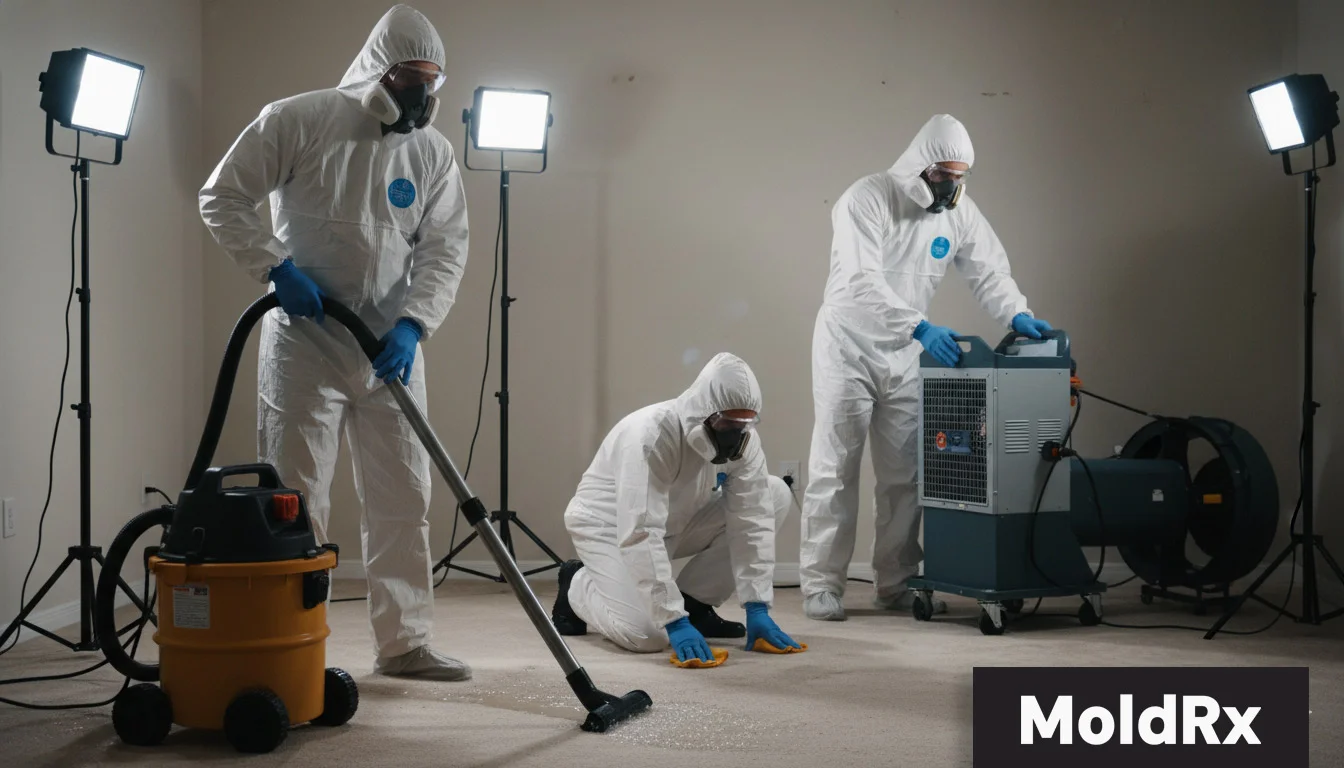
Water damage restoration is the process of extracting water, drying structural materials, and restoring your property to its pre-loss condition — before hidden moisture leads to mold growth, wood rot, or permanent structural damage. MoldRx provides full-service water damage restoration across Orange County, Riverside County, and San Bernardino County through vetted professionals who follow IICRC S500 protocols for water extraction, structural drying, moisture verification, and documentation on every project.
If you're dealing with standing water, a burst pipe, an appliance failure, or water stains appearing where they shouldn't — the single most important factor is speed. Water absorbed into drywall, subfloors, and insulation continues causing damage every hour it sits. Materials that could be dried and saved in the first 24 hours often need to be torn out and replaced by day three. And mold can begin colonizing damp materials within 24 to 48 hours.
Call (888) 609-8907 to talk to a real person about your situation. No scripts, no pressure — just honest guidance from a family-owned company that responds fast and does things right.
What Water Damage Restoration Actually Involves
Professional water damage restoration goes far beyond mopping up visible water. Water travels — it wicks up drywall, soaks into subfloor plywood, saturates insulation inside wall cavities, and pools in areas you can't see or reach. By the time you've toweled up what's on the surface, the real damage is already happening inside the structure.
Proper restoration addresses four things simultaneously:
- The standing water — rapid extraction using commercial-grade equipment to remove water from floors, carpets, padding, and cavities before it spreads further
- The hidden moisture — structural drying with industrial dehumidifiers and air movers to pull trapped moisture out of walls, subfloors, and framing
- The contamination risk — antimicrobial treatment and, when necessary, removal of materials exposed to sewage or contaminated floodwater
- The secondary damage — preventing mold growth, wood rot, and material deterioration that begin within hours of sustained moisture
If any one of these is missed, you're left with damage that shows up weeks or months later — warped flooring, mold behind walls, musty odors, or structural problems that are far more expensive to fix than the original water event.
What It Includes
- Water extraction — Commercial extractors remove standing water from floors, carpets, padding, and structural cavities far faster and more thoroughly than consumer equipment
- Structural drying — Industrial dehumidifiers and high-velocity air movers are strategically positioned to dry all affected materials. Moisture levels are monitored daily with meters and thermal imaging until target dryness is confirmed
- Moisture mapping — Professional-grade moisture meters and infrared cameras identify exactly where water has traveled — including inside walls, under flooring, and in areas with no visible signs of damage
- Antimicrobial treatment — Affected surfaces are treated to prevent mold growth and bacterial contamination during the drying period
- Content cleaning — Salvageable belongings, furnishings, and materials are cleaned and restored when possible
- Documentation — Moisture readings, equipment placement, drying logs, photos, and scope of work are recorded throughout the process for your records and insurance claims
What It Does Not Include
- Mopping up water and calling it done (surface removal without structural drying guarantees hidden damage)
- Using fans and open windows instead of commercial drying equipment (this does not reach moisture inside walls and subfloors)
- Skipping moisture verification (the area may feel dry but still have elevated moisture content deep in the materials)
- Ignoring contamination categories (sewage and gray water require specific handling — treating all water damage the same puts your health at risk)
When You Need Professional Water Damage Restoration
Not every wet floor requires a restoration crew. A small spill caught immediately on a hard surface can usually be handled with towels and a fan. But water damage is different from water cleanup — it means water has reached materials that absorb it, and those materials won't dry on their own.
Professional restoration becomes necessary when:
The Water Has Reached Structural Materials
- Water has soaked into carpet, padding, or subfloors — these layered materials trap moisture underneath, creating hidden damage even after the surface feels dry
- Walls, baseboards, or cabinets show signs of absorption — swelling, warping, discoloration, or soft spots mean water is inside the material
- Water came through the ceiling — this means it has already traveled through roof decking, insulation, framing, or plumbing chases above
- The water source ran for an extended period — a supply line or appliance that leaked for hours (or days) before discovery has likely saturated far more material than what's visible
The Water Is Contaminated
- Sewage backup — Category 3 "black water" contains bacteria, viruses, and pathogens that require biohazard protocols, protective equipment, and proper disposal of contaminated materials
- Appliance discharge water — Washing machine and dishwasher overflows (Category 2 "gray water") contain detergents and contaminants that require more than simple drying
- Floodwater from outside — Storm runoff, rising groundwater, and any water that has contacted soil carries contaminants regardless of how clean it appears
Documentation Is Required
- You're filing an insurance claim for water damage — professional documentation (moisture readings, drying logs, photos, scope of work) is essential for claim processing
- You're a landlord or property manager who needs records for tenant communication, liability protection, or regulatory compliance
- The property is involved in a real estate transaction and water damage needs to be professionally addressed and documented before closing
Time Has Passed Since the Water Event
- More than 24 hours have elapsed and materials are still damp — mold colonization risk increases significantly at this point
- You've noticed musty odors developing after a previous water event that wasn't professionally dried
- Mold has begun to appear — at this stage, you need both water damage restoration and mold remediation
Warning Signs of Water Damage
Some water damage is obvious — you walk into a flooded room. Other damage develops quietly and goes unnoticed until it becomes a much bigger problem. Here's what to watch for.
What you might see:
- Standing water on floors, or water actively flowing from a visible source
- Water stains or discoloration on ceilings, walls, or around windows — even if the area feels dry now
- Paint bubbling, wallpaper peeling, or baseboards warping — indicates moisture trapped behind or beneath the surface
- Sagging or bulging ceilings — water is pooling above, and the weight can cause collapse
- Flooring that is cupping, buckling, or feels soft underfoot
What you might smell:
- A persistent musty, damp, or earthy odor — often the first sign of hidden moisture or mold growth from a water event you may not have noticed. Learn more about how professionals detect hidden moisture and mold
What you might feel:
- Unusually humid air in specific rooms, or condensation forming on windows and cold surfaces
- Carpet that feels damp or spongy even though no spill occurred
- A room that feels noticeably colder than adjacent rooms — evaporating moisture pulls heat from the air
Situations that create water damage risk:
- Any plumbing failure, appliance malfunction, or roof leak — even after the source is stopped, absorbed water needs professional drying
- Properties that sat vacant during a water event — undetected leaks in empty homes or units cause extensive hidden damage. Learn about hidden water leaks and how to spot them
- Recent storms or heavy rainfall, especially in properties with older roofs, poor drainage, or history of water intrusion
- HVAC condensation issues — clogged drain lines and malfunctioning units can introduce water into walls, ceilings, and ductwork over time
What Happens If You Wait
Water damage doesn't plateau. It gets worse with every hour that passes — and the damage curve isn't linear. It accelerates.
Within hours: Water wicks up drywall (it can climb 12+ inches in the first few hours), soaks into subfloor plywood, and saturates carpet padding. Furniture begins to stain and swell. Metal surfaces tarnish and corrode.
Within 24 to 48 hours: Mold spores — always present in indoor air — begin colonizing damp materials. Drywall starts to soften and lose structural integrity. Wood begins to swell and warp. What would have been a straightforward extraction and drying project now includes mold prevention treatment at minimum.
Within one to two weeks: Mold colonies become established and visible. Wood framing begins to rot. Subfloor delamination progresses. Odors intensify. The project scope expands from water damage restoration to water damage restoration plus mold remediation — two separate processes with separate timelines.
Within months: Structural materials degrade to the point of requiring replacement. Mold spreads through wall cavities and into HVAC systems. What started as a contained water event becomes a major reconstruction project with health implications.
The practical reality: Every day you wait expands the scope. Materials that could have been dried in place on day one need to be torn out and replaced by week two. A one-room problem spreads to adjacent rooms. The straightforward restoration becomes complex and significantly more expensive.
Why DIY Water Damage Cleanup Falls Short
When you're standing in a wet room, your instinct is to start cleaning up — and that instinct is right. Remove what water you can. But understand the difference between emergency cleanup and actual restoration, because they're not the same thing.
Consumer equipment can't dry structural materials. Shop vacs, mops, and box fans remove surface water. They don't extract water from carpet padding, pull moisture out of wall cavities, or dry saturated subfloor plywood. Professional restoration uses commercial extractors, industrial dehumidifiers, and high-velocity air movers — equipment designed to reach moisture that consumer tools leave behind. The gap isn't incremental; it's categorical. Read Can I Remove Water Damage Myself?
You can't see where water has traveled. Water follows gravity, capillary action, and the path of least resistance through your building's structure. It moves through stud bays, wicks along bottom plates, and pools in cavities you can't access without professional moisture detection equipment. Without thermal imaging and moisture meters, you're leaving wet materials inside your walls — and discovering the consequences months later.
Incomplete drying leads to mold. This is the most common and most costly outcome of DIY cleanup. You remove the visible water, the floor feels dry, you put things back to normal — and weeks later, you smell something musty or see mold along a baseboard. The water you couldn't see has been feeding mold growth inside the wall. Now you need mold remediation on top of the water damage repairs you were trying to avoid. Learn more about how fast mold grows after water damage.
Insurance claims require professional documentation. If you're planning to file a claim, DIY cleanup undermines your position. Insurance adjusters need moisture readings, equipment logs, drying progress documentation, and professional scope of work to process claims. "I mopped it up and ran a fan" doesn't provide the evidence needed for reimbursement.
How MoldRx Handles Water Damage Restoration
1. You Call — and Talk to a Real Person
When you call (888) 609-8907, you talk to someone who listens to your situation, asks the right questions, and gives you honest guidance — not a call center, not a script, not a sales pitch. We'll help you understand what you're likely dealing with, what to do right now to limit damage, and how quickly we can get someone to your property. For emergencies, we prioritize same-day response.
2. On-Site Assessment
A vetted restoration professional arrives with moisture meters, thermal imaging cameras, and the experience to assess what's happened. We identify every affected area — not just the visible water, but moisture hidden inside walls, under flooring, and above ceilings. We determine the water category (clean, gray, or black) because that dictates the protocols required.
3. Clear Scope of Work
Before any work begins, you'll know exactly what needs to happen: which areas are affected, what equipment will be used, how long drying is expected to take, what materials may need to be removed, and what to expect throughout the process. Every question gets answered. No surprises, no scope creep without communication.
4. Water Extraction
Commercial extractors remove standing water from floors, carpets, padding, and structural cavities. Truck-mounted and portable units handle everything from a single-room leak to a full-building flood. Every gallon removed quickly is material that doesn't absorb further and damage that doesn't spread.
5. Structural Drying
Industrial dehumidifiers and high-velocity air movers are strategically placed based on the moisture map of your property. This isn't random fan placement — equipment positioning is calculated to create optimal airflow and evaporation patterns across all affected materials. Moisture levels are monitored daily with meters and documented in drying logs until every material reaches its target moisture content.
6. Cleaning and Antimicrobial Treatment
Affected surfaces are cleaned, sanitized, and treated with antimicrobial solutions to prevent mold growth during and after the drying process. For contaminated water events (sewage, gray water), affected porous materials that can't be decontaminated are removed and properly disposed of. Salvageable contents are cleaned and restored when possible.
7. Documentation and Verification
Moisture readings, equipment placement records, drying logs, and photos document the entire process from start to finish. Final moisture readings verify that all materials have reached acceptable levels before equipment is removed. You receive complete documentation — essential for insurance claims, property records, and your peace of mind.
8. Final Walkthrough
We walk through the completed project with you, explain everything that was done, confirm all areas are verified dry, and discuss any repairs or reconstruction needed to fully restore your property. If mold testing or mold remediation is warranted based on what we found, we'll explain why and coordinate next steps. We also provide guidance on preventing future water damage — what to monitor, what maintenance matters most, and when to call if you have concerns.
Who We Serve
Homeowners
Whether it's a burst pipe that flooded your kitchen overnight, a water heater failure that soaked the garage, a washing machine overflow that reached the hallway, or a slow roof leak that's been quietly saturating your attic insulation — we handle residential water damage of all sizes. From a single-room extraction to a whole-house drying project, every job gets the same professional protocols: commercial equipment, daily monitoring, full documentation, and a verified dry result.
Commercial and Industrial Properties
Water damage in a commercial property means more than structural risk — it means business interruption, liability exposure, and revenue loss for every hour the space is unusable. Office buildings, retail spaces, warehouses, restaurants, medical facilities, and multi-tenant buildings all require fast, coordinated response with minimal disruption. We adjust our process for commercial timelines, after-hours work, tenant communication, and the documentation packages commercial property owners and their insurance carriers need.
Property Managers and Landlords
Tenant-reported water damage requires fast, professional response — for both the property and your liability protection. A leak in one unit can affect multiple units below or adjacent, and the clock on mold growth starts the moment materials get wet. We provide the documentation you need: assessment reports, moisture readings, drying logs, scope of work, and verification records. We've worked with property managers across our service area and understand the urgency, accountability, and communication your position demands.
Real Estate Professionals
Water damage discovered during a home inspection can stall or kill a deal. Whether you represent the buyer or the seller, we provide objective assessment, professional restoration, and complete documentation that gives both parties confidence the issue has been properly resolved. Fast turnaround when transaction timelines are tight. We also flag secondary risks — if water damage has been present long enough for mold to develop, we'll identify that and recommend mold testing so nothing gets missed.
Where We Work
MoldRx provides water damage restoration services throughout Southern California:
- Orange County — Irvine, Anaheim, Santa Ana, Huntington Beach, Costa Mesa, Newport Beach, Fullerton, Orange, Mission Viejo, Lake Forest, and 30+ more cities
- Riverside County — Riverside, Corona, Temecula, Murrieta, Palm Springs, Palm Desert, Hemet, Moreno Valley, Menifee, and 20+ more cities
- San Bernardino County — San Bernardino, Ontario, Rancho Cucamonga, Fontana, Redlands, Victorville, Upland, Rialto, and 15+ more cities
Water Damage Restoration FAQs
How quickly do I need to act after water damage occurs?
As fast as possible — ideally within the first 24 hours. Mold can begin growing on damp materials within 24 to 48 hours, and structural materials continue absorbing water and deteriorating the longer they stay wet. The sooner extraction and drying begin, the more material can be saved in place and the smaller the overall scope of restoration. If you discover water damage, call (888) 609-8907 immediately — even if it's after hours.
Can I handle water damage cleanup myself?
For minor spills on hard surfaces caught immediately, yes. For anything that has reached carpet, drywall, subfloors, or insulation — or any water that has been sitting for more than a few hours — professional restoration is strongly recommended. Consumer equipment cannot dry structural materials, and incomplete drying is the primary cause of mold growth after water events. Read our detailed guide: Can I Remove Water Damage Myself?
How long does water damage restoration take?
Most contained projects (one room, clean water source) take 3 to 5 days for extraction and drying. Larger projects involving multiple rooms, contaminated water, or extensive material saturation can take a week or longer. The drying timeline depends on what materials are affected, how saturated they are, and ambient conditions. We provide a realistic estimate during your assessment and monitor moisture levels daily until verified dry — we don't pull equipment early based on a calendar.
Will my insurance cover water damage restoration?
Most homeowner's policies cover water damage from sudden, accidental events — burst pipes, appliance failures, accidental overflows. Coverage typically does not extend to damage from gradual leaks, deferred maintenance, flooding from outside sources (that requires separate flood insurance), or damage resulting from negligence. We provide thorough documentation — moisture readings, equipment logs, photos, drying records, and scope of work — to support legitimate claims. We recommend contacting your insurance carrier promptly to report the loss.
What's the difference between water mitigation and water restoration?
Water mitigation is the emergency phase — stopping the water source, extracting standing water, and setting up drying equipment to prevent further damage. Water restoration is the full process from initial response through complete recovery, including drying, cleaning, antimicrobial treatment, verification, and any repairs or reconstruction needed to return the property to pre-loss condition. MoldRx handles both phases as one continuous project so nothing falls through the cracks.
Does water damage always lead to mold?
Not if the affected materials are dried quickly and thoroughly — generally within 24 to 48 hours. Professional extraction and structural drying within this window significantly reduces mold risk. However, water damage that isn't professionally addressed — or that goes undetected for days — almost always results in mold growth. If you suspect mold has developed from a previous water event, mold testing can confirm whether remediation is needed.
How do you detect water damage hidden inside walls?
Professional restoration technicians use infrared thermal imaging cameras and moisture meters to identify moisture behind walls, under flooring, and in other concealed areas. Thermal imaging reveals temperature differences caused by evaporative cooling in wet materials — showing where water has traveled even when the surface looks normal. The visible damage is often only a fraction of the actual affected area.
What is Category 3 "black water" and why does it matter?
Category 3 water is grossly contaminated water containing pathogenic agents, toxins, or other harmful substances. Sources include sewage backups, toilet overflows, floodwater from outside, and standing water that has remained stagnant long enough to support microbial growth. Black water events require specialized protective equipment, antimicrobial treatment, and removal of all porous materials that contacted the water. This is not a situation for DIY cleanup.
Should I turn off my HVAC system after water damage?
Yes, in most cases. If water has reached areas connected to your HVAC system — including the area around return vents, the air handler closet, or ductwork — running the system can spread moisture and contaminants throughout the building. It can also circulate mold spores if growth has already begun. Your restoration professional will advise whether and when it's safe to resume HVAC operation.
What should I do right now while waiting for a restoration crew?
Stop the water source if you safely can (shut off the supply valve or the main water shutoff). Move furniture and valuables off wet floors. Do not use a household vacuum on standing water (electrical hazard). Do not enter rooms where electrical outlets are submerged. Take photos for insurance documentation. Then call (888) 609-8907 — we'll walk you through additional steps specific to your situation.
Get Your Free Water Damage Assessment
Don't wait for water damage to become mold damage. The sooner your property is assessed and drying begins, the more material can be saved and the smaller the scope of restoration. Call (888) 609-8907 or request a free estimate online. You'll talk to a real person who will listen to your situation, answer your questions honestly, and help you understand your options.
Mold Removal → · Mold Testing → · Emergency Services → · All Services → · Service Areas → · Contact Us →