Mold Removal in Westminster, CA — MoldRx
IICRC-Certified Mold Removal Professionals Serving Westminster and Central Orange County
Westminster sits in western Orange County — 10.1 square miles, roughly 91,000 residents, nearly 9,000 people per square mile. Incorporated in 1957, the city grew explosively during the postwar housing boom, and tract homes from that era — predominantly 1950s through 1970s — still make up the vast majority of its housing stock. Westminster is home to Little Saigon, the largest Vietnamese-American community outside of Vietnam. Roughly 27,800 housing units split nearly evenly between owners and renters, with significant apartment inventory alongside single-family tracts. At 15 feet above sea level on flat terrain near the Bolsa Chica Channel, Westminster's combination of marine layer humidity, 50-to-70-year-old housing, high renter density, and aging plumbing creates persistent conditions for mold. MoldRx only sends vetted, IICRC-certified mold removal professionals who follow IICRC S520/R520 remediation standards and EPA guidance (publication 402-K-01-001).
Request your free estimate — we'll assess your property and give you straight answers.
Why Mold Grows in Westminster Properties
Westminster's geography, climate, housing age, and density create a distinctive set of moisture pathways that feed mold growth across single-family homes, apartments, and condominiums alike.
Marine Layer Humidity and Coastal Moisture
The Pacific sits roughly eight miles southwest, and the marine layer pushes reliably inland across Westminster's flat terrain. During "May Gray" and "June Gloom," relative humidity holds between 60 and 70 percent well into late morning. Even fall and winter rarely drop below 50 percent. Westminster averages 275 sunny days and only 14 inches of annual rainfall, but persistent marine moisture is what matters for mold. In older homes where bathroom exhaust vents into attic cavities and original single-pane windows allow condensation, that humidity provides the conditions mold needs. The IICRC S520 Standard and EPA publication 402-K-01-001 document that mold colonizes damp materials within 24 to 48 hours. In Westminster's tightly packed neighborhoods — homes on 5,000-to-7,000-square-foot lots — limited airflow traps moisture against exterior walls and beneath eaves.
Aging 1950s-1970s Housing Stock
Westminster's residential development exploded between the late 1940s and mid-1970s, when postwar tract housing replaced agricultural fields. The average home is now 50 to 70 years old. Original galvanized and copper plumbing is at or past its service life, and pinhole leaks inside walls and beneath slabs are common. Early slab-on-grade construction lacks modern vapor barriers. Sixty-plus years of service creates dozens of moisture entry points — inside wall cavities around aging plumbing, beneath original flooring on slabs without barriers, in attic spaces where exhaust was never properly terminated, and around deteriorating stucco.
High Apartment and Renter Density
Nearly half of Westminster's housing units are renter-occupied, and the city contains significant apartment and multifamily inventory from the 1960s and 1970s. Apartments present distinct mold risks: shared plumbing walls mean one unit's leak migrates next door. Renters may not report small leaks promptly. Bathroom exhaust is often underpowered or ducted through shared chase walls. A concealed problem in one unit affects air quality in neighboring units through shared HVAC and wall cavities. Westminster's apartment stock faces the same aging infrastructure challenges as single-family homes, compounded by higher density and maintenance dynamics that delay repairs.
Bolsa Chica Channel and Flood Channel Proximity
The Bolsa Chica Channel runs along Westminster's western boundary, and smaller drainage channels cross the city. At 15 feet of elevation on flat terrain, Westminster relies entirely on engineered drainage to move water. During winter storms, the system backs up, raising water tables and saturating soil around foundations. Properties near the channel experience elevated soil moisture that wicks upward through older slabs lacking vapor barriers — slow, persistent moisture migration that feeds concealed mold along baseboards, beneath carpet, and inside wall cavities. FEMA maps identify portions of Westminster as Special Flood Hazard Areas.
Signs You Need Professional Mold Removal
These indicators warrant professional assessment — particularly in Westminster's older homes and apartments where concealed growth can be extensive before it becomes obvious.
Visible Growth Beyond a Small Area
EPA publication 402-K-01-001 sets ten square feet as the threshold for professional remediation. In Westminster homes, colonies commonly appear along slab-to-drywall transitions, inside bathroom cavities behind original tile, at aging window frames, and in shared plumbing walls between apartment units. If growth exceeds a three-by-three-foot patch or appears in multiple rooms, professional containment is appropriate.
Persistent Musty Odor Without Visible Mold
A musty smell without an obvious source typically means mold is growing concealed — inside wall cavities around aging plumbing, in HVAC ductwork, behind cabinetry on exterior walls, or beneath original flooring on slabs lacking vapor barriers. In Westminster's apartments, odors migrate between units through shared walls and mechanical chases.
Recurring Mold After Previous Cleanup
If mold returns after cleaning, the moisture source was never corrected. In Westminster, persistent sources include marine layer condensation in attic spaces, slab moisture near the Bolsa Chica Channel, bathroom exhaust terminating in attic cavities, and aging plumbing with slow leaks behind walls. Recurring mold requires professional moisture mapping and source correction.
Water Damage History
Per IICRC S520 and EPA guidance, mold colonizes damp materials within 24 to 48 hours. Properties that have experienced a plumbing failure, roof leak, slab moisture intrusion, or storm drain backup should be evaluated even if surfaces appear dry. In housing of this age, water inside wall cavities migrates through original framing for weeks without visible evidence.
Health Symptoms That Worsen Indoors
The CDC notes that mold exposure can cause nasal stuffiness, throat irritation, coughing, and wheezing. If symptoms improve when you leave and worsen when you return, indoor mold is a reasonable possibility. In Westminster's apartments with shared HVAC, spores from a single concealed colony circulate through every room.
Health Risks of Mold Exposure
Mold produces allergens, irritants, and in some species mycotoxins. The EPA, CDC, and WHO Guidelines for Indoor Air Quality: Dampness and Mould document that prolonged exposure is associated with respiratory symptoms, allergic reactions, and asthma aggravation — particularly when indoor colonies exceed normal outdoor baselines.
Populations at Higher Risk
Westminster's demographics shape which populations face the greatest risk:
- Children — The WHO Guidelines for Indoor Air Quality identify children as a priority population. Developing respiratory systems are more sensitive to airborne spores.
- Older adults — The CDC reports that mold exacerbates chronic respiratory conditions. Long-term Westminster residents may have been exposed to concealed mold for extended periods.
- Adults with asthma — Mold triggers asthma attacks. In homes where HVAC circulates air from concealed colonies, sensitive occupants face continuous exposure.
- Immunocompromised individuals — Chemotherapy patients and transplant recipients face elevated risk from species like Aspergillus.
The goal of professional remediation is to return indoor fungal ecology to normal background levels — what the IICRC S520 standard defines as Condition 1.
When DIY Mold Removal Isn't Enough
The EPA allows homeowners to address small areas of mold. These situations exceed DIY methods:
- The affected area exceeds ten square feet — EPA publication 402-K-01-001 identifies this threshold. In Westminster's aging homes, concealed colonies often exceed this by the time they are discovered.
- Mold is inside HVAC ductwork or the air handler — The National Air Duct Cleaners Association (NADCA) recommends professional cleaning when mold is confirmed in duct systems. Original 1960s ductwork in attic spaces is particularly susceptible.
- Growth has penetrated structural materials — Mold in wall framing, subfloor sheathing, or foundation-adjacent materials requires selective demolition, containment, and professional drying.
- The mold appears to be Stachybotrys (black mold) — IICRC S520 requires careful containment due to mycotoxin production. Species identification requires laboratory analysis.
- The water source is Category 2 or Category 3 — IICRC S500 classifies sewage backups as gray or black water, requiring biohazard protocols. Westminster's aging 1960s sewer laterals can back up during storms.
- Documentation is needed for insurance or real estate — DIY cleanup does not produce the reports and clearance testing that carriers and buyers require. With median home values above $858,000, documented remediation protects property value.
If any of these conditions apply, professional assessment is the practical next step. Request a free estimate — we will tell you what you actually need.
How We Remove Mold in Westminster Properties
Every project follows IICRC S520/R520 and Cal/OSHA Title 8 regulations — methodical, documented, and designed to eliminate mold at the source rather than cover it up.
1. Inspection and Moisture Mapping
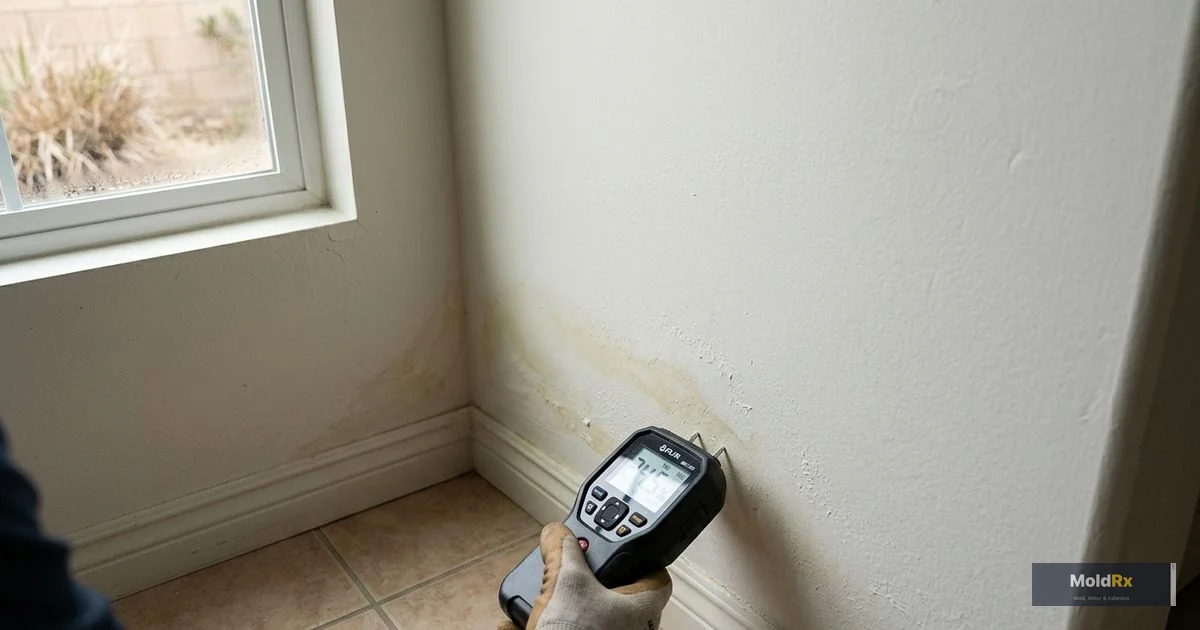
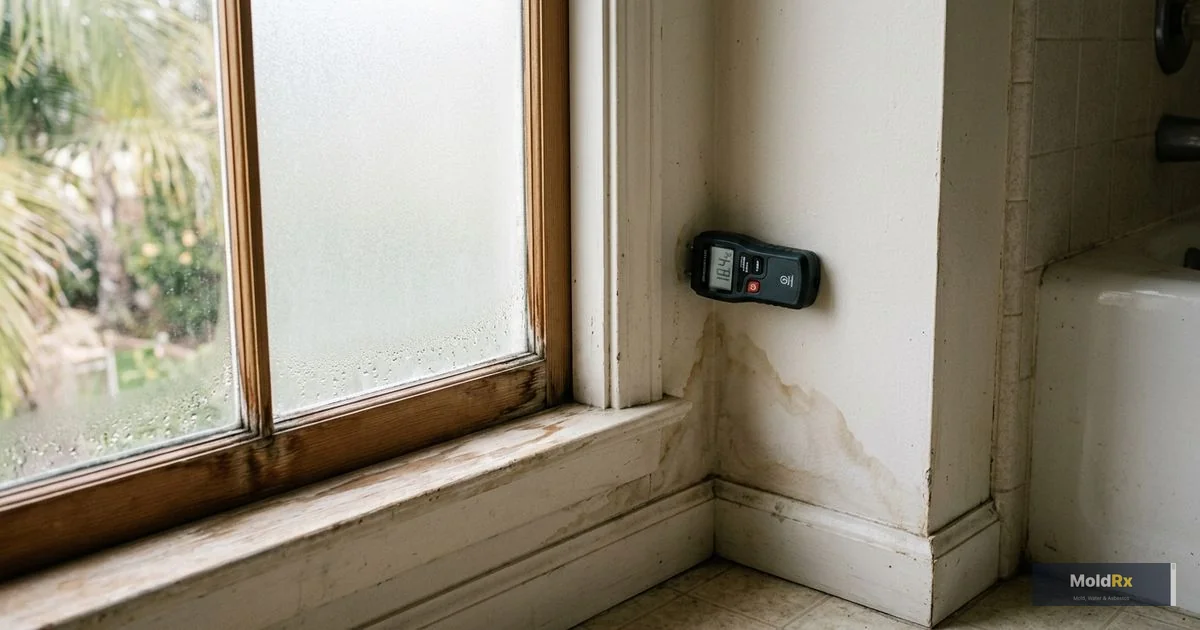
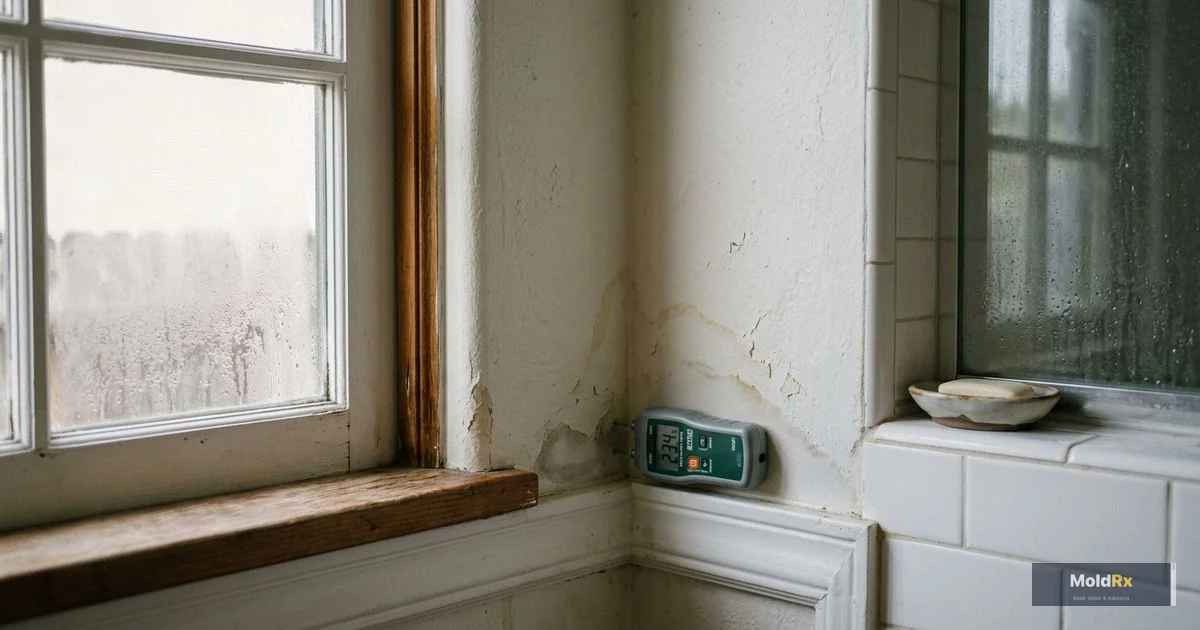
Infrared thermal imaging and calibrated moisture meters locate all affected areas — wall cavities, bathroom assemblies behind original tile, slab edges, shared plumbing walls in apartments, exterior walls with stucco intrusion, and attic spaces. The assessment follows EPA 402-K-01-001 protocols, producing a moisture map and scope of work before any material is disturbed.
2. Containment
Affected areas are isolated using polyethylene sheeting and negative air pressure with HEPA filtration, following IICRC S520 Condition 2 and 3 classifications. The CDC and EPA advise keeping vulnerable occupants away from active remediation. In apartment buildings, containment must prevent spore migration through shared walls and HVAC systems.
3. Removal and Treatment
Colonized porous materials are removed, double-bagged, and disposed of per IICRC S520 and Cal/OSHA Title 8 section 5155 standards. Salvageable surfaces are HEPA-vacuumed and treated with EPA-registered antimicrobials. Common removal locations in Westminster: behind original tile, inside wall cavities along plumbing runs, along slab-to-drywall transitions, inside attic spaces, within HVAC ductwork, and in shared plumbing chases between apartment units.
4. Moisture Correction
Mold removal without moisture correction is temporary. Correction targets the specific pathway: replacing aging plumbing, rerouting bathroom exhaust to the exterior, sealing stucco and re-caulking windows, installing vapor barriers on older slabs, correcting drainage near the Bolsa Chica Channel, and improving ventilation in apartment units.
5. Post-Remediation Verification
Verification confirms IICRC S520 Condition 1 — normal fungal ecology, no visible mold, no elevated spore counts. You receive complete documentation: photographs, moisture readings, clearance results, and moisture correction summary for insurance and real estate records.
Mold Removal vs. Mold Remediation: What's the Difference?
Mold removal is the physical elimination of colonized materials. Mold remediation is the full IICRC S520 process: assessment, containment, removal, moisture correction, drying, and verification to confirm Condition 1 — normal fungal ecology.
Removal without remediation is incomplete. In Westminster, where marine layer humidity, aging plumbing, the Bolsa Chica Channel, and apartment density all create persistent moisture pathways, moisture correction is the difference between a permanent fix and a recurring problem. MoldRx coordinates full remediation from assessment through Condition 1 clearance.
Preventing Mold After Remediation
These prevention steps are tailored to Westminster's specific combination of older construction, dense housing, marine climate, and flood channel proximity.
Upgrade Bathroom Exhaust in Older Homes and Apartments
Many 1960s-1970s Westminster homes have bathroom exhaust that terminates in the attic rather than at the exterior — or lack exhaust fans entirely. This deposits humid air into attic cavities where it condenses and feeds mold for years. Have an HVAC contractor verify every fan terminates at the exterior. In apartments, confirm ducts route outside rather than into a shared ceiling cavity.
Control Indoor Humidity Year-Round
The marine layer keeps outdoor humidity above 60 percent for much of the year. Run bathroom exhaust fans during showers and for 20 minutes afterward. Use kitchen range hoods when cooking. Where humidity consistently exceeds 55 percent, use a dehumidifier to maintain indoor levels between 30 and 50 percent. North-facing rooms and ground-floor apartment units are most prone to condensation.
Maintain Your Aging Building Envelope
Westminster's stucco, roofing, and window assemblies have endured 50 to 70 years of UV and marine salt air. Inspect exterior walls annually for stucco cracks and failed caulk. Seal cracks before winter rains. Have roofing inspected every two to three years. For apartment owners and HOAs, proactive envelope maintenance prevents cascading moisture problems across units.
Address Slab Moisture and Drainage
At 15 feet of elevation near the Bolsa Chica Channel, Westminster properties face elevated soil moisture during wet winters. Grade soil away from foundations. Ensure downspouts discharge at least four feet from the house. For properties near drainage channels or in FEMA flood zones, consider a sump pump. Monitor for efflorescence along baseboards, damp carpet edges, or musty odors at floor level.
Schedule Periodic Professional Inspections
For homes built in the 1950s through 1970s, an annual professional moisture inspection is practical preventive care. Thermal imaging and moisture meters identify slab moisture, plumbing leaks, and attic condensation before mold establishes. Ideal timing is late fall — after marine layer season and before winter rains.
What Sets MoldRx Apart
- Straight talk, not sales talk. We report what the inspection finds — including when the problem is smaller than you feared. No inflated scopes, no manufactured urgency.
- Licensed, insured, IICRC-certified. Every professional MoldRx sends holds active credentials verified through the CSLB (Contractors State License Board) and carries full liability and workers' compensation insurance for Orange County work.
- Full documentation on every job. Inspection reports, moisture readings, clearance testing, photo documentation — a complete written record for insurance and real estate transactions. With median home values above $858,000, thorough documentation protects your investment.
- Family-owned accountability. We only send vetted remediation professionals we stand behind. If something is not right, you call us directly.
Get your free estimate — no obligations, no pressure.
Westminster Neighborhoods We Serve
MoldRx serves every neighborhood in Westminster — ZIP codes 92683, 92684, and 92685.
Little Saigon
Westminster's cultural heart — the largest Vietnamese-American community outside of Vietnam, centered along Bolsa Avenue between Brookhurst and Magnolia. Midcentury ranch-style homes from the 1950s and 1960s sit alongside apartment complexes and townhomes. Homes average 55 to 65 years old with original plumbing and stucco weathered by decades of marine moisture. Apartment buildings here face particular mold risk from shared plumbing and aging exhaust.
Bolsa Chica Park
Western Westminster, single-family homes from the late 1950s to early 1970s on slightly larger lots. One of the city's higher-income areas, these homes still carry era-specific vulnerabilities — original slabs without vapor barriers, aging plumbing, and envelopes stressed by coastal proximity. Closest to the Bolsa Chica Channel, with elevated soil moisture and persistent humidity.
Westminster Mall / Goldenwest Corridor
Dense mix of single-family homes, apartments, and condominiums from the 1960s and 1970s along Goldenwest Street. High renter density divides maintenance responsibility between owners and property managers, delaying leak repairs. Aging storm drains make this corridor susceptible to drainage issues during winter storms.
West Westminster / Seal Beach Border
Westminster's lowest elevations along Seal Beach Boulevard, closest to the Bolsa Chica Channel and the coast. Marine layer influence is strongest here, and channel proximity raises groundwater during wet seasons. Housing includes 1950s-era tract homes — some of the city's oldest — along with apartments and mobile homes. Slab moisture and aging envelopes make this corridor particularly prone to concealed mold.
Midway City Adjacent / North Westminster
Borders unincorporated Midway City and Garden Grove. Single-family homes, duplexes, and small apartment buildings from the 1950s through 1970s on some of Westminster's most affordable lots. Aging plumbing, deferred maintenance in rental properties, and high occupant density all contribute to mold risk.
South Westminster / Fountain Valley Border
Along Heil and Warner Avenues bordering Fountain Valley and Huntington Beach. Later development — homes from the late 1960s and 1970s — including newer condominium and townhome developments. Still 45 to 55 years old, well past the point where original materials begin to fail.
Nearby Communities We Also Serve
Related Services in Westminster
→ All remediation services in Westminster
Frequently Asked Questions
How quickly does mold grow in Westminster's climate?
Mold colonizes damp materials within 24 to 48 hours. Westminster's marine layer keeps humidity between 50 and 70 percent depending on season, and in older homes where building envelopes have been compromised by decades of weathering, any water intrusion creates colonization conditions almost immediately. Inside wall cavities around aging plumbing or beneath slab foundations without vapor barriers, mold establishes and spreads before visible signs appear.
Why are Westminster homes particularly vulnerable to mold?
Four factors converge. First, the housing stock is 50 to 70 years old — original plumbing, aged stucco, outdated exhaust, and slab foundations built before modern moisture barriers. Second, the marine layer maintains ambient humidity year-round at levels that enable mold growth. Third, the Bolsa Chica Channel and flat terrain at 15 feet of elevation create elevated soil moisture during wet winters. Fourth, nearly half of all housing units are renter-occupied apartments where shared infrastructure multiplies moisture pathways.
Does the marine layer cause mold inside Westminster homes?
Not directly, but it creates humidity conditions that enable colonization when other moisture sources are present. When outdoor humidity averages 60 to 70 percent and a bathroom without adequate exhaust adds more, indoor humidity exceeds the condensation threshold on cooler surfaces — window glass, exterior wall cavities, attic sheathing. Over weeks, persistent condensation wets materials enough for active growth.
I rent an apartment in Westminster — who is responsible for mold?
Under California Civil Code, landlords must maintain habitable conditions, including addressing moisture sources and mold from building deficiencies — aging plumbing, roof leaks, inadequate ventilation. Document the mold with photographs and notify your landlord in writing. If it results from a building condition rather than tenant-caused moisture, the landlord bears responsibility for remediation. MoldRx provides professional documentation that clarifies the source.
Can mold spread between apartment units?
Yes. In Westminster's multifamily buildings — many with shared plumbing walls, common ceiling cavities, and connected HVAC — mold from one unit affects adjacent units. Spores travel through shared ductwork, wall cavities, and penetrations in fire separations. Professional remediation requires assessing all potentially affected units, not just the one where mold is visible.
How does the Bolsa Chica Channel affect mold risk in Westminster?
The channel runs along Westminster's western boundary, and flat terrain at 15 feet of elevation means drainage depends entirely on engineered infrastructure. During wet winters, elevated water tables push moisture upward through older slab foundations lacking vapor barriers. Properties near the channel experience chronically elevated moisture along baseboards, beneath carpet, and inside ground-level wall cavities — slow moisture migration that feeds concealed mold over months.
My Westminster home was built in the 1960s — should I get a mold inspection?
Homes of this era have elevated mold risk: original plumbing approaching failure, slab foundations without vapor barriers, bathroom exhaust that may terminate in attic space, single-pane windows prone to condensation, and stucco weathered by six decades of marine moisture. A professional moisture inspection using thermal imaging and calibrated meters can identify concealed moisture before it produces mold — or confirm its absence for peace of mind.
Will mold remediation damage my older Westminster home?
Professional remediation is minimally invasive. IICRC S520 protocols specify that only colonized porous materials require removal — salvageable surfaces are cleaned and treated in place. In older homes with original hardwood or tile, experienced technicians preserve as much original material as possible while eliminating mold and correcting the moisture source.
How do I prevent mold from returning after remediation?
Ensure every bathroom exhaust fan terminates at the exterior. Run exhaust fans during and 20 minutes after every shower. Maintain indoor humidity between 30 and 50 percent. Inspect stucco annually and seal cracks before winter rains. Replace aging plumbing proactively. Audit drainage to ensure water moves away from the foundation. In apartments, report moisture to your landlord promptly and in writing.
Does MoldRx provide emergency mold removal in Westminster?
Yes. Mold colonization begins within 24 to 48 hours of moisture exposure, and in Westminster's older homes where concealed moisture pathways are common, delay allows contamination to spread rapidly. Call (888) 609-8907 — we coordinate prompt assessment and containment to limit colonization before it spreads.
Get Mold Removal in Westminster
MoldRx only sends vetted, IICRC-certified remediation professionals who know Central Orange County construction and Westminster's specific combination of aging 1950s-1970s housing, marine layer humidity, Bolsa Chica Channel proximity, and high-density apartment stock.
Mold does not resolve on its own. In housing of this age and density, what begins as a small leak behind a bathroom wall or along a slab edge becomes extensive if left unaddressed.
Call (888) 609-8907 or request your free estimate online — clear answers, honest guidance, work done right.