You cleaned it. You scrubbed with bleach, maybe even replaced the caulk. It looked great for a few weeks. And now it's back — same spot, same dark stain spreading across the wall or ceiling, same musty smell creeping back into the room.
Mold returns after cleaning because the moisture source wasn't fixed, the cleaning didn't reach the root structures growing inside the material, or both. Surface cleaning — no matter how aggressive — treats the symptom, not the cause. Until the underlying conditions change, the mold will keep growing back.
This article explains why mold recurs after cleaning, the specific mistakes that guarantee it will return, and what actually works to break the cycle.
5 Reasons Your Mold Keeps Coming Back
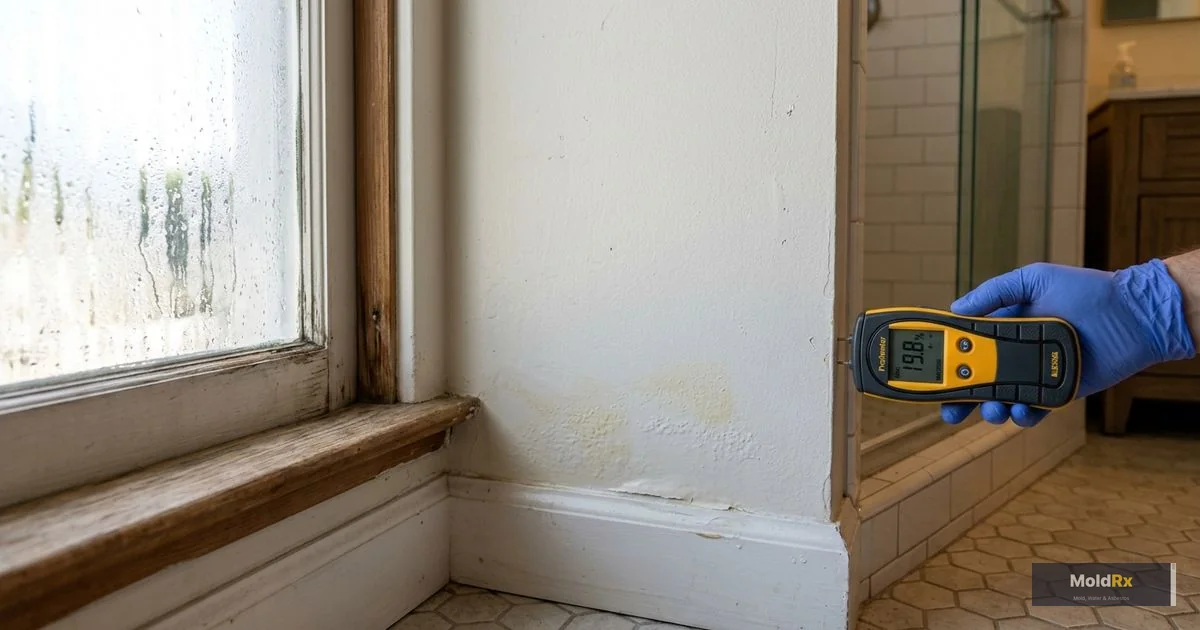
Recurring mold isn't random. It follows a predictable pattern, and almost every case traces back to one or more of these five causes.
1. The Moisture Source Was Never Fixed
This is the single most common reason mold returns after cleaning.
Every mold colony in your home is connected to a water source: a slow plumbing leak behind a wall, condensation from poor ventilation, water intrusion through a compromised roof or foundation, or chronic humidity in an enclosed space. When you clean visible mold without correcting the moisture source, the surface looks clean for a few days or weeks — but the same conditions that produced the original growth are still saturating the same materials. New colonization begins almost immediately.
Common hidden moisture sources:
- Slow plumbing leaks behind walls or under cabinets that drip intermittently, keeping materials damp without any visible pooling
- Roof leaks that only activate during rain and dry between storms — enough to keep attic and ceiling materials perpetually damp
- Condensation on cold surfaces (exterior walls, single-pane windows, cold water pipes) in humid environments
- Poor ventilation in bathrooms, kitchens, laundry rooms, and crawl spaces where moisture accumulates faster than it can dry
- Foundation or slab moisture wicking up through concrete into flooring and wall materials
- Failed weatherproofing — cracked caulk around windows, deteriorated flashing, gaps in siding — that lets rainwater penetrate wall cavities
If you didn't fix the water source, the mold will return. Every time. Learn how water damage and mold are connected in our guide on how fast mold grows after water damage.
2. You Only Cleaned the Surface
Mold growing on porous materials — drywall, wood, insulation, carpet, ceiling tiles — doesn't just sit on the surface. It sends root structures called hyphae into the material itself, penetrating deep into drywall paper, wood grain, carpet fibers, and insulation. These roots extract nutrients from the material and anchor the colony.
When you scrub the surface clean, you remove the visible growth but leave the hyphae intact inside the material. Regrowth begins within days. The colony pushes back to the surface from the same root network, and within a few weeks, you're looking at the same mold in the same spot.
This is the fundamental limitation of DIY mold cleaning on porous materials. No amount of scrubbing reaches hyphae embedded inside drywall or wood. The mold you can see is only the part you can reach — and it's the least important part.
Non-porous surfaces are different. Mold on tile, glass, metal, and sealed countertops sits on top of the material because it can't penetrate. Surface cleaning on non-porous surfaces actually works because there's no root structure to leave behind. This distinction — porous versus non-porous — is the dividing line between mold you can handle yourself and mold that requires professional mold removal.
3. The Bleach Myth Is Making Things Worse
Bleach is the default mold cleaning product in most households. It feels effective — you spray it on, the dark stain disappears, the surface looks white and clean. But on porous surfaces, bleach can actually make the problem worse.
Here's the chemistry: Household bleach (sodium hypochlorite solution) is mostly water. On porous materials like drywall, wood, and grout, the water in the bleach solution soaks into the material while the chlorine stays on top. You've just delivered moisture — the one thing mold needs most — directly into the material where the root structures live. The surface looks clean because the visible mold has been bleached white, but beneath it the root system is intact and freshly watered.
The EPA does not recommend bleach for mold cleanup on porous surfaces. Their guidance focuses on physical removal of contaminated materials rather than chemical treatment. On non-porous surfaces, detergent and water are more effective because they physically remove the mold rather than just bleaching the color.
What bleach actually does:
- Bleaches the visible stain white, creating the appearance of removal
- Fails to penetrate porous materials where hyphae are growing
- Delivers water into the material, feeding the root system
- Produces harsh fumes in enclosed spaces
- Damages certain surfaces including natural stone, colored grout, and some fixtures
If you've been using bleach on recurring mold and wondering why it keeps coming back — this is why. You've been feeding it.
4. Cleaning Without Containment Spread Spores Everywhere
When you disturb a mold colony during cleaning — scrubbing, spraying, wiping — you release a massive burst of microscopic spores into the surrounding air. Without containment, those spores travel freely through the room, into adjacent spaces, through hallways, and into your HVAC system. They settle on surfaces throughout the home, including areas that were previously unaffected. If any of those surfaces have moisture and organic material, new colonies establish.
This is why professional mold remediation uses containment barriers and negative air pressure. Plastic sheeting seals the work area. HEPA-filtered air scrubbers prevent contaminated air from reaching the rest of the home. These protocols exist because professionals understand that disturbing mold without containment makes the problem worse. Learn more about what happens during professional mold remediation.
When you clean mold at home without containment, the bathroom door is open, the HVAC is running, and spores from your cleaning go everywhere.
5. Porous Materials Weren't Removed
When mold has colonized porous building materials, those materials need to be physically removed — not cleaned, not treated, not painted over. Removed.
Drywall with mold growth has mold embedded throughout the paper facing and potentially into the gypsum core. That drywall needs to be cut out and replaced. Carpet and carpet padding that have been colonized can't be effectively cleaned. Insulation that has been exposed to moisture and mold contamination doesn't clean up. Ceiling tiles, cardboard, paper-backed materials — same story.
Homeowners understandably don't want to tear out their walls. But when mold has penetrated porous materials, cleaning the surface is temporary at best. The contaminated material itself is the problem, and until it's gone, the mold will keep returning.
Professional remediation protocols (following IICRC S520 standards) include removal of contaminated porous materials within a containment zone, HEPA vacuuming of exposed structural elements, antimicrobial treatment of remaining surfaces, and clearance testing to verify the contamination has been effectively addressed.
What Actually Works: The Professional Remediation Process
If surface cleaning is insufficient, what does effective mold remediation look like? Here's the process that actually breaks the cycle of recurring mold.
Identify and Fix the Moisture Source
Before touching the mold, professionals identify the water source sustaining it — using moisture meters, thermal imaging, and sometimes exploratory openings to trace water paths. The moisture source must be corrected before remediation proceeds. Without this step, everything that follows is temporary.
Establish Containment
The work area is sealed with plastic sheeting and placed under negative air pressure using HEPA-filtered air scrubbers. HVAC systems serving the affected zone are isolated. This prevents spores from migrating to unaffected areas during removal.
Remove Contaminated Materials
Porous materials with mold growth — drywall, insulation, carpet, ceiling tile — are carefully removed, bagged in sealed containers, and disposed of. Removal extends beyond the visible mold to ensure no hidden contamination remains.
Clean and Treat Structural Elements
Exposed framing, subfloor, and other semi-porous structural elements are HEPA vacuumed, wire-brushed or sanded as needed, and treated with professional-grade antimicrobial solutions. Air scrubbers run continuously throughout the process and afterward to capture remaining airborne spores.
Clearance Testing
An independent party — not the remediation company — collects air and surface samples after the work is complete. If spore counts in the remediated zone are at or below normal levels compared to unaffected areas and outdoor air, the project passes clearance. If not, additional work is performed and testing is repeated.
Reconstruction
Once clearance is confirmed, removed materials are replaced — new drywall, insulation, flooring, paint. The space is returned to its pre-loss condition with the moisture source corrected and the contamination eliminated.
This process is why professional remediation costs more than a bottle of bleach. But it's also why it works — permanently — when DIY cleaning doesn't.
How to Know If Your Cleaning Worked or Just Masked the Problem
You cleaned the mold yourself. Now you're watching and waiting. Here's how to tell whether your cleaning was actually effective or whether you just set the clock on a recurrence.
Signs Your Cleaning Was Effective
- The mold hasn't returned after 4-6 weeks. If the surface stays clean through a full month and beyond, your cleaning likely addressed the issue — particularly if it was surface mold on a non-porous material.
- The musty smell is gone. Mold produces microbial volatile organic compounds (MVOCs) that create that distinctive musty odor. If the smell disappeared after cleaning and hasn't returned, the active colony has been eliminated.
- You identified and fixed the moisture source. If you found and corrected the reason moisture was accumulating — improved ventilation, fixed a leak, addressed condensation — you've addressed the root cause, not just the symptom.
- The material under the mold is solid and dry. Drywall that's firm, wood that's hard, surfaces that are dry to the touch — these suggest the mold was superficial and the material wasn't compromised.
Signs the Problem Isn't Solved
- Mold reappears within days or weeks. This is the clearest indicator that root structures survived your cleaning, the moisture source is still active, or both.
- The musty smell persists or returns. Even if the surface looks clean, a persistent musty odor means active mold growth is occurring somewhere — possibly behind the surface you cleaned.
- The same spot keeps getting damp. If you're noticing moisture, condensation, or dampness at the location where mold appeared, the conditions for regrowth are still present.
- Mold appears in new locations. If you cleaned mold in one area and it's now showing up in nearby areas, spores may have spread during your cleaning process.
- The material feels soft or spongy. Drywall that gives under pressure, wood that feels soft, or surfaces that seem swollen indicate moisture damage that goes deeper than the surface — and mold that does too.
- Health symptoms continue. If respiratory symptoms, allergies, or headaches persist after cleaning, airborne mold spores may still be elevated. Professional mold testing can measure whether indoor air quality has actually improved.
If any of these signs are present, your cleaning addressed the appearance but not the problem. The mold is still active, either at the location you cleaned or in areas where spores spread during the process.
Frequently Asked Questions
Why does mold come back after I clean it with bleach?
Bleach bleaches visible mold white but doesn't penetrate porous materials where root structures (hyphae) grow. The water in bleach solution actually soaks into the material, delivering moisture to the root system. The surface looks clean temporarily, but the colony regrows from its intact roots within days or weeks. On non-porous surfaces like tile and glass, detergent and water are more effective because they physically remove the mold. On porous materials like drywall and wood, the material itself typically needs to be removed — no chemical treatment can reach embedded mold growth.
Can I kill mold permanently with vinegar, hydrogen peroxide, or tea tree oil?
These products may kill some surface mold on non-porous materials, but none of them penetrate porous materials deeply enough to reach embedded hyphae. They work the same as any surface cleaning: effective on tile, glass, and other hard surfaces where mold sits on top; ineffective on drywall, wood, carpet, and other porous materials where mold grows into the material itself. No consumer-available chemical kills mold permanently in porous materials. The material must be physically removed.
How many times should mold come back before I call a professional?
Once. If mold returns after a thorough cleaning, that tells you either the moisture source is still active, the mold has penetrated beyond what surface cleaning can reach, or both. Cleaning it a second or third time won't produce a different result. Each cycle of cleaning and regrowth also releases more spores into your home. Professional assessment identifies what you're missing — the hidden moisture source, the depth of contamination, or the porous materials that need to be removed rather than cleaned.
Does mold grow back faster after you clean it?
It can seem that way, and there's a reason. When you scrub the surface but leave the root system intact, the colony doesn't have to start from scratch. It already has an established root network drawing nutrients from the material. Regrowth from existing hyphae is faster than new colonization from airborne spores. Additionally, if your cleaning method delivered moisture into the material (as bleach does), you've actually improved growing conditions for the surviving root structures.
Is recurring mold dangerous to my health?
Recurring mold means sustained elevated spore levels in your indoor air. Each growth-cleaning-regrowth cycle releases spores. Over time, this can cause or worsen respiratory symptoms, allergic reactions, and asthma — particularly in children, elderly household members, and anyone with a compromised immune system. If you or your family members are experiencing symptoms that improve when you leave the house, that's a signal to stop the DIY cycle and get the situation professionally assessed. The species of mold matters less than most people think — learn more in our guide on black mold vs regular mold and when bathroom mold becomes a real concern.
Can I just paint over mold to stop it from coming back?
No. Paint doesn't kill mold, and "mold-resistant" or "mold-killing" primers are not substitutes for removal. Mold continues growing under paint, consuming the organic compounds in the paint itself and in the material underneath. The paint will eventually blister, peel, and discolor as the colony expands. Worse, the paint traps moisture against the material, accelerating decay. The mold must be removed (or the contaminated material must be removed) and the surface must be completely dry before any repainting.
Why does mold keep coming back in the same spot?
Because that spot has conditions the mold needs: a moisture source, organic material to feed on, and often poor air circulation. Bathrooms, exterior wall corners, areas below windows, spaces behind furniture against exterior walls, and ceiling areas below bathrooms or rooflines are common repeat locations because they have persistent moisture conditions. Until the specific moisture pathway at that location is identified and corrected, the mold will return there regardless of how many times you clean it.
Should I get mold testing if my cleaning doesn't seem to work?
Testing can be valuable in this situation. Professional air sampling can tell you whether spore levels are elevated in the room and throughout your home — which indicates active mold growth somewhere, even if the surface you cleaned looks clear. Testing can also identify whether spores have spread to other areas during your cleaning attempts. If you've cleaned visible mold more than once and it keeps returning, professional mold testing gives you objective data about the scope of the problem rather than relying on what you can see.
Will improving ventilation stop mold from returning?
Improved ventilation helps prevent moisture accumulation, which reduces the conditions mold needs. But ventilation alone won't stop mold that's already established in porous materials or mold caused by a direct water source like a leak. If the moisture source is humidity and condensation, better ventilation — especially exhaust fans that vent to the exterior — can be a complete solution once existing mold is properly removed. If the moisture source is a leak or water intrusion, ventilation won't overcome the direct water supply. Fix the water source first.
What does it cost to fix recurring mold professionally vs. keep cleaning it myself?
The irony of recurring mold is that DIY cleaning often costs more in the long run. Each cycle of cleaning products, your time, and the eventual material damage adds up — and the mold spreads further with each failed attempt, increasing the scope of eventual remediation. Professional remediation addresses the root cause once. The cost depends on the scope of contamination, materials involved, and the moisture source, but investing in a permanent solution is almost always less expensive than years of recurring cleanup and the eventual larger remediation that becomes unavoidable. Request a free estimate to understand what your specific situation requires.
Stop Cleaning Mold That Keeps Coming Back
If you've read this far, you probably recognize your situation in one or more of the five reasons above. The mold in your home isn't indestructible — it's just being sustained by conditions that surface cleaning can't change.
The cycle breaks when the moisture source is corrected, contaminated materials are properly removed, and the space is verified clean through independent testing. That's what professional remediation does, and it's why remediated spaces stay clean when DIY-cleaned spaces don't.
MoldRx coordinates professional mold remediation and mold testing with IICRC S520-certified specialists throughout Orange County, Riverside County, and San Bernardino County. We'll assess your situation honestly, identify the moisture source driving the problem, and recommend only what's actually needed.
Call (888) 609-8907 to talk to a real person about what you're dealing with. No scripts, no scare tactics — just straight answers about why the mold keeps coming back and what it takes to stop it. Or request a free estimate online and we'll follow up on your schedule.