Mold Removal in Yorba Linda, CA — MoldRx
IICRC-Certified Mold Removal Professionals Serving Yorba Linda and North Orange County
Yorba Linda — the "Land of Gracious Living" — is roughly 68,000 residents in the foothills where North Orange County meets the Chino Hills. Known as the birthplace of Richard Nixon and for its 100-plus miles of equestrian trails, the city is defined by large lots and hilly terrain. But that terrain is exactly what makes mold a persistent problem. Elevations range from 300 feet on the western flats to over 1,400 feet in the eastern foothills, and that spread — combined with marine layer humidity, hillside drainage, Santa Ana winds funneling through Carbon Canyon, and housing spanning the 1960s through the 2000s — creates conditions where mold colonizes behind walls, inside HVAC systems, and through foundations before homeowners notice. MoldRx only sends vetted, IICRC-certified mold removal professionals who follow IICRC S520/R520 standards and EPA guidance (EPA 402-K-01-001) — specialists who work North Orange County every week.
Request your free estimate — we'll assess your property and give you straight answers.
Why Mold Grows in Yorba Linda Homes
Yorba Linda spans roughly 20 square miles across two ZIP codes — 92886 (western and central areas) and 92887 (eastern hillside communities). The city contains about 24,000 housing units, 75% detached single-family homes with a median construction year of 1984. Thousands of properties are now 35 to 60 years old — old enough for plumbing to fail, stucco to crack, and HVAC systems to deteriorate. Four factors drive mold growth here.
Marine Layer Humidity
Yorba Linda sits roughly 18 miles from the Pacific — far enough inland that many homeowners assume marine layer humidity is irrelevant. It is not. Average humidity reaches approximately 61%, peaking in May and June when coastal fog penetrates inland valleys and gets trapped against the Chino Hills. That moisture infiltrates homes through aging stucco joints, deteriorated window seals, and ventilation intakes. Per IICRC S520 and EPA 402-K-01-001, mold colonizes within 24 to 48 hours once sustained moisture conditions are present — a timeline the marine layer makes realistic for weeks at a stretch, particularly in low-lying western neighborhoods where cold air pools overnight.
Hillside Drainage and Canyon Runoff
Yorba Linda's most desirable feature — its hilly, canyon-adjacent terrain — is also its biggest mold risk factor. Eastern communities like Hidden Hills, Bryant Ranch, and Vista del Verde sit on slopes where rainwater runs downhill toward foundations, retaining walls trap moisture against structures, and grading has settled over decades. The city averages roughly 17 inches of annual rainfall concentrated between November and March. During those months, hillside runoff saturates soil against foundations, enters through hairline slab cracks, and wicks into wall cavities. Properties adjacent to Carbon Canyon and the Chino Hills foothills are especially vulnerable — canyon topography funnels water toward the lowest points, which are often residential lots.
Aging 1960s-1970s Housing Stock
Yorba Linda's population exploded from 1,198 in 1960 to nearly 12,000 by 1970 following incorporation in 1967. That suburban wave — concentrated in the Yorba Linda Knolls and the flats west of Fairmont Boulevard — produced single-story ranch homes now 50 to 60 years old with original copper plumbing developing pinhole leaks, cracking slab foundations, stucco separating from framing, bathroom exhaust venting into attics, and HVAC ductwork that has accumulated decades of dust and moisture. Homes from this era may also contain asbestos — a consideration if remediation requires disturbing walls, flooring, or insulation.
Santa Ana Winds Through Carbon Canyon
Santa Ana winds — hot, dry offshore events from October through March — funnel directly through Carbon Canyon into Yorba Linda's eastern neighborhoods, driving temperatures past 100 degrees and dropping humidity to single digits. When the Santa Ana breaks, marine air rushes back in within hours, and the rapid temperature swing creates condensation on windows, in attic spaces, inside HVAC ductwork, and on cooler interior wall surfaces. This cycle is invisible to most homeowners but creates ideal conditions for mold on surfaces that never fully dry between events. Properties in the Carbon Canyon corridor and along the eastern ridgelines experience this most acutely.
Signs You Need Professional Mold Removal
Not every discoloration requires a remediation crew. But certain signs indicate the problem has moved beyond what a homeowner can handle.
Visible Growth Beyond a Small Area
EPA 402-K-01-001 uses 10 square feet as a general threshold — contamination exceeding that warrants professional remediation. In Yorba Linda homes, visible growth commonly appears along baseboards on exterior walls, inside bathroom cabinets in older ranch homes, around sliding glass doors facing hillside slopes, on garage walls shared with living space, and in closets on canyon-facing walls.
Persistent Musty Odor Without Visible Mold
If a musty smell persists after cleaning, mold is likely growing concealed — behind drywall, under flooring, or within HVAC ductwork. Yorba Linda's hillside homes with finished lower-level rooms built into slopes are especially prone to hidden mold in foundation wall assemblies. Professional moisture mapping locates the source without unnecessary demolition.
Recurring Mold After Previous Cleanup
Mold that keeps returning means the moisture source was never resolved. In Knolls-area homes, the recurring source is often a slab leak or deteriorated exhaust venting. In hillside communities, it is frequently slope drainage that was never properly diverted. If you have cleaned the same area more than once, the underlying condition needs professional diagnosis.
Water Damage History
Any previous water event — plumbing failure, hillside runoff intrusion, roof leak, or HVAC condensate overflow — can leave residual moisture that supports mold for months. If your property was not dried within the 24-to-48-hour window per IICRC S520, assessment is warranted.
Health Symptoms That Worsen Indoors
Nasal congestion, eye irritation, persistent cough, or worsening asthma that improves when you leave the house may indicate mold exposure. The CDC notes mold causes respiratory symptoms in healthy individuals and severe reactions in those with existing conditions. These symptoms justify evaluation.
Health Risks of Mold Exposure
Mold exposure is a legitimate health concern backed by federal agency guidance.
The EPA links mold exposure to allergic reactions including sneezing, red eyes, and skin rash. The CDC identifies coughing, wheezing, and throat irritation. The WHO's Guidelines for Indoor Air Quality: Dampness and Mould connects prolonged exposure to respiratory infections and asthma development in children.
Populations at Higher Risk
Yorba Linda is an affluent, family-oriented community — median household income exceeding $152,000. The WHO identifies several groups at elevated risk:
- Children — Vulnerable to dampness-related health effects including increased asthma risk. Yorba Linda's family-oriented neighborhoods mean young children are present in virtually every community.
- Individuals with asthma or allergies — Mold is a known asthma trigger. The CDC recommends people with mold allergies avoid exposure entirely.
- Elderly residents — Weakened immune function increases susceptibility to respiratory infections. Yorba Linda's aging-in-place population often lives in the older homes most likely to harbor concealed mold.
- Immunocompromised individuals — Transplant recipients, chemotherapy patients, and those with autoimmune conditions face elevated risk of fungal infections.
Timely remediation matters — particularly in homes with vulnerable occupants.
When DIY Mold Removal Isn't Enough
For small surface mold on non-porous materials, EPA guidance allows homeowner cleanup. But several conditions require professional intervention:
- Contamination exceeding 10 square feet — EPA 402-K-01-001 recommends professional remediation at this threshold
- Mold inside HVAC systems or ductwork — Aging systems in 1960s-1980s homes frequently harbor mold; even newer systems develop condensation problems from Santa Ana wind cycling. NADCA (National Air Duct Cleaners Association) standards apply
- Structural involvement — Mold behind drywall, under subfloor, or inside wall cavities requires controlled demolition, containment, and HEPA filtration
- Toxic species suspected — Species like Stachybotrys chartarum (black mold) produce mycotoxins requiring IICRC S520-compliant removal
- Water category 2 or 3 involvement — If the moisture source involves sewage or gray water per IICRC S500, professional protocols are required
- Insurance or real estate documentation needed — DIY cleanup produces no documentation. Professional remediation generates records insurers and buyers require
When in doubt, get a professional assessment — it is part of our free estimate.
How We Remove Mold in Yorba Linda Properties
Every remediation follows IICRC S520/R520 standards — the industry benchmarks recognized by insurers, public health agencies, and the courts. Our professionals also adhere to Cal/OSHA Title 8 §5155 for worker and occupant safety.
1. Inspection and Moisture Mapping
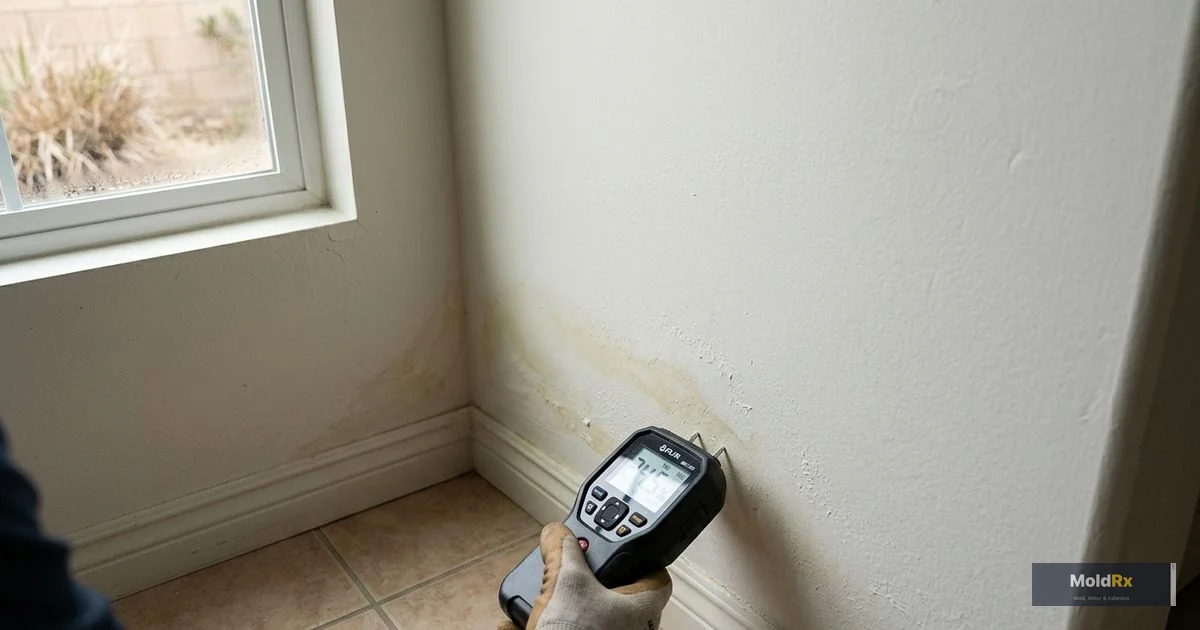
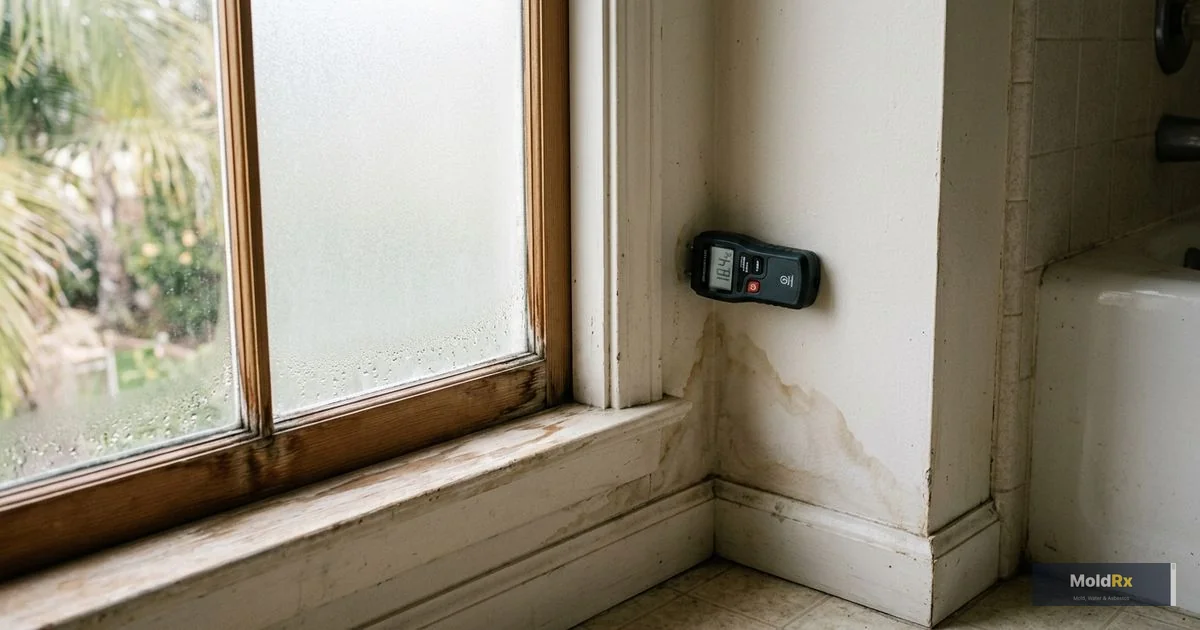
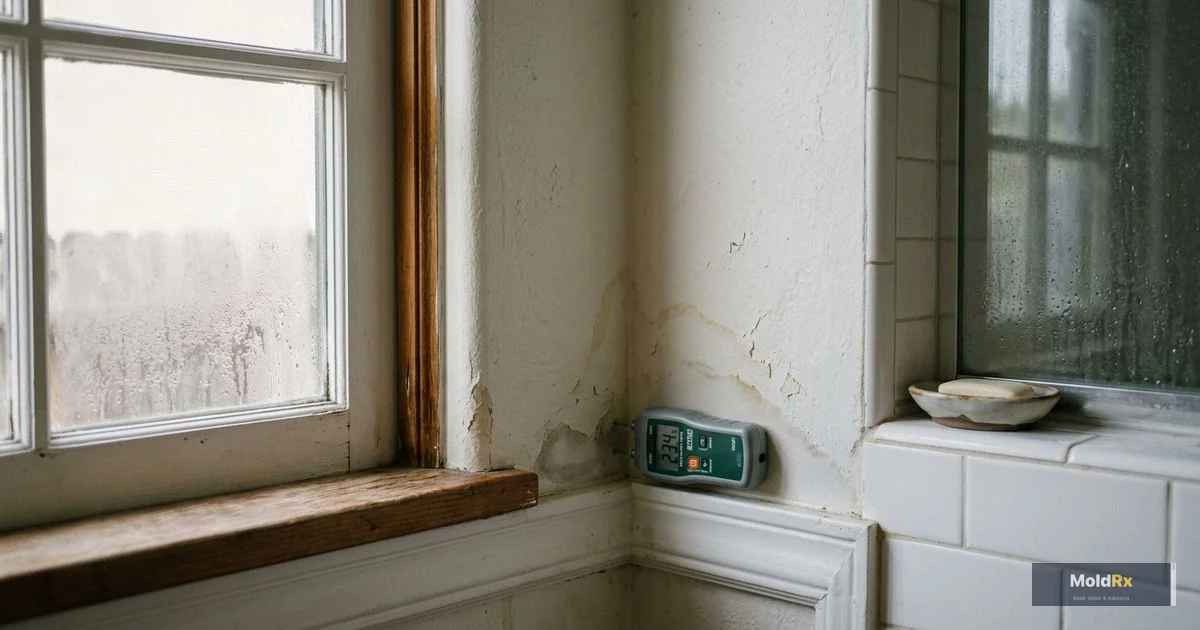
Our specialists map the full scope per EPA 402-K-01-001 — checking plumbing in older ranch homes, inspecting slab foundations for moisture migration, evaluating hillside drainage in foothill communities, testing HVAC ductwork for condensation from Santa Ana wind cycling, examining canyon-facing exterior walls, and assessing retaining walls for water pathways. Thermal imaging and moisture meters trace water movement that visual inspection alone would miss.
2. Containment
Physical barriers and negative air pressure isolate the affected area per IICRC S520. HEPA air scrubbers capture spores down to 0.3 microns — critical in Yorba Linda's larger floor plans where open layouts allow spore distribution across entire levels. The CDC, EPA, and the WHO's Guidelines for Indoor Air Quality: Dampness and Mould all identify children as especially vulnerable. In hillside homes with finished lower levels, containment also prevents spore migration into upper living areas through stairwells and HVAC returns.
3. Removal and Treatment
Mold-damaged materials — drywall, insulation, carpet padding — are removed per IICRC S520 and Cal/OSHA Title 8 §5155 exposure limits. Remaining structural surfaces are treated with EPA-registered antimicrobial solutions that eliminate residual spores and inhibit regrowth. Every surface in the containment zone gets addressed.
4. Moisture Correction
Removing mold without fixing the water source guarantees it returns. Our specialists resolve the underlying cause — slab leak in a 1970s ranch home, hillside drainage overwhelming a retaining wall, Carbon Canyon condensation cycling through inadequate attic ventilation, marine layer moisture through deteriorated stucco, a failed shower pan, or slope runoff channeling toward a foundation during winter storms.
5. Post-Remediation Verification
Work is not finished until conditions are verified against IICRC S520 Condition 1 (normal fungal ecology). You receive full documentation — scope, materials removed, treatments, moisture readings, verification results — meeting standards insurers and real estate professionals require.
Mold Removal vs. Mold Remediation: What's the Difference?
The terms get used interchangeably, but they describe different scopes of work.
Mold removal refers to physically eliminating growth — cutting out contaminated drywall, HEPA-vacuuming, applying antimicrobials. It addresses what is already there.
Mold remediation is the broader IICRC S520 process: assessment, containment, removal, moisture correction, and verification. Remediation addresses the mold and the conditions that caused it, restoring Condition 1 (normal fungal ecology).
When MoldRx sends professionals to your Yorba Linda property, they perform full remediation. The hillside drainage gets redirected, the aging plumbing gets traced, the ventilation gets corrected. The mold is gone and the reason it grew is resolved. Any company offering "mold removal" without addressing the moisture source is selling a temporary fix.
Preventing Mold After Remediation
Once remediation is complete, the right maintenance keeps mold from returning. These measures are calibrated to Yorba Linda's specific conditions.
Ventilation Upgrades in Older Ranch Homes
Homes from the 1960s and 1970s in the Knolls and the original flats were built before modern ventilation standards. Run bathroom fans for at least 30 minutes after showers and verify exhaust terminates outside — not into the attic, which is where many original installations vent. Interior bathrooms benefit from inline fans ducted to a roof cap. Ranch-style homes with low-pitch roofs trap heat and moisture in attic spaces; adequate soffit-to-ridge ventilation is essential.
Humidity Control
The EPA recommends indoor humidity between 30% and 50%. Marine layer moisture pushes Yorba Linda above 60% in May and June, and canyon-bottom properties stay elevated longer as cold, humid air pools overnight. A standalone hygrometer monitors conditions; if indoor humidity consistently exceeds 50%, a dehumidifier is worthwhile. Air conditioning removes moisture as it cools — but aging systems in older homes may not dehumidify efficiently.
Hillside Drainage and Grading Maintenance
In foothill neighborhoods, verify that grading continues to slope away from your foundation — settling over decades changes drainage patterns. Clean hillside drainage swales before each rainy season. Inspect retaining walls for cracks or weep-hole blockages that trap moisture against your structure. After heavy rain, check lower-level rooms and garage walls for moisture intrusion — catching it early prevents mold establishment.
Plumbing and Slab Monitoring
In older homes with original copper plumbing approaching 50 to 60 years, leaks are inevitable. Watch for unexplained water bill increases, warm spots on slab floors, and running water sounds when fixtures are off. Slab leaks are a leading mold trigger because moisture migrates upward through concrete and saturates wall assemblies for weeks before detection.
Exterior Maintenance and Santa Ana Wind Preparation
Stucco exteriors develop cracks over time, especially on canyon-facing and wind-exposed walls. Inspect stucco annually, check window and door seals, and verify flashing at roof-wall junctions. Before Santa Ana season (October through March), ensure attic ventilation is unobstructed — rapid temperature swings create the condensation that drives hidden mold growth. Seal gaps around recessed lighting, attic access panels, and plumbing penetrations where condensation collects.
What Sets MoldRx Apart
-
Straight talk, not sales talk. If your situation is smaller than you feared, we will tell you. If it is more involved, you will hear that too. We do not manufacture problems to inflate a job.
-
Licensed, insured, IICRC-certified. Our vetted professionals hold IICRC certifications, carry CSLB (Contractors State License Board) licensing, and maintain insurance for Orange County remediation. They have field experience with Yorba Linda's challenges — hillside drainage, aging housing, marine layer humidity, and Santa Ana wind condensation.
-
Full documentation on every job. Detailed records protect you with insurance, in real estate transactions, and for your own records.
-
Family-owned accountability. MoldRx is not a call center. We only send vetted professionals we stand behind.
Get your free estimate — no obligations, no pressure. Just a clear picture of your situation.
Yorba Linda Neighborhoods We Serve
MoldRx provides mold removal across every neighborhood and community in Yorba Linda — ZIP codes 92886 and 92887 — including single-family homes, equestrian properties, and commercial buildings.
-
Yorba Linda Knolls (92886) — Among the city's earliest neighborhoods, developed in the 1960s and early 1970s. Single-story ranch homes on generous lots, many now 55 to 60 years old with original plumbing, aging slab foundations, and stucco weathered by decades of exposure. Flat terrain means marine layer humidity settles and lingers. These homes are the most likely in the city to have exhaust systems venting into attics.
-
Travis Ranch (92886) — Master-planned community developed mid-1980s through the 1990s. Homes are 30 to 40 years old — old enough for plumbing issues and HVAC deterioration. Relatively flat terrain near the Santa Ana River corridor. Proximity to Yorba Regional Park keeps ambient moisture slightly elevated.
-
Eastlake Village (92886) — Large master-planned community dating to 1979 with development through the 1980s. Mix of single-family homes and attached units surrounding man-made lakes. Lake proximity keeps localized humidity elevated, and shared-wall townhomes face moisture transfer challenges. Properties along lake edges deal with higher water tables.
-
Hidden Hills (92887) — Custom hillside homes built primarily in the 1980s and 1990s on the eastern slopes. Elevated terrain means excellent views but significant drainage challenges — retaining walls trap moisture, slope runoff channels toward foundations, and canyon-adjacent lots experience the full force of Carbon Canyon wind events. Lower-level rooms built into hillsides are prime mold locations.
-
Bryant Ranch (92886/92887) — Developed mid-1980s through the late 1990s with single-family homes and condominiums. Rolling terrain transitions between flats and foothills. Properties on higher elevations face drainage challenges; those lower deal with moisture pooling. Condos introduce shared-wall moisture pathways.
-
Horse Country / Equestrian Areas (92886) — Scattered throughout the western and central portions, these large-lot properties preserve Yorba Linda's equestrian heritage. Barns, stables, and outbuildings create additional moisture-vulnerable structures. Irrigation for pastures keeps soil saturated near foundations. Older homes on these properties are frequently among the city's earliest construction.
Nearby Communities We Also Serve
Our vetted professionals also cover surrounding North Orange County:
- Placentia — Western neighbor with similar 1960s-1970s housing and aging-infrastructure challenges
- Brea — Northern neighbor sharing Carbon Canyon access and foothill terrain
- Anaheim — Southern neighbor, including Anaheim Hills with comparable hillside drainage patterns
- Chino Hills — Eastern neighbor sharing foothill terrain and the Santa Ana wind corridor
- Orange — Southwestern neighbor with a wide range of housing ages
Related Services in Yorba Linda
Mold rarely exists in isolation. We also cover:
→ All remediation services in Yorba Linda
Frequently Asked Questions
How long does mold remediation take in Yorba Linda?
Most projects take 2 to 5 days. Single-room issues may wrap in a day; multi-room remediation involving slab leaks or hillside moisture correction can take a week or longer. We will give you a realistic timeline after assessment.
Do I need mold testing before removal starts?
If mold is visible, testing is not always required — the priority is removal and moisture correction. Testing becomes valuable when you suspect hidden mold, need insurance documentation, are in a real estate transaction, or need to determine whether contamination has spread.
Will my homeowner's insurance cover mold removal?
It depends on the cause. Mold from a sudden covered event (burst pipe) is often covered; mold from deferred maintenance typically is not. Our documentation supports legitimate claims.
Can I stay home during remediation?
Usually, yes. Containment and HEPA filtration isolate spores from living areas. For larger projects or if anyone has respiratory sensitivities, we may recommend staying elsewhere during the most intensive phases.
Is mold more common in Yorba Linda's older homes or newer hillside developments?
Older homes in the Knolls and original flats carry the highest risk due to aging plumbing, deteriorated stucco, and outdated ventilation. But hillside homes from the 1980s-1990s face their own vulnerabilities — drainage patterns shift over decades, retaining walls develop cracks, and canyon-adjacent properties experience persistent condensation from Santa Ana events. Risk is present across the city.
Does hillside drainage really cause mold problems?
Yes. When rainwater runs downhill toward a foundation — particularly when grading has settled or retaining walls have cracked — moisture enters through hairline foundation gaps, saturates soil against slabs, and wicks into wall cavities. In Yorba Linda's foothill communities, this is one of the most common mold triggers during the November-through-March rainy season.
How do Santa Ana winds contribute to mold?
Santa Ana winds themselves are hot and dry — the mold risk comes from what happens when they stop. Marine air rushes back in, and the rapid temperature drop creates condensation on windows, in attic spaces, inside HVAC ductwork, and on cooler wall surfaces. Carbon Canyon acts as a funnel that intensifies this cycle in Yorba Linda's eastern neighborhoods. Properties that experience repeated condensation-evaporation cycles without adequate ventilation develop mold in concealed locations.
How do I know if I have mold behind my walls?
Common indicators: persistent musty smell, water staining, peeling paint, buckled baseboards, worsening allergy symptoms indoors. In Yorba Linda, check canyon-facing exterior walls, poorly ventilated bathrooms in older ranch homes, lower-level rooms built into hillsides, and baseboards near slab foundations. Professional moisture mapping confirms what is there without unnecessary demolition.
What is the difference between mold removal and mold remediation?
Mold removal is the physical elimination of growth. Remediation is the complete process — assessment, containment, removal, moisture correction, and verification per IICRC S520. MoldRx professionals perform full remediation on every job.
Do you offer emergency mold removal in Yorba Linda?
If you have experienced sudden water intrusion — burst pipe, hillside runoff, slab leak, or storm damage — time matters. Mold colonizes within 24 to 48 hours. Contact MoldRx at (888) 609-8907 and we will dispatch vetted professionals to contain the situation before mold establishes.
Get Mold Removal in Yorba Linda
Mold spreads. The longer moisture stays unchecked, the further contamination reaches into your walls, your HVAC system, and your air quality. In a city defined by hilly terrain — 1960s ranch homes with aging plumbing, 1980s-1990s hillside developments contending with canyon drainage, marine layer humidity, Santa Ana winds cycling condensation through Carbon Canyon — that risk is persistent and real.
MoldRx only sends vetted remediation professionals who understand North Orange County. No guesswork. No runaround.
Call MoldRx for your free estimate — (888) 609-8907. Clear answers. Honest guidance. Work done right.